

More news on this day
More than 40 flights operated by Qatar Airways, Delta Air Lines, Spirit Airlines, Lufthansa, British Airways and other carriers were cancelled or heavily delayed across key US hubs on Friday, triggering fresh travel disruption for passengers heading to Doha, London, Frankfurt, San Francisco, Toronto and other long-haul destinations.
Get the latest news straight to your inbox!
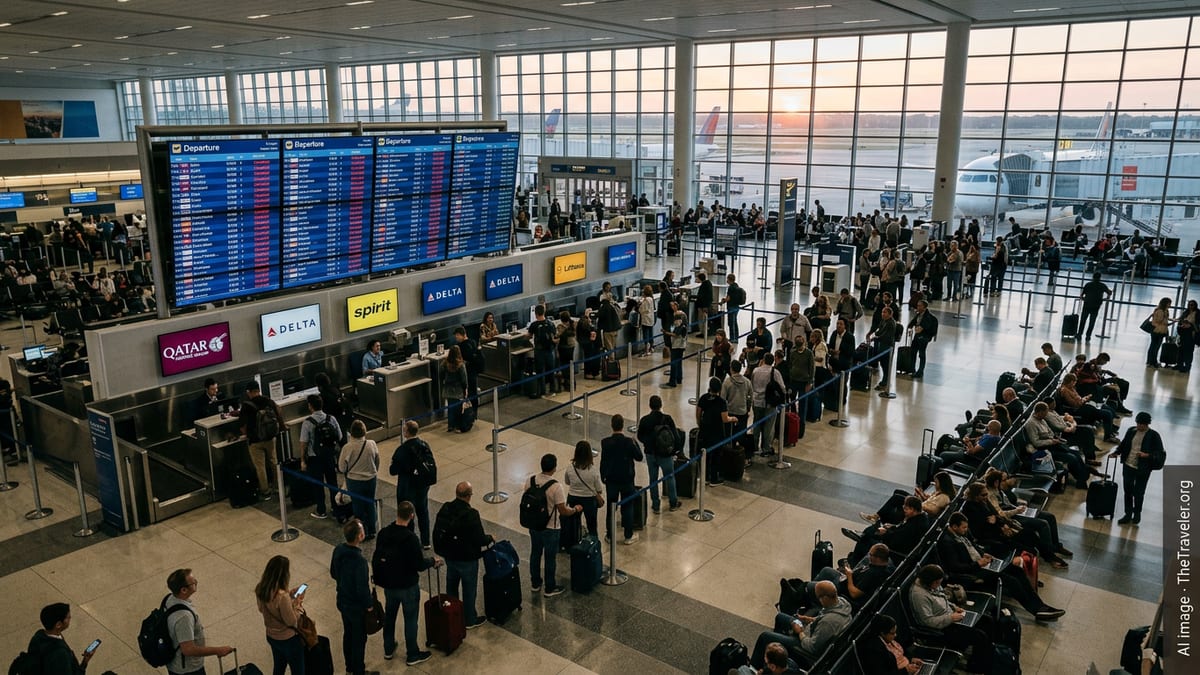
Wave of Cancellations Hits Major US Hubs
Airports in Atlanta, Dallas, Chicago, Los Angeles, Orlando, Charlotte, Las Vegas and the New York area reported clusters of cancellations and rolling delays, as airlines adjusted schedules in response to ongoing airspace restrictions and sharply reduced capacity on Middle East and transatlantic routes. Flight-tracking data and airport boards showed more than 40 departures and arrivals scrubbed within hours, with knock-on delays extending through the evening wave.
Passengers booked on Qatar Airways services to Doha were among the hardest hit, with several eastbound departures from US gateways removed from schedules or retimed, leaving travelers scrambling for alternative routings through Europe and North America. Some Delta, Spirit, Lufthansa and British Airways services were also cancelled or consolidated, particularly on routes feeding into affected long-haul flights.
While overall US domestic capacity remains robust, aviation analysts said the concentration of cancellations at major connecting hubs magnified the disruption. Travelers who began their journeys on seemingly unaffected domestic legs often discovered during layovers that onward international segments to Doha, London, Frankfurt, San Francisco and Toronto had been cancelled or significantly retimed.
Airport operations teams reported growing lines at rebooking desks as airline staff tried to juggle limited seats on remaining services and comply with fast-changing operational restrictions. In several hubs, carriers quietly capped same-day standby lists, telling passengers they should expect to travel “one to three days later” than originally planned.
Qatar Airways and Gulf Routings Under Pressure
Qatar Airways, a key connector between the United States, Europe and Asia via its Doha hub, continues to operate on a constrained schedule as Gulf airspace remains tightly managed amid regional security tensions. Although some repatriation and limited commercial flights have resumed, airlines and regulators remain cautious about restoring full traffic through the region.
Travelers on US–Doha itineraries reported last-minute notifications of cancellations and reroutes, with some tickets shifted onto partner or competitor airlines via European gateways such as London Heathrow and Frankfurt instead of transiting Doha. Others were offered departures several days later, reflecting limited spare capacity and the operational complexity of restarting long-haul rotations that had been temporarily suspended.
The squeeze on Doha services is also reverberating through partner networks. US passengers booked on codeshare tickets combining Qatar Airways with American Airlines, British Airways or other oneworld partners found that changes on the Gulf sector often forced complete ticket reissues. In many cases, routes were rebuilt to bypass Doha entirely, swapping Middle East connections for alternative hubs in Europe or North America.
Industry observers noted that even where some Gulf-bound flights remain scheduled, ongoing uncertainty has prompted airlines to publish conservative timetables, favoring reliability over frequency. That has left fewer options for same-day reaccommodation when cancellations do occur, particularly on peak days out of New York, Chicago and Los Angeles.
Transatlantic Capacity Tightens on Delta, Lufthansa and British Airways
Transatlantic routes, which serve as critical alternatives when Gulf hubs are constrained, are also feeling the strain. Delta Air Lines, Lufthansa and British Airways are selectively trimming or combining flights between the United States and Europe, citing both operational challenges and the need to reposition aircraft and crews.
On Friday, passengers in Atlanta, New York and Chicago reported cancellations on services feeding into European hubs that connect onward to the Middle East and South Asia. Some Delta departures to key European cities were zeroed out and replaced with later departures on larger aircraft, while Lufthansa and British Airways consolidated certain frequencies to Frankfurt and London to preserve core long-haul links while reducing overall rotations.
The tightening of transatlantic capacity is complicating rerouting options for stranded travelers originally destined for Doha or other Middle Eastern cities. With many US–Europe flights now operating near full, airlines have limited flexibility to absorb additional passengers displaced from cancelled Gulf-bound services. Business travelers and families alike are reporting multi-stop itineraries stitched together at short notice, with overnight layovers and arrivals several days behind schedule.
Travel advisors say they are fielding a surge in urgent rebooking requests from clients who had relied on the robustness of the North Atlantic market as a safety valve. Instead, a combination of aircraft redeployments, crew duty limitations and volatile demand has turned premium transatlantic seats into scarce inventory, especially from New York, Dallas and Los Angeles.
Knock-On Effects for Domestic Networks and Leisure Flyers
Although the current disruption is rooted in international airspace and long-haul scheduling, the consequences are increasingly visible across US domestic networks. Spirit Airlines and other low-cost carriers have cancelled or reshuffled a series of flights touching major hubs and leisure markets, including Orlando and Las Vegas, as aircraft and crews are repositioned to cover priority routes.
Families heading to or from spring holidays report abrupt cancellations on domestic legs that were meant to connect with long-haul services out of gateway airports. Even travelers without any international segments are feeling the impact in the form of tighter aircraft utilization, reduced spare capacity and longer recovery times when irregular operations occur.
At several airports, ground staff indicated that some short-haul cancellations were deliberate tactical decisions aimed at protecting longer sectors and maintaining overall network integrity. By trimming selected frequencies between secondary cities and major hubs, airlines are attempting to free up aircraft, crews and maintenance windows to support complex international rotations.
For leisure passengers, the distinction offers little comfort. Many find themselves rebooked on late-night or next-day departures, often with itinerary changes that add extra connections. Travel insurance providers and credit card issuers are already reporting increased claims and customer inquiries related to missed connections, hotel overnights and nonrefundable ground arrangements.
What US Travelers Should Expect in the Coming Days
Airlines and airport authorities caution that disruption is likely to remain elevated in the near term as carriers continuously adjust schedules in response to geopolitical developments, regulatory decisions and crew availability. While some Gulf and European services may be gradually restored, operational leaders are signaling that timetables will remain fluid and capacity constrained.
For US-based travelers, that means planning for uncertainty on itineraries involving Doha, the wider Middle East or secondary European gateways, particularly when journeys rely on tight connections through hubs such as London Heathrow or Frankfurt. Industry experts recommend allowing longer connection windows, being flexible on departure airports within the United States and considering alternative routings that avoid the most heavily impacted corridors.
Consumer advocates also urge passengers to familiarize themselves with airline disruption policies, including options for refunds, vouchers and rebooking on partner carriers when significant schedule changes occur. In some cases, travelers have successfully requested rerouting to alternate destinations in the same country, then completing their journeys by rail or short-haul flights at their own expense.
With flight schedules being updated frequently, airlines emphasize that travelers should monitor their bookings closely in the 24 to 48 hours before departure and again on the day of travel. For now, the combination of Gulf airspace constraints and transatlantic capacity adjustments means that even a single cancellation at a major hub can cascade quickly, transforming what once looked like a routine connection into a multi-day journey across continents.