

More news on this day
North American air travel faced fresh disruption on April 5 as at least 109 flights were canceled and 709 delayed across major hubs including Atlanta, Newark, San Francisco and Toronto, leaving thousands of passengers facing missed connections, overnight airport stays and scrambled travel plans.
Get the latest news straight to your inbox!
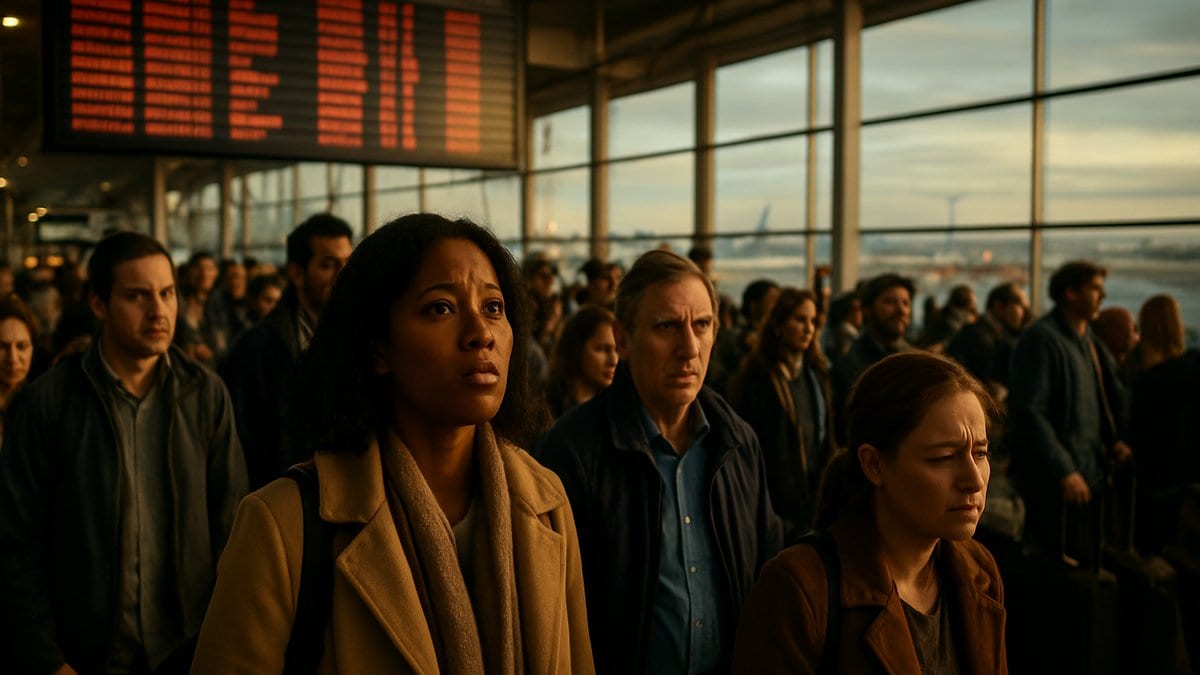
Major Hubs From Atlanta to Toronto Bear the Brunt
Publicly available flight tracking data for April 5 indicates that disruptions were clustered around a handful of high-traffic hubs, with Atlanta, Newark, San Francisco and Toronto Pearson among the most affected airports. These gateways form critical links in the North American network, meaning local problems quickly cascaded across domestic and transborder routes.
At Hartsfield-Jackson Atlanta International Airport, one of the world’s busiest passenger hubs, delays rippled across both domestic connections and long-haul services. Similar patterns emerged at Newark Liberty International Airport, a key base for transatlantic and transcontinental operations, and at San Francisco International Airport, where congestion and weather-sensitive coastal approaches often magnify schedule disruptions.
In Canada, Toronto Pearson International Airport reported a spike in delayed services, compounding the pressure on cross-border corridors. Travel industry coverage notes that passengers on routes linking Toronto with U.S. hubs such as Atlanta, Newark and San Francisco were particularly exposed to missed connections as hold times and rolling delays accumulated through the day.
By evening, airport status boards across these hubs showed clusters of delayed departures and arrivals rather than a single concentrated ground stop, illustrating how a combination of operational factors rather than one isolated incident contributed to the day’s disruption.
Weather, Staffing and Congestion Combine Into a “Perfect Storm”
Travel news summaries and aviation data providers attribute the latest round of disruption to a familiar mix of challenging weather, air traffic control constraints and staffing limitations at both airlines and airports. While no single nationwide weather emergency was reported on April 5, localized storms, low cloud ceilings and gusty winds around key hubs added extra spacing between aircraft and forced tactical ground delay programs.
In parallel, ongoing staffing pressures in air traffic control facilities and among airline ground crews left less flexibility to absorb schedule shocks. Industry analyses published in recent months have highlighted how even modest weather systems can trigger disproportionately large numbers of delayed flights when controller staffing and airport capacity are already tight during peak travel periods.
Congestion on heavily used transcontinental routes between California and the Northeast, as well as north-south flows linking the U.S. Southeast with Canadian gateways, further amplified the impact. Once early services slipped behind schedule, later rotations struggled to recover, resulting in evening cancellations that stranded travelers overnight in Atlanta, Newark, San Francisco and Toronto.
The pattern mirrors other recent episodes during holiday peaks and stormy periods, where a complex interaction of weather, limited spare aircraft and crew duty-time limits has resulted in rolling delays rather than discrete, easily contained events.
Thousands of Travelers Stranded as Cancellations Mount
Although 109 cancellations may appear modest compared with some past mass disruption events, the combination of cancellations with more than 700 delays significantly increased the number of disrupted journeys. Travel-focused outlets report that terminals in Atlanta, Newark and San Francisco saw long customer service lines as passengers sought rebooking options and hotel vouchers after missed onward connections.
Because many of the affected airports serve as major connecting hubs, one canceled leg could unravel entire itineraries spanning multiple countries. Travelers arriving from Europe or Latin America into Newark or Atlanta, for example, often rely on tight connections to continue to smaller U.S. or Canadian cities; when those feeder flights are delayed or canceled, re-accommodation options quickly become limited.
Airlines operating through the impacted hubs, including large U.S. network carriers and regional partners, attempted to reposition aircraft and crews to stabilize schedules. However, previously delayed inbound flights frequently arrived out of sequence, leaving aircraft and staff in the wrong cities at the wrong times. Aviation analysts note that this sort of “network misalignment” is a major reason why disruption can persist long after the initial cause, such as a storm band or temporary ground delay program, has passed.
Social media posts and passenger reports described crowded gate areas, extended waits for baggage, and difficulty reaching airline call centers, reflecting the strain that even a mid-sized disruption can place on customer support systems.
Impact on Airlines and the Wider Aviation System
Recent commentary aimed at investors has stressed that days like April 5 are not isolated anomalies but part of a broader pattern of heightened volatility in the U.S. air travel system. Analysts point to repeated episodes of significant cancellations and delays at hubs such as Dallas Fort Worth, Chicago O’Hare, Houston and Atlanta in recent months, underscoring systemic vulnerability when traffic levels approach or exceed pre-pandemic volumes.
Operationally, airlines face difficult trade-offs between canceling flights early to reset the schedule and holding services in the hope of operating them with delays. While cancellations create immediate disruption for affected passengers, extended rolling delays can lead to additional knock-on effects, including crews timing out and aircraft missing subsequent rotations, which then feeds back into later cancellations.
From a financial standpoint, irregular operations generate additional costs for carriers through crew repositioning, fuel inefficiencies, overtime, and customer care obligations, while also putting pressure on customer satisfaction scores and brand reputation. For airports and local economies, recurring travel disruption can dampen business travel demand and discourage discretionary trips, particularly when travelers face repeated uncertainty about arriving on time.
Policy discussions around air traffic control modernization, staffing levels and airport capacity enhancements have gained renewed urgency as travel demand remains strong. Publicly available regulatory and legislative documents in recent years have flagged chronic congestion at major hubs including Atlanta, Newark and San Francisco, suggesting that without structural upgrades, similar days of disruption are likely to recur.
What Disrupted Passengers Can Do Next
Consumer advocates and travel advisories emphasize that passengers affected by cancellations are generally entitled to a refund if they choose not to travel, or to be rebooked on a later flight when seats are available. For significant delays, many airlines also provide meal vouchers, hotel accommodations or travel credits, depending on the circumstances and carrier policies.
Travel industry guidance recommends that stranded travelers use multiple channels simultaneously, including airline apps, airport kiosks and staffed counters, to secure alternative itineraries as quickly as possible. Same-day seats via nearby airports, such as using LaGuardia or John F. Kennedy in place of Newark, or Oakland and San Jose as alternatives to San Francisco, can sometimes provide faster exit options when a primary hub is saturated.
Experts also advise building more buffer time into itineraries that rely on vulnerable hubs, especially during busy holiday periods or seasons prone to storms. Choosing slightly longer layovers, avoiding the last flight of the evening where possible, and monitoring weather and airport status in the days leading up to departure can reduce the risk of becoming stranded.
With the latest disruption underscoring how quickly conditions can deteriorate across interconnected hubs, many travelers and industry observers are calling for continued investment in resilient infrastructure and more transparent, user-friendly tools that allow passengers to navigate an increasingly unpredictable air travel landscape.