

More news on this day
Thousands of airline passengers across the United States are facing extensive disruptions as major carriers including Delta, American, United and JetBlue cancel 115 flights and delay more than 2,400 others, snarling travel through key hubs from Boston and New York to Denver and Miami.
Ripple Effects From Coast to Coast
The latest wave of disruption began building late this week as a combination of lingering winter weather in the Northeast, low visibility in parts of the West and South, and tight aircraft and crew rotations pushed the national air network to a breaking point. By Friday, data compiled from major tracking services showed 115 flights scrubbed outright across US airports and approximately 2,417 departures and arrivals running late, with some delays stretching well beyond two hours.
While the raw numbers are national, the impact is highly concentrated at major hubs. Boston Logan, New York area airports, Chicago, Denver, Miami and other busy gateways have all reported elevated disruption, with delays on key transcontinental and East Coast shuttle routes feeding into a wider backlog. Travelers connecting through these cities are bearing the brunt, often missing onward flights and being rebooked onto already crowded services later in the day.
The pattern mirrors recent days of turmoil, when more than 100 flights were canceled and over 2,500 delayed across Boston, New York, Chicago, Honolulu and San Francisco. Operational stress from that surge has yet to fully unwind, leaving schedules vulnerable to even minor additional shocks.
Boston, New York and Philadelphia Among Hardest Hit
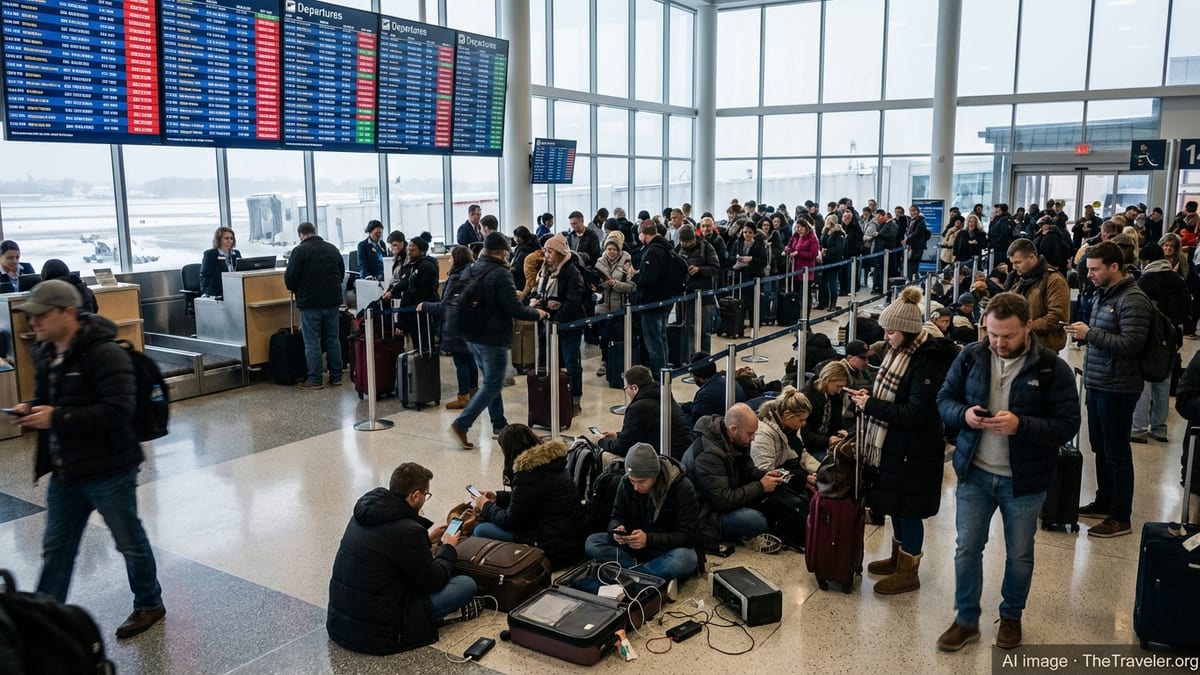
In the Northeast corridor, Boston, New York and Philadelphia have emerged as particular hotspots. At Boston Logan, tracking data on Saturday showed more than 140 delays and multiple cancellations touching airlines such as JetBlue, Republic Airways, Delta Air Lines and American Airlines, with services to and from Washington, New York and Florida especially affected. Crowded terminals and long lines at customer service desks became a familiar scene by midday.
New York’s three major airports, already recovering from this week’s historic blizzard, remain under pressure. LaGuardia and John F. Kennedy International have both seen recurring waves of delays as airlines reposition aircraft and crews, while Newark Liberty continues to experience knock-on issues from earlier weather and heavy traffic. Passengers on shuttle routes between New York, Boston, Philadelphia and Washington report rolling departure time changes, often announced only minutes before boarding.
Philadelphia International has not escaped the turbulence. After weather-related disruption and reduced visibility earlier in the week, the airport is now grappling with congestion driven by late-arriving aircraft from the Northeast and Midwest. Airlines are padding schedules where possible, but high load factors during the late-February travel period are limiting flexibility.
Denver, Miami and Other Hubs Struggle With Backlogs
Beyond the Northeast, major connecting centers such as Denver and Miami are also feeling the strain. At Denver International, delays have stacked up on routes linking the Mountain West with both coasts, particularly for passengers traveling on legacy carriers with tight banked schedules. Periods of low clouds and gusty winds have occasionally forced ground holds and slower arrival rates, amplifying the impact of late departures from the East.
In Miami, thunderstorms and intermittent low visibility over South Florida have slowed operations on popular domestic and Caribbean routes. Airlines have been forced to implement short-term ground stops and reroutes, which in turn push back rotation times for aircraft scheduled to operate evening flights into the Northeast and Midwest. Travelers bound for New York, Boston and Chicago from Miami and nearby hubs such as Fort Lauderdale report extended waits on the tarmac and crowded gate areas.
Other airports, including Orlando, Los Angeles, Chicago and San Francisco, are contending with smaller but still disruptive pockets of irregular operations. Analysts note that even a relatively modest number of cancellations and delays at a major hub can quickly cascade across the network, given how tightly timed many winter schedules are.
Major Airlines Grapple With Operational Strain
Among the airlines most visible in the current disruption are Delta Air Lines, American Airlines, United Airlines and JetBlue, alongside carriers such as Southwest, Alaska, Spirit, Air Canada and various regional partners. While 115 cancellations represent only a fraction of the thousands of daily flights operated nationwide, the concentration of those cancellations at key connection points magnifies the effect on travelers.
Several airlines have been recovering from a punishing week. Earlier in the week, a powerful blizzard grounded nearly one fifth of all US flights, with New York and Boston experiencing cancellation rates above 90 percent on peak days. Carriers have since been working to reposition aircraft, clear maintenance backlogs and rebuild crew schedules disrupted by weather and mandatory rest requirements.
Technical and staffing pressures are also playing a role. Delta recently acknowledged connectivity problems affecting some of its check-in and gate systems, slowing processing and boarding and contributing to higher-than-normal delay levels even on days with relatively favorable weather. Industry observers say similar operational vulnerabilities can quickly surface when traffic is heavy and recovery windows are short.
Regional affiliates such as Endeavor Air and Republic Airways, which operate flights on behalf of the major brands, add another layer of complexity. Delays across these feeder networks can strand passengers in smaller markets and choke the flow of connecting traffic into hub airports.
What Stranded Travelers Can Expect in the Coming Days
For passengers stuck in terminals from Boston and New York to Denver and Miami, the immediate priority is rebooking. Airlines are encouraging customers to check their flight status frequently through carrier apps and text alerts, and to use digital self-service tools to change itineraries where possible. With same-day seats limited on many routes, some travelers are being pushed to flights one or two days later, particularly on transcontinental and popular leisure services.
Many major carriers have issued or extended weather and operational waivers that allow affected travelers to change travel dates without additional change fees, though fare differences may still apply. Travel advisors recommend that passengers be flexible with departure times and even departure airports, as nearby secondary airports may offer more immediate options when primary hubs are backed up.
Looking ahead, airlines and airport officials expect lingering disruption to continue into the next few days as they work through aircraft rotations and crew schedules. If weather remains relatively stable and no major new systems move through the East Coast or Rockies, operations could gradually normalize, but any additional storms or technical issues could quickly reignite widespread delays.
For now, the advice to travelers is straightforward: build extra time into itineraries, monitor flights closely, and be prepared for last-minute gate changes or rolling departure times as the US air travel system battles through one of its most challenging late-winter stretches.