

More news on this day
Travel across the United States faced another turbulent day as major hubs including Atlanta, Boston, Chicago, Dallas, Houston, Los Angeles and New York collectively canceled around 135 flights and delayed more than 1,900 services, disrupting schedules at carriers such as Delta Air Lines, American Airlines, United Airlines, Spirit Airlines and JetBlue Airways.
Get the latest news straight to your inbox!
Major Hubs Buckle Under Mounting Operational Strain
Publicly available flight-tracking data for Sunday, April 12, 2026, show a broad pattern of disruption across the US aviation system, with the sharpest impacts concentrated at the country’s largest connecting hubs. Airports in Atlanta, Chicago, Los Angeles, Houston and the New York metropolitan area reported some of the heaviest combined totals of cancellations and delays, underscoring how quickly pressure in a few key markets can reverberate nationwide.
Reports indicate that Hartsfield-Jackson Atlanta International Airport and Chicago O’Hare International Airport have again featured prominently among the worst-affected facilities, reflecting their roles as primary connection points for Delta and United’s domestic and international networks. At the same time, Los Angeles International Airport and Houston George Bush Intercontinental Airport have seen rolling departure and arrival delays build through the day, straining gate availability and crew schedules.
In the Northeast, New York’s John F. Kennedy and LaGuardia airports, along with Boston Logan International Airport, have experienced dense clusters of late-running flights that added to the national tally of 1,910 delays. While outright cancellations reached 135 across the system, the far larger number of delayed services has had a more widespread impact on passenger itineraries, driving missed connections and forcing last-minute rebookings.
According to summaries compiled from flight-status dashboards and aviation data providers, the dispersion of disruption across hubs rather than a single epicenter has made recovery more complex. With aircraft and crew often out of their planned positions, even modest schedule changes at one airport have triggered knock-on effects hundreds or thousands of miles away.
Delta, American, United and Low-Cost Carriers Feel the Impact
The latest figures highlight how both full-service and low-cost carriers continue to face operational headwinds as they manage tight schedules and high demand. Data drawn from airline status pages and independent tracking platforms show that Delta, American and United have all registered clusters of delayed and canceled departures at their largest hubs, particularly in Atlanta, Dallas Fort Worth, Chicago, Houston and New York.
For Delta, disruption at Atlanta and key coastal gateways has translated into cascading delays across its domestic network, as late-arriving aircraft compress turnaround times. American has faced similar challenges at Dallas Fort Worth International Airport, where a high volume of narrow-body departures amplifies even minor timing disruptions, while United’s activity at Chicago O’Hare and Houston George Bush Intercontinental has contributed to rolling schedule adjustments across multiple regions.
Low-cost and leisure-focused carriers have not been spared. Publicly available information shows that Spirit Airlines and JetBlue Airways have contended with pressure on both point-to-point routes and connecting services, particularly in and out of major East Coast and Florida markets that rely heavily on tight timing to keep daily utilization high. For airlines that operate with leaner spare capacity, a wave of delays can quickly exhaust available slack in aircraft and crew rosters.
Recent performance data also suggest that while some airlines have improved their overall on-time metrics compared with earlier this year, isolated days of severe disruption remain a persistent risk. The current episode illustrates how a combination of adverse conditions and system congestion can temporarily erase gains in punctuality, even for carriers that typically rank near the top of on-time arrival tables.
Weather Systems, Congested Skies and Staffing Constraints
Meteorological outlooks for mid-April point to a series of storm systems tracking across the central United States, with forecasters highlighting the potential for severe thunderstorms, low cloud and shifting wind patterns that can all interfere with normal airport operations. When such weather intersects with the tightly scheduled traffic banks at major hubs, air traffic managers often have little choice but to slow arrival and departure rates, prompting ground holds and extended taxi times.
In addition to weather, structural factors continue to make the system vulnerable on busy days. High utilization of aircraft fleets, particularly during peak travel periods, leaves limited room to absorb unplanned delays or mechanical checks without triggering schedule reshuffles. Any constraint in available crews, whether through out-of-position pilots or duty-time limits, can further reduce flexibility just as passenger volumes remain elevated.
Air traffic management procedures can also contribute to localized bottlenecks. Flow-control measures that space aircraft more widely for safety during periods of convective weather or low visibility often mean fewer takeoffs and landings per hour at major airports. Once departure queues build at facilities such as Atlanta, Los Angeles or New York, the backlog can take much of the day to clear, especially when connecting banks are timed closely together.
Industry observers note that the cumulative effect of these pressures often manifests as a high volume of delays rather than a dramatic spike in cancellations. While fewer flights may be scrubbed entirely, the large number of services arriving late still has a significant impact on passengers, particularly those with onward connections or time-sensitive travel plans.
Traveler Experiences: Long Lines, Missed Connections and Limited Options
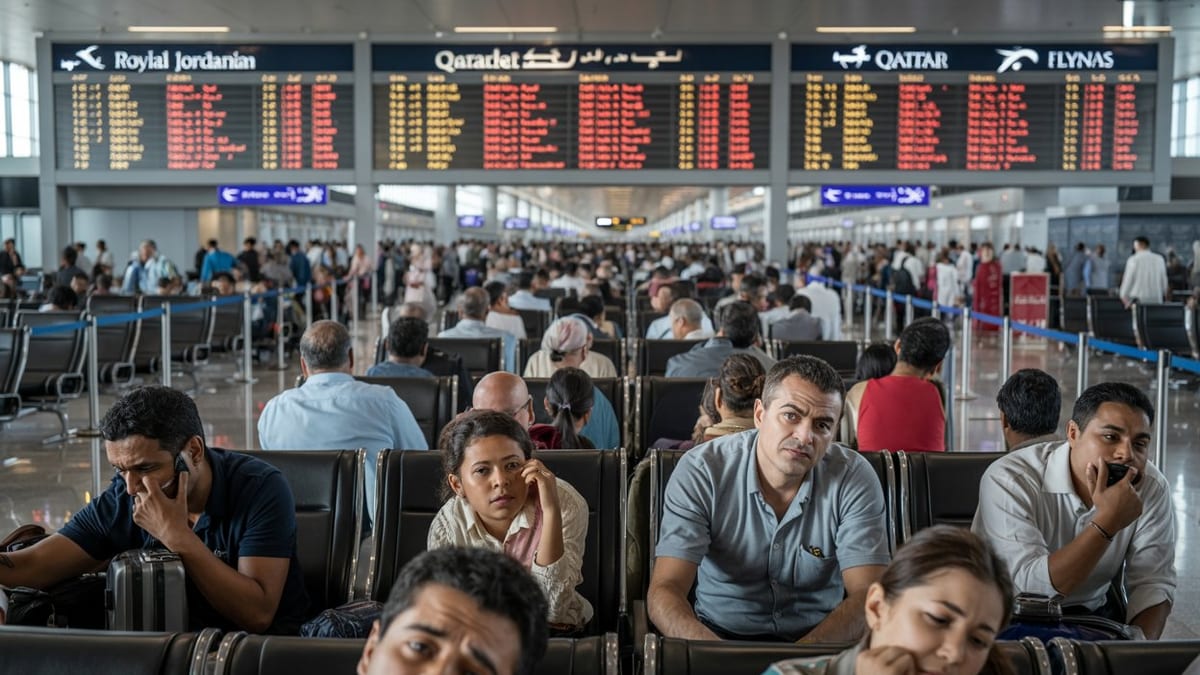
The operational picture has translated into a challenging experience for many travelers. Across multiple hubs, social media posts and local news coverage on Sunday highlighted long check-in and security lines during peak morning and early afternoon periods, along with crowded gate areas where passengers waited for updated departure times. Some travelers reported missed connections and overnight stays after relatively short initial delays compounded into multi-hour disruptions.
Publicly available guidance from airlines and aviation agencies consistently recommends that travelers build additional time into itineraries involving connections through the most delay-prone hubs, especially when traveling late in the day. Early-morning departures are often less vulnerable to the accumulated impact of system-wide delays, though they are not completely immune when aircraft and crews are still repositioning after previous disruptions.
As the current wave of delays unfolded, passengers with flexible plans were frequently encouraged by airline advisories and media coverage to consider voluntary rebooking or travel waivers where available, particularly on routes with multiple daily frequencies. Those who chose to travel as planned were often advised to monitor flight status closely and to be prepared for gate or terminal changes on short notice.
The pattern of disruption has also underscored the importance of contingency planning for travelers, including packing essential medications and a change of clothes in carry-on baggage, budgeting for potential overnight stays, and keeping digital boarding passes and notifications enabled to receive real-time updates on schedule changes.
Ongoing Resilience Challenges for the US Aviation Network
The latest figures of 135 cancellations and 1,910 delays form part of a broader trend of intermittent strain across the US aviation network in early 2026. Previous days this month have already seen episodes in which several hundred flights were either canceled or significantly delayed nationwide, suggesting that operational resilience remains uneven even as airlines seek to refine schedules and add capacity.
Industry analyses of recent months point to a system still adapting to post-pandemic travel patterns, with high demand on leisure-heavy routes and a gradual recovery in business traffic putting fresh pressure on some of the nation’s busiest hubs. At the same time, infrastructure and staffing limitations at airports and air traffic control facilities leave limited margin for error during periods of intense activity or adverse weather.
Looking ahead, forecasts for continued unsettled weather across portions of the central and eastern United States into mid-April raise the possibility of further localized disruptions. While not every storm system results in widespread delays, a series of closely spaced disturbances can erode the buffers that airlines typically rely on to stabilize operations between peak periods of stress.
For travelers, the current episode serves as another reminder that even on days when total cancellations are relatively modest, the combination of late departures, tight connections and congested hubs can significantly complicate journeys. As airlines and airports work to manage the immediate backlog, the wider challenge of building a more resilient system capable of absorbing shocks without cascading disruption remains at the forefront of the US air travel landscape.