

More news on this day
Hundreds of flights were cancelled and thousands more delayed across the United States today, as major hubs including Atlanta, Dallas, Chicago, Houston, Los Angeles and San Francisco reported 415 cancellations and 3,963 delays affecting American, Delta, Spirit, PSA, SkyWest and other carriers.
Get the latest news straight to your inbox!
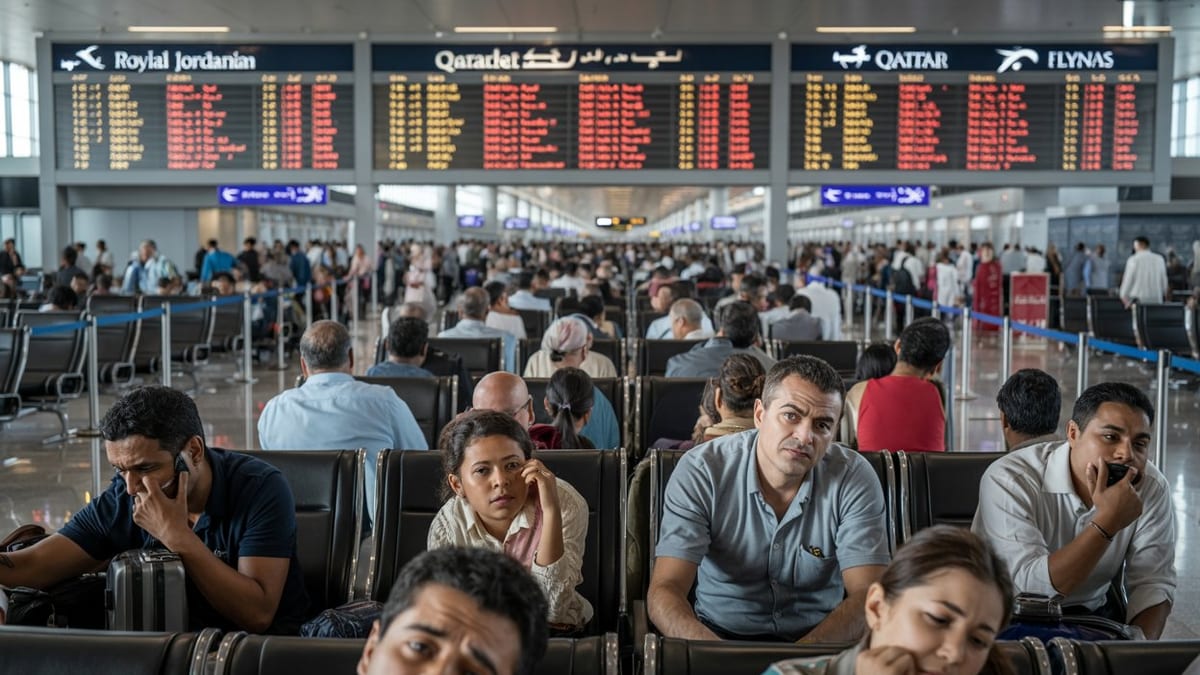
Major Hubs Struggle With Systemwide Disruptions
Publicly available tracking data shows that the disruptions are concentrated at the country’s busiest hubs, with Atlanta’s Hartsfield Jackson, Dallas Fort Worth, Chicago O’Hare, Houston George Bush Intercontinental, Los Angeles International and San Francisco International all reporting elevated levels of cancellations and delays. Secondary airports feeding into these hubs are also seeing knock on effects as aircraft and crews fail to arrive on time.
Figures compiled from live flight status boards indicate that around 415 flights were cancelled nationwide today, while close to 4,000 were delayed, leaving passengers facing long queues at check in counters, security lanes and customer service desks. While these numbers are below the most extreme disruption days recorded in recent years, they remain high enough to snarl connections and strand travelers across multiple time zones.
Operational pressures appear to be distributed unevenly across the network. Some hubs are reporting relatively modest cancellation counts but heavy delays, suggesting that airlines are prioritizing keeping schedules intact, even at the cost of significant departure and arrival slippages. Airports already known for chronic congestion, such as Atlanta, Los Angeles and San Francisco, appear particularly vulnerable when additional strain hits the system.
Industry data and prior government reports show that these large coastal and interior hubs play an outsized role in national aviation flows, meaning localized problems can quickly cascade. When a major airport reduces its arrival or departure rate, it often triggers holding patterns, ground stops and crew scheduling issues at outstations around the country.
American, Delta, Spirit, PSA and SkyWest Among Hardest Hit
According to aggregated carrier status information, a cross section of US airlines has been affected, from full service network operators to regional feeders and ultra low cost players. American Airlines and Delta Air Lines, both heavily reliant on their hub and spoke models in cities such as Dallas, Atlanta, Chicago and Los Angeles, are experiencing a mix of cancellations and prolonged delays as they work through backlogs.
Regional operators such as PSA Airlines and SkyWest, which fly under the brands of larger legacy carriers, have also seen significant disruption. Because these airlines operate many of the shorter connecting segments that feed major hubs, cancellations on their routes can make it harder for passengers to reach long haul flights, amplifying the overall impact of the day’s irregular operations.
Spirit Airlines and other low cost carriers are likewise contending with schedule challenges. With leaner spare capacity and tighter aircraft utilization, disruptions can be harder for these airlines to absorb, especially on peak travel days. Travelers on point to point routes that bypass major hubs are not immune, as aircraft and crews scheduled to operate those flights may be delayed elsewhere in the network.
Recent coverage of similar large scale disruption days has highlighted how shared airspace, shared infrastructure and interline connections mean that problems are rarely contained to a single brand. Even passengers booked on airlines with smaller cancellation totals can be delayed if they are connecting onto another carrier or if they are flying through a congested hub.
Weather, Congestion and Staffing Drive Ongoing Vulnerability
While the precise mix of causes varies from airport to airport, recent reporting on US aviation performance points to three recurring pressure points: severe weather, structural congestion at busy hubs and staffing challenges affecting airlines and air traffic control. Storm systems moving through key regions, especially around major connecting cities such as Dallas, Chicago and Houston, can quickly lead to traffic management programs that slow arrivals and departures.
Federal and congressional analyses in recent years have consistently ranked Atlanta, Dallas Fort Worth, Los Angeles and San Francisco among the airports generating the highest volumes of delay minutes nationwide. When those airports experience even minor disruptions, the reduced margin for error can translate into long queues for takeoff and arrival slots, further straining tight schedules.
At the same time, aviation industry coverage has drawn attention to staffing gaps at some air traffic control facilities and operational centers. Even when weather is manageable, any shortage of controllers or crew can force airlines and the aviation system to reduce throughput, spreading delays across multiple hubs. These underlying issues mean that individual bad days, like today’s wave of cancellations and delays, sit atop a broader pattern of vulnerability.
Experts cited in recent transport reports also note that increased leisure demand, especially around holidays and long weekends, has pushed flight volumes closer to pre pandemic levels. On peak days, this leaves less flexibility for airlines to reposition aircraft or recover quickly when disruptions occur.
Knock On Effects for Passengers Across the Country
The operational problems at major hubs are rippling outward to regional and secondary airports, affecting travelers who never set foot in Atlanta, Chicago or Los Angeles. When aircraft arrive late or are taken out of rotation, smaller cities can see last minute schedule changes, downgauged aircraft or abrupt cancellations, even in the absence of local weather issues.
Passengers on multi segment itineraries are at particular risk of missed connections when thousands of flights across the system are running behind schedule. A delay of less than an hour leaving a regional airport can easily turn into an overnight stay if the onward flight from a hub has departed or if crew duty time limits are reached before a replacement aircraft can operate.
While many carriers have developed more flexible rebooking tools and same day change options, those features provide limited relief when large numbers of travelers are vying for a shrinking pool of available seats. During heavy disruption days, alternative flights may also be delayed or oversold, making it harder for stranded passengers to find timely options.
Travel industry analysts note that the effects of a disruption day often linger beyond the calendar date itself. Aircraft and crews displaced by cancellations today may not be back in position for early morning departures tomorrow, creating a secondary wave of delays and operational adjustments that can affect business travelers and early bank departures.
What Travelers Can Do on High Disruption Days
On days when cancellations and delays climb into the thousands, travel experts generally advise passengers to monitor flight status frequently and to keep airline apps, email and text alerts enabled. Because schedules can change rapidly, real time information from carrier systems is often the quickest way to learn about gate changes, revised departure times or automatic rebooking.
Passengers already at the airport often fare better if they simultaneously use digital tools and in person assistance. While airport customer service lines can be long during mass disruptions, airline mobile apps and kiosks may offer options to move to an earlier or later flight, or to reroute through a less congested hub. Checking both can increase the chances of securing a workable alternative.
Travel planners also recommend building more buffer time into itineraries when connecting through historically congested hubs such as Atlanta, Dallas, Chicago, Houston, Los Angeles or San Francisco, especially during peak travel seasons. Longer connection windows can reduce the risk of misconnecting when departure banks suffer rolling delays.
For upcoming trips, some advisers suggest early morning departures where possible, since first bank flights are often less exposed to upstream delays from earlier segments. As today’s disruptions illustrate, however, no time slot or routing is completely immune when nationwide cancellations and delays climb to the levels seen across the United States.