

More news on this day
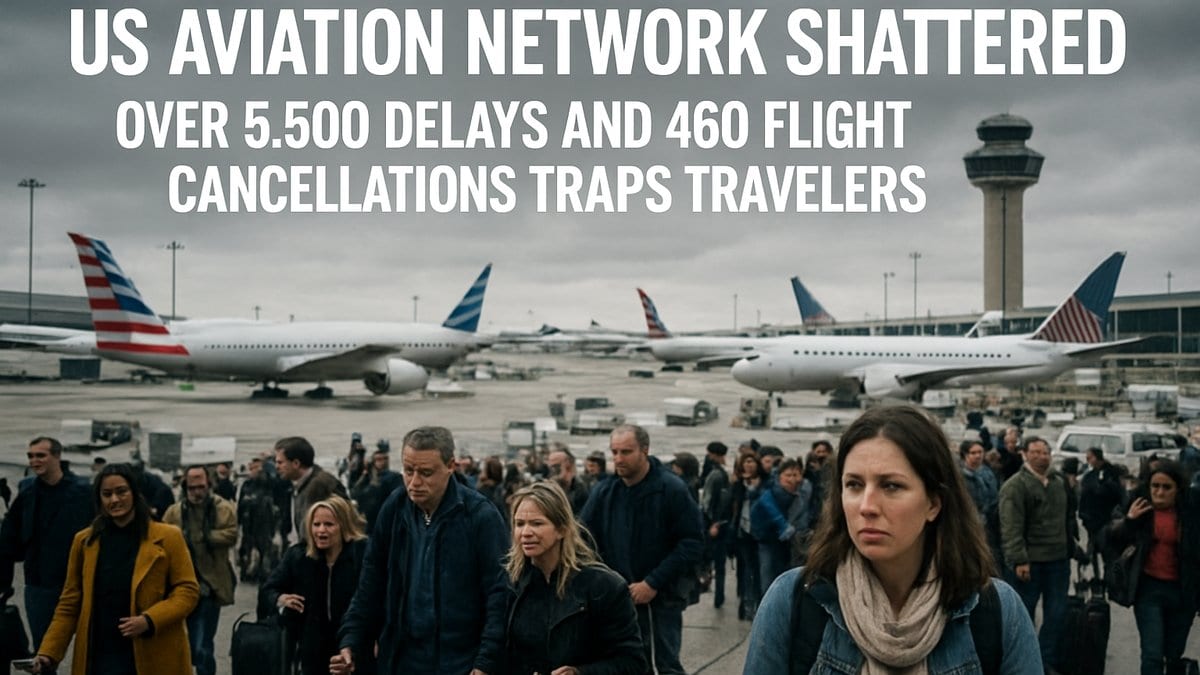
The US air travel system has been hit by a fresh wave of disruption, with more than 5,500 flight delays and at least 460 cancellations reported across the country in a single turbulent day, stranding passengers at major hubs and exposing persistent vulnerabilities in the nation’s aviation network.
Get the latest news straight to your inbox!
Systemwide Disruptions Hit Major Hubs
Publicly available flight tracking data shows that the latest disruption has cascaded through some of the country’s busiest airports, with Chicago O’Hare, Dallas Fort Worth and Phoenix Sky Harbor among the hardest hit. A combination of severe spring weather, congestion and rolling knock on effects from earlier schedule problems has left aircraft and crews out of position, forcing airlines to delay or cancel departures across multiple regions.
Coverage from national travel outlets indicates that on the peak day of disruption, more than 5,500 flights within, into or out of the United States were delayed, while around 460 were canceled outright. The pattern mirrors earlier waves of disruption where a bad operational day at a handful of hubs spread across the entire domestic network over subsequent hours.
Reports point to particularly acute problems for large carriers that rely on tightly banked hub schedules. When storms or ground stops slow operations early in the day, aircraft and crews can fall out of sequence quickly, leaving later flights with no available plane or qualified crew even after weather conditions improve.
Travelers have reported lengthy waits on tarmacs and in terminal queues as airlines work through rebooking backlogs. According to published coverage, some passengers have faced missed connections at coastal gateways, with onward flights already full due to school break and early summer demand.
Weather, Staffing and Aging Infrastructure Combine
While severe thunderstorms and shifting wind patterns triggered many of the initial delays, analysts note that weather alone does not fully explain the scale of the latest breakdown. Recent reporting on US aviation performance highlights chronic air traffic control staffing shortfalls, capacity constraints at key facilities and infrastructure upgrades that have lagged behind demand growth.
In previous episodes, technology outages and staffing gaps at busy control centers have sharply reduced the number of aircraft that can safely move through crowded airspace. Industry data from recent years shows that when traffic management programs are imposed at congested hubs, delays can climb rapidly into the thousands, even if only a fraction of flights are canceled outright.
Government reports on on time performance also show that so called “late arriving aircraft” has become a major driver of downstream delays. Once an aircraft starts the day behind schedule because of earlier congestion, it tends to carry that delay throughout its sequence of flights, limiting airlines’ ability to recover without trimming schedules.
Travel industry analysts argue that the latest wave of 5,500 plus delays and hundreds of cancellations underlines how thin the margin for error has become. A single day of intense storms can intersect with staffing shortages or equipment constraints, creating conditions where a localized disruption quickly becomes a nationwide event.
Airlines Struggle to Rebalance Schedules
Publicly available information suggests that some carriers have resorted to tactical schedule cuts at especially constrained hubs in recent months in an effort to reduce the risk of repeated meltdowns. For example, previous network adjustments at Newark Liberty and other busy airports have sought to dial back peak movements while demand remains high.
On the latest day of turmoil, however, even these efforts were not enough to prevent widespread disruption. Published coverage indicates that one major low cost carrier logged close to 1,000 delays at airports including Chicago Midway, New York LaGuardia and Los Angeles, while legacy carriers faced hundreds of late departures and dozens of cancellations across their hub systems.
Rebalancing the network after such a shock can take days. Aircraft and crews must be repositioned, maintenance windows rescheduled and duty time regulations observed. Industry observers note that airlines may prioritize restoring core trunk routes and high revenue business markets first, leaving secondary city pairs to see longer lasting schedule gaps.
The ripple effects can also reach into international operations. When domestic connections fail to feed long haul departures, some transatlantic and transpacific flights may depart with heavy delays or reduced passenger loads, adding further strain to already tight global networks.
Travelers Face Long Lines and Limited Options
For travelers, the immediate impact of more than 5,500 delays and 460 cancellations has been felt in crowded gate areas, customer service lines and packed rental car centers. Reports from consumer travel platforms describe families sleeping in terminals, business travelers scrambling to rebook missed meetings and leisure passengers searching for scarce hotel rooms near major airports.
Published advice from travel experts emphasizes the importance of acting quickly when large scale disruption hits. Same day rebooking options tend to vanish within hours once it is clear a wave of cancellations is underway, particularly on popular routes and during peak leisure travel periods. Travelers with flexible routing options through less congested hubs may have better odds of finding an alternative same day seat.
Some passengers are also turning to nearby secondary airports in search of relief. However, when disruption is national in scope, even smaller fields can see mounting delays as airlines reroute aircraft and concentrate remaining capacity on the busiest corridors.
Travel insurance and credit card protections have become a point of focus as well. While coverage terms vary, observers note that policies tied to weather and carrier controllable delays can help offset the cost of unexpected hotel nights, meals and ground transport during protracted disruptions.
Renewed Scrutiny of US Aviation Resilience
The latest breakdown of the US aviation network is renewing scrutiny of how well prepared the system is for an era of more volatile weather and sustained high demand. Recent history has included a series of high profile events, from technology outages affecting critical flight planning systems to global IT incidents that cascaded into mass cancellations for individual airlines.
Transportation data released over the past year shows that while overall cancellation rates have at times improved from the worst of the pandemic era, passengers still face significant variability in reliability across carriers and seasons. Peaks in disruption often coincide with busy holiday periods and shoulder season storm patterns, when spare aircraft and crew capacity is limited.
Policy discussions have increasingly focused on modernizing air traffic control technology, boosting staffing at key facilities and encouraging more realistic scheduling practices at the most congested airports. Analysts suggest that without a combination of infrastructure investment and operational reforms, episodes featuring thousands of delays and hundreds of cancellations in a single day are likely to remain a recurring feature of US air travel.
For now, travelers are being urged by consumer advocates and travel publications to build more buffer time into itineraries, favor early morning departures when possible and keep a close watch on developing weather systems that can trigger the next wave of nationwide disruption.