

More news on this day
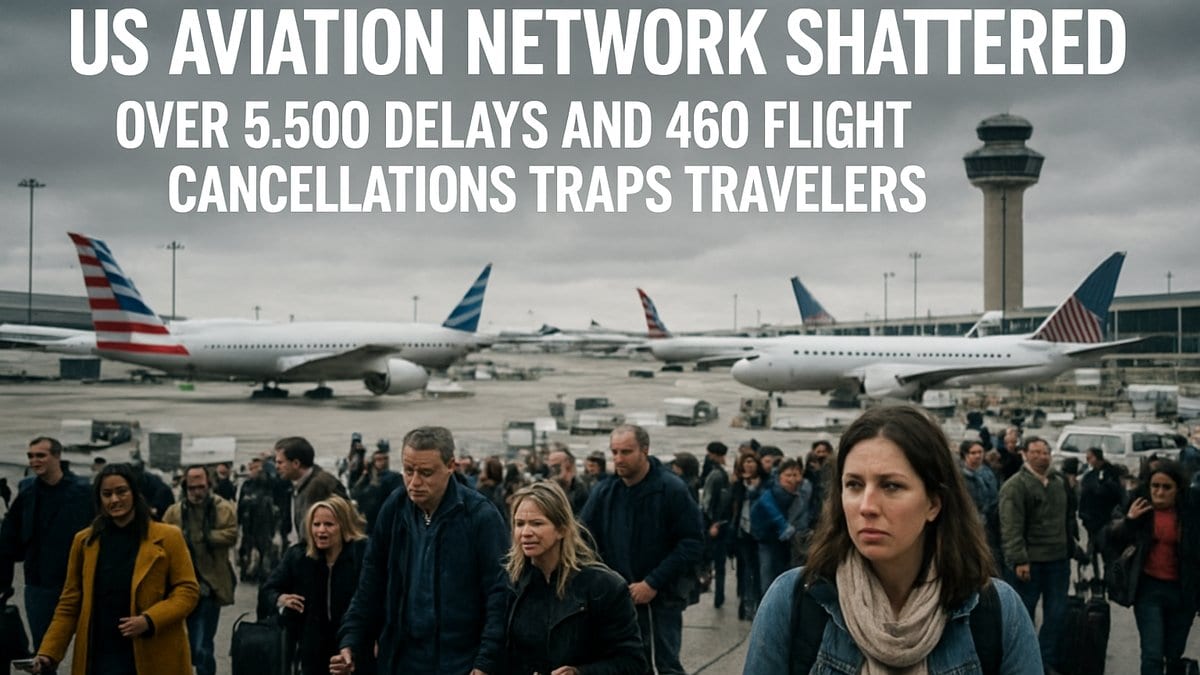
Thousands of passengers across the United States are facing missed connections, overnight airport stays and abandoned itineraries after a fresh wave of aviation disruption produced more than 5,500 flight delays and about 460 cancellations in a single 24 hour period at the height of the Easter travel rush.
Get the latest news straight to your inbox!
Aviation Network Strains Under Holiday Demand
Publicly available flight tracking dashboards and published aviation coverage for early April 2026 show that the latest turbulence in the US system coincided with one of the busiest travel periods of the spring. Data compiled from national status boards indicate that, over a recent 24 hour window, around 460 flights were cancelled while roughly 5,500 were delayed across US airports, creating a rolling backlog that rippled well beyond the immediate storm zones.
Industry forecasts had already pointed to intense pressure this season, with trade groups projecting record passenger volumes through March and April as leisure and business travel continued to climb above pre pandemic levels. That surge in demand left little room for error in airline schedules or airport operations, meaning even modest disruptions could swiftly cascade into widespread delays.
Aviation analysts note that the pattern seen in early April has become familiar. Weather may act as the trigger, but crowded hubs, tight aircraft utilization and complex connection patterns frequently amplify the initial shock, turning localized issues into a nationwide event that affects travelers far from the original source of disruption.
Storm Systems, Low Clouds and Runway Works Combine
Reports from flight status services and operational notices show that unsettled spring weather over Texas and the broader Southeast was a primary driver of the latest disruption, with thunderstorms prompting ground delay programs at several major hubs. These measures, which slow the rate of arrivals and departures to maintain safety margins, immediately reduced airport capacity and stretched schedules throughout the day.
At the same time, low cloud ceilings and visibility restrictions along parts of the West Coast, combined with ongoing runway works at key airports, further constrained the system. Coverage from aviation focused outlets describes how San Francisco and Denver, in particular, faced periodic flow restrictions that forced airlines to pad flight times or hold aircraft on the ground while air traffic managers sequenced arrivals.
The timing proved especially punishing. With airlines operating near peak utilization for the Easter period, many carriers had limited spare aircraft or crew available to recover from early disruption. Once morning flights began departing late from weather affected hubs, knock on delays spread into afternoon and evening banks, extending the chaos for travelers on both domestic and international connections.
Chicago, Texas and the Northeast Bear the Brunt
Published coverage of the Easter travel weekend highlights Chicago O Hare as one of the airports most exposed to the latest wave of disruption, echoing patterns seen in prior holiday periods. The airport’s role as a central node in multiple domestic and international networks means that any instability in the Midwest can send shock waves across coast to coast itineraries.
Simultaneously, hubs in Texas and the broader Southeast, including those serving major network carriers, faced convective storms and airspace management constraints that disrupted tightly timed connection complexes. Flight boards at airports in states such as Texas, Georgia and the Carolinas showed mounting delays through the afternoon peak as arrival metering slowed down inbound traffic and forced airlines to shuffle departure slots.
Further east, busy coastal and Mid Atlantic airports reported growing queues of delayed departures as aircraft arriving late from the interior struggled to get back on schedule. Aviation trackers and local media accounts indicate that even airports spared the worst of the weather often experienced secondary disruptions as they received late running flights and crews from the most heavily affected hubs.
Why Airlines Prefer Delays Over Cancellations
Recent analyses by transportation researchers and industry commentators suggest that airlines are increasingly opting to delay flights instead of cancelling them outright when the network comes under strain. Publicly discussed operational strategies indicate that carriers see extended delays as a way to keep aircraft and crews in roughly the right place for subsequent rotations, even if passengers on the affected flights face long waits.
This approach can keep headline cancellation numbers lower, but it has side effects. Long ground holds and late arrivals can push crew duty times toward regulatory limits, leading to last minute cancellations later in the day when staff are no longer permitted to operate additional sectors. Travelers then encounter a mix of protracted delays and sudden cancellations that can be difficult to predict from early morning schedules.
Government statistics and consultation documents on airline performance published over the past year underline that the national aviation system continues to experience a significant share of disruptions attributed to operational factors beyond extreme weather alone. Tight turn times, high aircraft utilization and staffing pressures in both airline operations and air traffic control can all magnify the effect of storms or low visibility events when they occur.
Travelers Confront Domino Effect Across the Network
For passengers on the ground, the distinction between a delay and a cancellation often matters less than the practical consequences. The combination of more than 5,500 delayed flights and about 460 cancellations in the latest disruption left many travelers contending with missed connections, rebooked itineraries and unexpectedly long days at the airport.
Accounts gathered from aviation forums and local news reports describe terminals filled with travelers waiting out rolling gate changes, as well as long lines at customer service desks as people sought alternative routings. In some cases, the high load factors typical of the Easter period meant that rebooking options were limited, forcing travelers to accept indirect routings, longer layovers or departures pushed back to the following day.
Transportation policy discussions underway in Washington and among consumer advocates continue to focus on how best to protect passengers when large scale disruptions occur. While the latest wave of delays and cancellations has not matched the most extreme meltdowns of recent years, it underscores how quickly the US aviation network can seize up when severe weather and structural constraints collide during a peak travel window.