

More news on this day
Thousands of air travelers across the United States faced sudden schedule upheaval on Saturday as at least 825 flights were canceled nationwide, snarling operations for Delta Air Lines, Southwest, American Airlines, United, Qatar Airways and other carriers at major hubs in Atlanta, Dallas, Chicago, Los Angeles, Miami and New York.
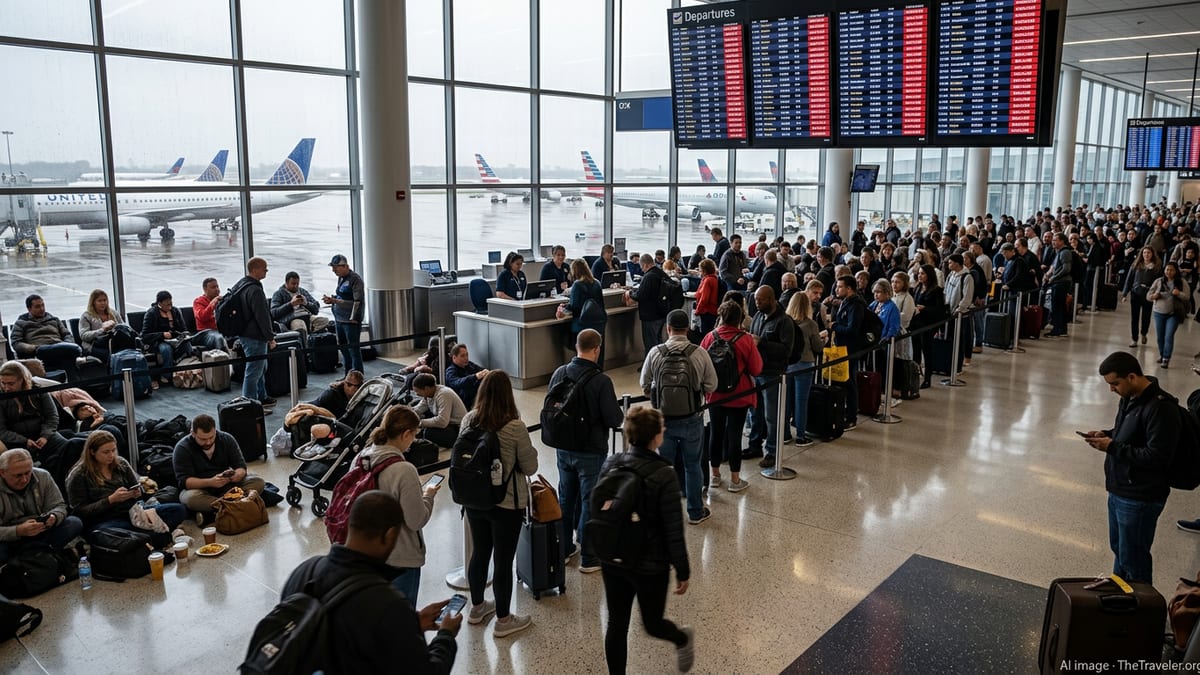
Major Hubs Struggle Under Wave of Cancellations
The latest wave of disruption concentrated heavily on the country’s largest connecting airports, where a mix of severe weather, operational bottlenecks and knock-on effects from earlier system strains converged. Data compiled from flight-tracking services and airport reports indicate that Hartsfield-Jackson Atlanta International, Dallas-Fort Worth International, Chicago O’Hare International, Los Angeles International, Miami International and the New York area’s main hubs together accounted for the bulk of the 825 cancellations and several thousand delays recorded today.
Chicago O’Hare once again emerged as one of the hardest-hit facilities, with hundreds of delays and well over 200 cancellations rippling through American Airlines and United’s busy hub operations, along with regional affiliates. Routes connecting New York, Los Angeles, Dallas, Denver, Atlanta, Seattle, Miami and Washington, D.C., were particularly exposed as aircraft and crews fell out of position across the network.
In the Southeast, flights into and out of Atlanta and Miami suffered rolling schedule changes as storms and low ceilings pushed controllers to slow traffic. The resulting congestion meant aircraft already en route were held in patterns or diverted, while outbound departures were pushed back repeatedly, leaving departure boards plastered with red “canceled” and “delayed” notices.
On the West Coast, operations at Los Angeles International and other California gateways came under renewed strain as delays emanating from the Midwest and East Coast hubs arrived in waves. Even airports reporting relatively few outright cancellations, such as San Francisco International, were grappling with dozens of late-running departures and arrivals as ground crews, gates and runways struggled to absorb out-of-sequence flights.
Delta, Southwest, American, Qatar and United Among Hardest Hit
The disruptions cut across the major U.S. carriers and key international partners. Delta Air Lines, which operates one of its largest hubs in Atlanta, faced rows of canceled and delayed departures as weather and traffic management initiatives forced schedule trims and crew reassignments. Travelers reported long lines at customer service desks as agents attempted to rebook passengers onto later flights that themselves remained vulnerable to further delays.
Southwest Airlines continued to see heavy operational pressure, particularly at its core Midwest and Texas bases. Travel alerts and rolling weather challenges around Chicago, Dallas and other heartland cities drove hundreds of delays and scores of cancellations over recent days, with today’s totals adding to a mounting backlog of displaced passengers and out-of-position aircraft.
American Airlines and United, which jointly dominate Chicago O’Hare and operate major hubs in Dallas-Fort Worth and Newark respectively, also reported significant schedule disruptions. Regional partners such as SkyWest and Envoy Air, which feed passengers into the big carriers’ networks from smaller U.S. cities, were forced to scrub numerous flights, extending the impact well beyond the nation’s largest gateways.
International operations were not spared. Qatar Airways and several other long-haul carriers recorded cancellations and delays on U.S.-bound and transatlantic services, particularly at Chicago, New York and San Francisco. While the number of individual long-haul cancellations remained modest compared with domestic cuts, each affected wide-body flight represented hundreds of stranded or rerouted passengers and missed onward connections.
Passengers Face Overnight Strands and Missed Connections
For travelers on the ground, today’s statistics translated into missed weddings and funerals, lost vacation days and yet another test of patience with the country’s fragile aviation system. Terminal concourses at some of the worst-affected hubs were dotted with families stretched out on jackets and carry-on bags, camping near power outlets while they waited for rebooking options to materialize.
At Chicago O’Hare and Dallas-Fort Worth, many passengers found that the next available seats on their airline were not until late Sunday or even Monday, particularly on popular routes to Florida, California and major East Coast cities. Those who could afford it turned to rival carriers for last-minute one-way tickets, though with multiple airlines cutting flights, alternative options filled quickly and fares surged.
Airlines reminded stranded customers that they are generally not required under U.S. rules to provide hotel rooms or meal vouchers when cancellations are caused by weather or air traffic control constraints, a distinction that often frustrates passengers facing unexpected overnight stays. Consumer advocates, however, urged affected travelers to ask for written confirmation of the cause of their cancellation and to retain all receipts in case future reimbursement avenues open or company policies allow limited compensation.
At New York’s major airports, the sharp reduction in departing flights led to lengthy queues at security and check-in as passengers arrived early only to find their flights delayed by several hours or removed from the schedule altogether. Many international passengers, including those on disrupted Qatar Airways and other foreign-flag services, needed assistance with visa and transit rules after missed connections complicated their entry or onward travel plans.
Weather, War and System Strain Drive a Volatile Aviation Landscape
Today’s cancellations come against a backdrop of broader volatility across global aviation. Severe storms sweeping across parts of the Midwest and Southeast have repeatedly triggered large clusters of delays and cancellations in recent days, especially at Chicago, Denver, Dallas, Miami and Orlando. Forecasters have warned that shifting storm tracks, pockets of snow and strong winds will continue to pose operational challenges for airlines and air traffic controllers through the weekend.
At the same time, the ongoing conflict involving Iran has led to more than 15,000 flight cancellations worldwide in recent days, as airlines adjust routings and suspend services over parts of the Middle East and surrounding regions. While most of those disruptions are occurring far from U.S. soil, the global reshuffling of aircraft and crews is adding complexity to long-haul planning and increasing the risk that even routine operational hiccups can cascade into major schedule breakdowns.
Within the United States, recent government and industry reviews have highlighted how closely spaced schedules, limited spare aircraft and chronic staffing tightness across pilots, flight attendants, air-traffic control and ground operations can magnify the impact of any single weather or technical event. As a result, what might once have been a localized disruption is now more likely to trigger nationwide knock-on effects, like those seen with today’s 825 cancellations.
Industry analysts note that while airlines have made progress since the worst of the pandemic-era meltdowns, the system remains fragile at peak demand and during overlapping stressors such as regional storms and international crises. The pattern playing out this week, they say, demonstrates that passengers should brace for a choppy spring travel season, particularly around busy holiday and school-break periods.
What Travelers Can Do if Their Flight Is Canceled
With U.S. carriers and international partners alike navigating today’s turbulence, travel experts are urging passengers to take a more proactive approach to managing their journeys. The most immediate step for anyone whose flight is delayed or canceled is to use airline mobile apps and websites to request rebooking, rather than waiting in long airport lines. In many cases, digital channels display same-day alternatives and next-available flights more quickly than agents can process requests at a crowded gate.
Travelers are also being advised to monitor conditions not only at their departure and arrival airports, but also at major hubs where their aircraft or crew may be originating. A storm over Chicago or Dallas, for example, can upend flights hours later in Los Angeles, Miami or New York when aircraft fail to arrive on time. Building longer connection times into itineraries and favoring early-morning departures, which are less vulnerable to the day’s accumulating delays, can reduce the risk of misconnecting.
Consumer advocates recommend that passengers familiarize themselves with airline-specific customer service commitments, which outline when vouchers, hotel rooms or meal credits may be offered during irregular operations. Even when such assistance is not legally mandated, some carriers will voluntarily provide support during large-scale disruptions in order to preserve customer loyalty, especially for those booked in premium cabins or holding frequent flier status.
For now, with more than 800 flights already canceled and weather and operational pressures still evolving, airlines and airports across the United States are bracing for another difficult day. Travelers are being urged to check their flight status repeatedly, keep critical items such as medications and travel documents in carry-on bags, and be prepared for last-minute gate changes and extended waits as the country’s busiest hubs work to recover.