

More news on this day
Air travel across the United States and beyond is facing fresh turmoil after a deadly collision at New York’s LaGuardia Airport led to widespread cancellations and delays on Monday and Tuesday, disrupting more than 130 flights on major carriers including Delta Air Lines, United Airlines, American Airlines and Southwest Airlines and affecting routes as far afield as Dallas, Newark, Vancouver and Amsterdam.
Get the latest news straight to your inbox!
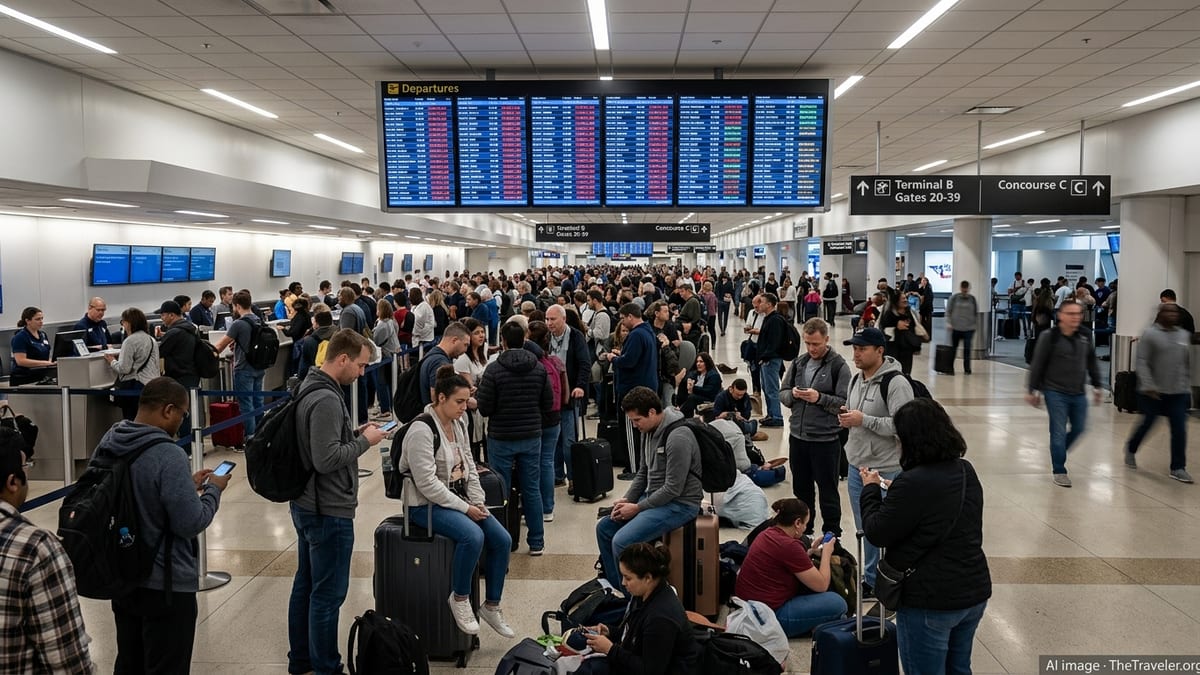
LaGuardia Collision Triggers Ground Stop and Nationwide Knock-On Cancellations
Published reports indicate that the current wave of disruption is closely tied to the fallout from Air Canada Express Flight 8646, which collided with an airport firefighting truck while landing at LaGuardia Airport on the night of March 22, 2026. The aircraft’s cockpit and forward fuselage were destroyed, and investigators from multiple agencies are examining how the ground vehicle came to be on the active runway as the regional jet touched down.
According to public flight-tracking data and airline advisories, the incident prompted a full field closure and subsequent ground stop at LaGuardia on March 23, with restrictions carrying into March 24 as investigators continued work around the crash site and airport crews reassessed runway and taxiway operations. Travel waiver announcements circulated widely among frequent flyer communities, describing New York LaGuardia as closed for much of Monday and warning that recovery would take days rather than hours.
Those operational constraints at a key New York hub quickly cascaded into a broader wave of cancellations. While the core disruption is focused on LaGuardia, the combination of diverted aircraft, displaced crews and tight connection windows has significantly reduced schedule reliability across many domestic and cross-border routes.
Major US Carriers Cancel Flights and Trim Schedules
Across the United States, publicly available data for March 23 and March 24 shows more than 130 flights canceled or severely delayed on large network carriers, including Delta, United, American and Southwest. Many of these flights were not operating to or from LaGuardia itself but were nonetheless affected by aircraft and crew rotations tied to New York flying.
Reports shared by travelers highlight cancellations on routes linking LaGuardia with major hubs and business destinations, as well as knock-on disruptions at airports such as Newark Liberty, Dallas Fort Worth and Dallas Love Field. Passengers describe same-day turn flights being pulled from the schedule with little notice, along with rolling delays that stretched into outright cancellations as aircraft missed their arrival slots or flight crews hit duty time limits.
The impact has been particularly visible on early morning and late evening departures, which airlines often rely on to reposition aircraft after a disrupted day. With LaGuardia movements constrained and New York–area airspace at reduced capacity, carriers have been trimming marginal flights, consolidating passenger loads and prioritizing long-haul and high-demand services, leaving some shorter domestic segments without service for extended periods.
Ripple Effects Reach Dallas, Newark, Vancouver and Amsterdam
The network knock-on from LaGuardia’s reduced operations has extended well beyond the New York region. In Texas, travelers at Dallas Fort Worth and Dallas Love Field have reported a mix of cancellations and lengthy delays on flights that rely on inbound aircraft previously scheduled to pass through LaGuardia or other constrained East Coast airports. Aircraft that were meant to arrive from New York have instead been diverted or remain out of position, forcing airlines to reshuffle limited spare capacity.
At Newark Liberty, one of the primary alternate gateways for the New York metropolitan area, ground stops and flow-control measures have periodically slowed arrivals and departures as additional traffic is rerouted from LaGuardia. This has resulted in crowded gate areas, tighter connection times and a higher risk of missed onward flights for passengers attempting to bypass LaGuardia by rebooking through Newark.
The disruption has also spilled across borders. Flights connecting through LaGuardia and Newark to Western Canada and Europe have felt the strain, with itineraries to cities such as Vancouver and Amsterdam experiencing delays, missed connections and, in some cases, outright cancellations when inbound transcontinental or transatlantic aircraft could not depart on time from the New York area. Passengers on multi-leg journeys have reported being rebooked onto next-day departures or rerouted through alternate hubs like Toronto, Montreal, Chicago and Atlanta.
Passengers Face Long Lines, Limited Rebooking Options and Overflowing Customer Service Channels
For travelers caught mid-journey, the operational disruption has led to long queues at airport customer service counters and crowded gate podiums. Social media posts and travel forum accounts describe passengers waiting hours to speak with airline representatives, only to learn that same-day rebooking options are scarce due to limited remaining seat inventory and aircraft already operating near capacity during the busy spring travel period.
With phone and chat channels overwhelmed, many customers have turned to airline mobile apps and websites in attempts to self-rebook, often encountering rapidly changing availability as flights fill or are further adjusted. Some travelers have reported that their original flights were shifted to the following day without clear advance notice, leaving them to arrange last-minute hotel stays near airports or seek alternative transportation at personal expense.
Stranded passengers at LaGuardia, Newark, Dallas and other affected airports also face secondary complications: expiring parking reservations, missed cruises or tours, and disrupted work schedules. Travel insurance providers and credit card issuers with trip-interruption benefits are expected to see an uptick in claims related to accommodation, meals and replacement flights, although reimbursement rules vary widely.
What Travelers Should Expect in the Coming Days
Industry analysts note that recoveries from major airport closures can take several days, even after runways are fully reopened, due to the complex web of aircraft rotations and federal crew-rest requirements. With LaGuardia only gradually restoring normal operations and New York–area airspace still under close scrutiny after the collision, travelers can expect lingering delays and occasional short-notice cancellations through much of the week.
Public dashboards that track cancellations and delays suggest that the biggest concentration of problems remains on routes touching LaGuardia and nearby airports, but disruptions are likely to continue appearing in less obvious parts of carrier networks as airlines rebalance capacity. Flights that rely on tightly timed aircraft turns or connect multiple constrained hubs remain particularly vulnerable.
Travel experts recommend that anyone flying over the next several days build extra time into their plans, especially when connecting through New York, Dallas or other major hubs. Monitoring flight status frequently via airline apps, verifying terminal and gate information, and considering earlier departures where possible can reduce the risk of missed connections. Travelers booked on multi-leg itineraries to long-haul destinations such as Vancouver or Amsterdam may wish to discuss alternative routings that avoid the most affected hubs, even if it means a longer journey.