

More news on this day
Hundreds of thousands of travelers across the United States and Canada are facing cascading disruption after a widespread technology failure triggered thousands of flight cancellations and delays at major carriers, snarling air traffic through some of North America’s busiest hubs.
Get the latest news straight to your inbox!
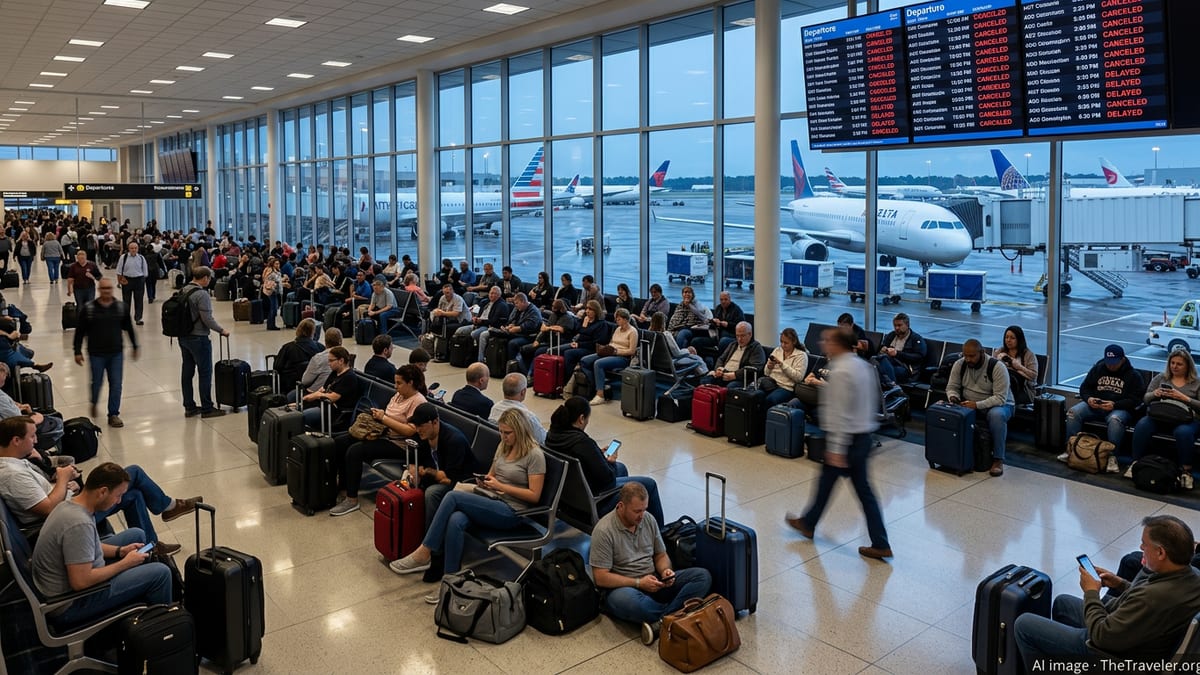
Major Airlines Grapple With System Failures
Publicly available flight-tracking and industry data show that a faulty software update tied to widely used cybersecurity tools caused Microsoft Windows systems to fail across multiple sectors, with commercial aviation among the hardest hit. The resulting outage led major North American airlines including American Airlines, Delta Air Lines, United Airlines, Air Canada and several smaller carriers to halt or sharply curtail operations as critical dispatch, check-in and crew-management systems went offline.
In the hours after the failure, ground stops and rolling cancellations rippled through airline networks, quickly topping several thousand flights within, into and out of the United States. Information compiled by government briefings and aviation analytics firms indicates that American, United and other carriers began to stabilize operations within about a day, while Delta suffered an extended disruption, ultimately canceling more than 7,000 flights over several days and affecting an estimated 1.3 million passengers.
Reports from congressional research staff and independent aviation analysts describe the event as one of the most extensive airline IT breakdowns since the Southwest Airlines scheduling crisis of 2022. The combination of the global software error and airline-specific vulnerabilities exposed how dependent modern flight operations have become on tightly integrated digital platforms, leaving little room for manual workarounds when core systems fail.
While some carriers such as Southwest reported limited operational impact, most large network airlines experienced at least several hundred cancellations and widespread delays as they worked through aircraft repositioning, crew reassignments and customer rebooking. Industry observers note that the differing recovery timelines underscore significant variation in backup procedures, redundancy and legacy technology across airline fleets and corporate IT environments.
Hubs From Chicago to Miami Buckle Under Strain
The outage’s practical impact was felt most acutely at the nation’s biggest connecting hubs, where disrupted flights and misaligned crews quickly produced gridlock. Data from aviation tracking services and airport operations reports highlight severe knock-on effects at Chicago O’Hare, New York’s major airports, Atlanta, Miami, Orlando and the Washington, D.C., region.
At Hartsfield-Jackson Atlanta International Airport, Delta’s primary hub and the world’s busiest airport by passenger traffic, hundreds of arrivals and departures were scrubbed or significantly delayed over consecutive days. Travelers described terminal corridors crowded with stranded passengers, long lines at rebooking counters and baggage areas overwhelmed by piles of unclaimed luggage as aircraft continued to move while checked bags remained out of position.
In the Northeast, cancellations mounted at New York’s John F. Kennedy, LaGuardia and Newark airports, where American, Delta and United maintain large operations. Publicly available flight logs show that even as some carriers lifted ground stops, residual delays persisted as aircraft and crews were out of place. Similar scenes played out at Chicago O’Hare, a critical connecting point for both American and United, where rolling disruption forced some travelers to wait hours simply to rebook onward journeys.
Florida’s tourism gateways were also heavily affected. Orlando International and Miami International, which handle a mix of domestic, international and leisure traffic, recorded high cancellation volumes, complicating travel plans at the height of peak vacation periods. Passenger accounts and airport advisories from these cities describe family groups sleeping in gate areas, long queues for rental cars and hotels near the terminals reporting full occupancy.
Millions of Travelers Face Cascading Disruptions
Across the network, the numbers associated with the outage are stark. Compilations from federal transportation briefings and industry data providers indicate that on the first day alone, more than 7,500 flights within, to or from the United States were canceled, with tens of thousands more delayed. As the disruption extended over several days for some carriers, particularly Delta, total cancellations climbed further and affected passengers numbered in the millions.
The impact did not end once flights resumed. Misplaced baggage, disrupted crew schedules and aircraft positioned in the wrong cities contributed to a drawn-out recovery. Travelers reported arriving at their destination days ahead of their luggage, while airlines organized dedicated efforts to sort and forward thousands of stranded bags from major hubs such as Atlanta, New York and Chicago.
Customer-service channels also came under intense pressure. Published coverage and passenger accounts describe call-center hold times stretching for hours, websites struggling to cope with rebooking traffic and airport service desks ringed by long lines. Some travelers resorted to booking entirely new itineraries on unaffected carriers or alternative modes of transport, later seeking refunds or vouchers from the original airline.
The U.S. Department of Transportation has emphasized in public statements and guidance that passengers whose flights were canceled or significantly changed retain a legal right to cash refunds if they choose not to travel, regardless of the cause of the disruption. In addition, federal officials have reiterated expectations that airlines provide meals, hotel rooms and ground transportation in cases where disruptions are considered within their control, a point that has drawn scrutiny as regulators review how carriers categorized the outage.
Regulatory Scrutiny and Industry Questions on Resilience
The scale and duration of the breakdown have already prompted closer examination from regulators and policymakers in Washington. The Department of Transportation has opened a formal investigation into Delta’s handling of the event, focusing on issues such as passenger communications, accommodation policies and refund practices. Congressional research summaries indicate that lawmakers are also studying whether additional consumer protections or IT-resilience standards may be necessary for major airlines.
Industry experts note that while the initial trigger was a third-party software failure, the most severe operational consequences were concentrated among carriers whose scheduling and crew-management systems proved difficult to restore. Delta’s extended struggle to recover service, contrasted with the faster rebound of some competitors, has fueled debate over the robustness of various airlines’ technology stacks, redundancy strategies and contingency planning.
The incident follows a series of high-profile aviation technology failures over the past several years, including the 2022 Southwest scheduling collapse and a temporary nationwide halt to departures in early 2023 after a Federal Aviation Administration systems issue. Analysts argue that these events collectively highlight systemic vulnerabilities in the digital infrastructure underpinning North American air travel, as well as the potential for localized outages to escalate rapidly into network-wide crises.
Airline trade groups and technology vendors are expected to face renewed pressure to demonstrate that they can isolate and contain future software or network problems before they cascade through global route maps. Proposals under discussion in policy circles include more stringent testing of critical software updates, stronger requirements for offline or manual fallbacks and clearer disclosure to passengers about the technology risks involved in modern air travel.
Travelers Weigh Options as Peak Seasons Approach
The disruption arrives as U.S. airports continue to record near-record passenger volumes, with demand for both domestic and international travel strong heading into key holiday and vacation periods. For millions of passengers, the outage has raised fresh questions about how to plan trips in a system that appears increasingly vulnerable to technology shocks.
Consumer advocates cited in recent transportation briefings encourage travelers to build additional time into tight connections, consider early-morning departures that are less exposed to rolling delays and keep essential items in carry-on bags whenever possible. They also urge passengers to familiarize themselves with airline customer-service commitments and federal refund rules so they can make informed decisions during future disruptions.
For the airlines, the near-term focus remains on restoring regular operations, clearing backlogs of stranded passengers and luggage and rebuilding goodwill with customers who faced multi-day interruptions. Over the longer term, carriers, regulators and technology providers will be under pressure to demonstrate that lessons from this latest episode translate into tangible improvements in resilience, redundancy and customer care across the North American air travel system.