

More news on this day
Thousands of travelers across the United States faced unexpected disruptions this week as United Airlines, American Airlines, Delta Air Lines, Qatar Airways and Lufthansa cancelled nearly 200 flights combined, snarling operations at major hubs including Chicago, Atlanta, Dallas, Los Angeles, Miami, New York, Denver and Phoenix.
Get the latest news straight to your inbox!
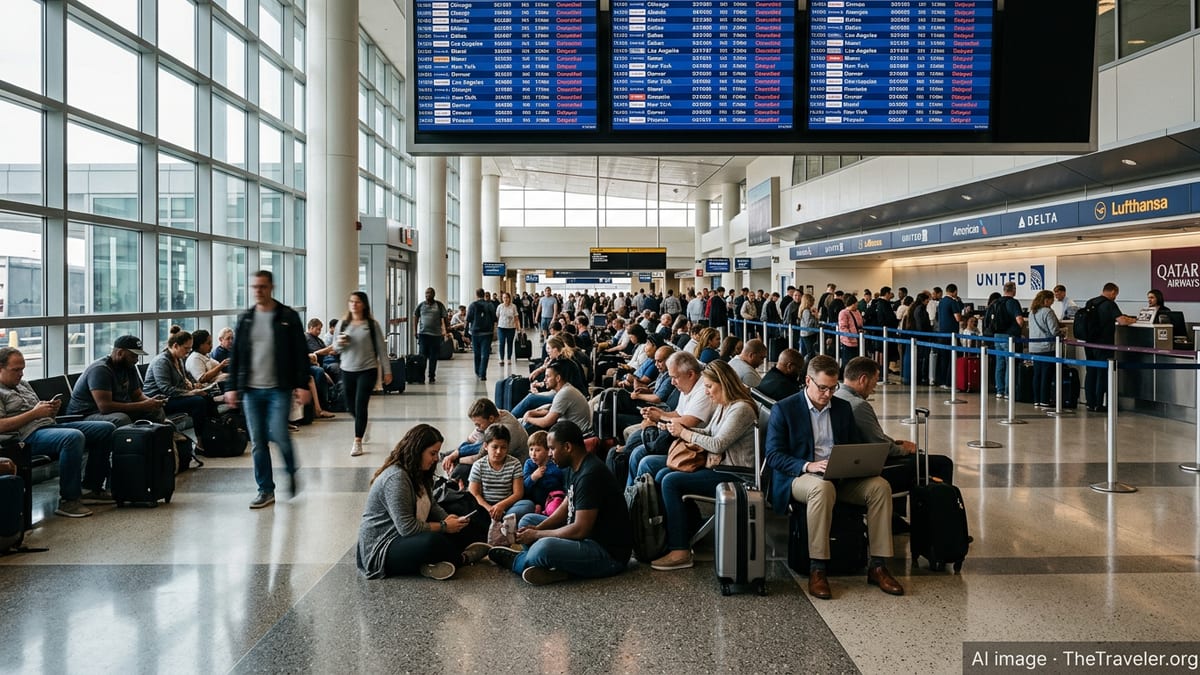
Widespread Disruptions Across Major US Hubs
The wave of cancellations built through the morning as storms and low clouds swept across key corridors in the Midwest, South and along the East Coast, prompting ground delays and tighter spacing between arrivals. Tracking data showed the heaviest disruption at primary hubs such as Chicago O’Hare, Hartsfield-Jackson Atlanta, Dallas Fort Worth, Denver International and the three major New York area airports.
By midday, operations at Los Angeles, Miami and Phoenix were also feeling the knock-on effects, as inbound aircraft and crews failed to arrive on time from earlier legs. Travelers reported long lines at check-in and security, as well as crowded gate areas where rolling delay announcements frequently turned into outright cancellations.
While the total number of cancellations remained below the worst recent meltdowns linked to winter storms and large-scale IT failures, the concentration of affected flights at some of the country’s busiest hubs amplified the impact. With many flights departing close to full, even a modest number of cancellations quickly cascaded into a shortage of available seats for stranded passengers.
United, American and Delta Bear the Brunt
United, American and Delta, which operate dense hub-and-spoke networks through Chicago, Atlanta, Dallas, Denver, Los Angeles and New York, accounted for the majority of disrupted services. The three US giants have all contended with elevated disruption this winter as a series of storms passed through the central and eastern United States, repeatedly stressing schedules and crew availability.
In Chicago, United and American trimmed a number of departures to and from Denver, New York, Dallas and Phoenix as weather and air traffic control programs slowed the flow of traffic into already congested airspace. At Atlanta, Delta canceled select short-haul services and adjusted frequencies on heavily traveled business routes, focusing on preserving longer-haul and international connections.
Dallas Fort Worth, a critical hub for American, also saw cancellations on routes into the Midwest and Northeast, where conditions were most volatile. Even where flights operated, delays frequently stretched beyond an hour, throwing off carefully timed connection banks and leaving passengers sprinting between concourses or seeking overnight accommodation.
Qatar Airways and Lufthansa Feel Knock-On Effects
Although the brunt of the cancellations fell on domestic carriers, international operators Qatar Airways and Lufthansa were also swept up in the disruption. Both airlines depend on US partners and shared hubs for feed traffic onto long haul routes, particularly out of cities such as Chicago, New York, Dallas and Los Angeles.
Schedule adjustments on United, American and Delta left some connecting passengers unable to reach their transatlantic or transpacific departures in time, forcing rebooking on later flights where space was available. In several cases, feeder flights into gateway airports were cancelled outright, requiring Qatar Airways and Lufthansa to reaccommodate travelers or adjust onward itineraries.
At New York area airports and in Chicago, travelers connecting from smaller markets onto Lufthansa services to Frankfurt and Munich were among those affected. At Dallas and Los Angeles, Qatar Airways passengers reported missed connections for flights to Doha after domestic legs from Denver and Phoenix failed to operate as scheduled.
Travelers Confront Long Lines and Limited Options
For passengers caught in the disruption, the most visible signs of the problems were mounting queues at airline service desks and crowded customer service areas, as travelers sought new flights, hotel vouchers and meal credits. Many reported waiting hours, both in person and on the phone, to speak with an agent authorized to rebook complex itineraries involving multiple carriers.
Limited spare capacity on later flights worsened the situation. On routes such as Chicago to New York, Atlanta to Dallas, Denver to Los Angeles and Miami to New York, where aircraft were already operating with high load factors, displaced travelers often found that the next several departures were fully booked. Some opted to reroute through secondary hubs or accept connections involving overnight stops, while others abandoned their trips entirely and sought refunds.
Families and international travelers were particularly vulnerable, as missed connections could mean arriving a day or more late to cruises, tours, major events or long-planned vacations. At several airports, exhausted passengers could be seen camping out in gate areas and baggage halls while waiting for morning flights with open seats.
Airlines Urge Flexibility as Further Delays Possible
Airlines advised customers with upcoming travel through Chicago, Atlanta, Dallas, Los Angeles, Miami, New York, Denver and Phoenix to monitor their flight status closely and to consider rebooking for later dates or different times of day if their plans allowed. Many carriers issued weather and operational waivers, enabling passengers to change flights without additional fees, although fare differences still applied on some routes.
Operational planners cautioned that even after weather conditions improve, delays can linger as aircraft and crews reposition and as airlines work through backlogs of displaced passengers. A single day of elevated cancellations can ripple through schedules for 24 to 48 hours, especially at complex hub airports with tightly banked connection windows.
With the heart of the spring break travel period approaching, analysts warned that any additional rounds of disruptive weather, air traffic control constraints or technical issues could trigger fresh waves of cancellations. For now, travelers are being urged to build extra time into their journeys, keep itineraries as simple as possible and ensure that airlines have up-to-date contact information for rapid rebooking notifications.