

More news on this day
Thousands of air travelers across the United States faced hours-long queues, missed connections and unexpected overnight stays this weekend as 128 flights were canceled and 787 delayed, snarling operations at major airports in New York, Chicago and Atlanta and rippling across the broader domestic network.
Weather Turbulence and Network Strain Collide
The latest wave of disruption unfolded from Friday into Sunday, as a volatile mix of severe thunderstorms in the Southeast, low ceilings in the Midwest and lingering snow and ice in northern states pushed already busy hub airports beyond their limits. Chicago O’Hare, Hartsfield-Jackson Atlanta and the New York area’s major airports all reported clusters of cancellations and rolling delays, with some departures held on the ground for close to an hour before takeoff slots opened.
Data from airline schedule trackers and airport operations centers indicate that many of the 128 cancellations and 787 delays were concentrated at these three hubs, but the impact quickly spread nationwide. Flights that never passed through New York, Chicago or Atlanta still suffered as aircraft and crews were left out of position, leading to knock-on schedule changes at secondary airports from Tulsa to Kansas City and San Francisco.
At Atlanta, where Delta Air Lines dominates traffic, passengers described long lines at rebooking counters and crowded gate areas after overnight storms triggered a request for a formal ground delay, forcing inbound flights to hold at their points of origin. In Chicago, ground stops and flow restrictions for traffic into O’Hare added pressure to already congested weekend schedules for United, American and their regional partners.
In New York, where John F. Kennedy, LaGuardia and Newark collectively handle tens of millions of passengers each year, the usual tight runway and airspace constraints amplified the effect of each delay. Even when skies began to clear, crews bumping up against federal duty-time limits prevented some flights from operating, turning what might have been a brief weather disruption into a prolonged operational challenge.
Major Airports Bear the Brunt
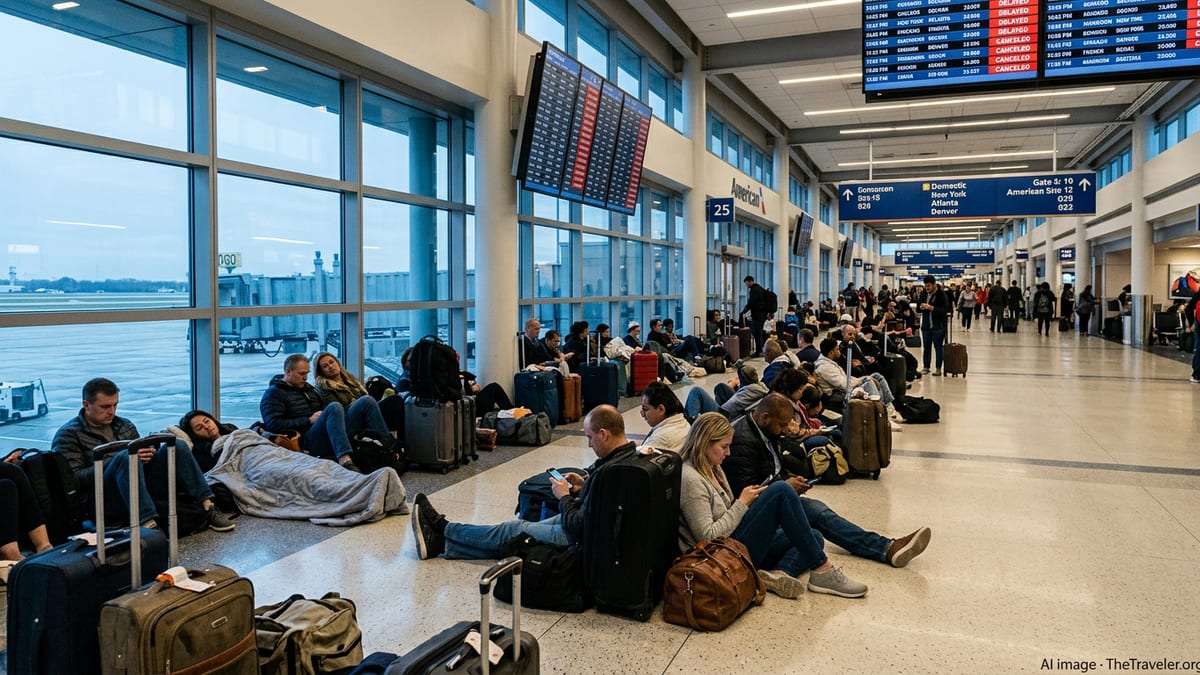
Hartsfield-Jackson Atlanta International Airport, the world’s busiest passenger hub, once again found itself at the center of the storm. Following a spate of cancellations and multi-hour delays, images from the terminal showed travelers sleeping on the floor or slumped in chairs near power outlets as they waited for new departure times. Some short-haul flights arriving late into Atlanta then sat for extended periods on taxiways as gates remained occupied by delayed aircraft.
At Chicago O’Hare, a key connecting point for both United and American, a succession of ground delay programs meant that aircraft bound for the airport were held at origin until arrival slots opened. Airlines attempted to preserve long-haul and high-demand routes by canceling lower-frequency services, a strategy that reduced congestion but left some regional passengers without same-day alternatives.
New York’s big three airports experienced a similar pattern. With limited runway capacity and tightly choreographed schedules, even modest thunderstorms or low clouds can trigger extensive holding patterns and arrival metering. Over the weekend, this translated into a cluster of short-notice cancellations on routes to and from the Northeast corridor and the Midwest, while flights that did operate often departed hours behind schedule.
Smaller and mid-sized airports felt the consequences almost immediately. Disruptions at the hubs meant missed connections for travelers heading onward to secondary cities, with some learning at the gate that their onward segment had been canceled while they were still in the air. Airlines scrambled to rebook affected passengers, but peak-season load factors limited the number of spare seats available on subsequent departures.
How Airlines Are Responding
Carriers say they are working to stabilize their operations and reduce backlogs, but acknowledge that some residual delays are likely to persist into the early part of the week. To cope with the turbulence, several airlines have implemented flexible rebooking policies for passengers traveling through affected hubs, waiving change fees and allowing itineraries to be adjusted to later dates or alternate airports, subject to seat availability.
Operationally, network planners have been prioritizing flights that help untangle the system most efficiently. That often means preserving transcontinental and key hub-to-hub services even if it requires trimming point-to-point or lower-demand regional routes. By keeping the backbone of the network intact, airlines aim to reposition aircraft and crews more quickly and restore normal patterns within a day or two.
At some hubs, airlines have requested traffic management initiatives from federal air traffic authorities to meter arrivals into congested airports rather than allowing surges that overwhelm gate and ground handling capacity. While such measures can lengthen individual flight times, carriers argue that they help prevent a more chaotic gridlock on the ramp and in terminal areas.
Staffing remains an underlying pressure point. Although airlines have rebuilt their workforces since the sharp cuts of the early pandemic years, they continue to face tight margins in critical roles such as pilots, mechanics and ramp workers. When storms or operational issues force extended duty days, carriers have less slack to call in spare crews, making it more likely that relatively small disruptions cascade into widespread schedule changes.
What Stranded Passengers Should Do Now
For travelers caught up in the latest round of cancellations and delays, the most important step is to stay closely connected to their airline. Mobile apps and text alerts typically show schedule changes before they are announced over terminal loudspeakers, and in many cases allow customers to rebook themselves onto later flights without waiting in line at a service desk.
Experts also recommend acting quickly when a cancellation is posted. Seats on the next available departures from busy hubs like New York, Chicago and Atlanta can disappear within minutes, particularly on peak weekend and holiday travel days. Passengers who are flexible about departure times, nearby airports or even connecting routes often have more options than those who insist on recreating their original itinerary exactly.
Under federal rules, airlines are required to refund passengers when a flight is canceled and the customer chooses not to travel, but policies around hotels, meals and rebooking can vary depending on whether the disruption is considered within the carrier’s control. Many major US airlines now publish customer service commitments that spell out what they will provide during delays and cancellations, including meal vouchers, overnight accommodation and ground transportation in some cases.
Travelers are advised to keep receipts for any out-of-pocket expenses related to the disruption and to document communication with the airline in case follow-up claims are needed. Travel insurance, where purchased, may offer additional protection, though coverage depends on the terms of the policy and the cause of the delay.
Looking Ahead: More Volatility on the Horizon
Industry analysts warn that bouts of disruption like this weekend’s are likely to become more frequent as severe weather patterns intensify and air traffic returns to or exceeds pre-pandemic levels. Major hubs such as New York, Chicago and Atlanta operate with little spare capacity during peak periods, meaning that even short-lived storms or ground stops can cause hours of downstream delays.
Airports and airlines are investing in technology to better predict and manage these events, from advanced weather modeling to more dynamic crew scheduling tools. However, those systems cannot fully offset the physical limits of runway capacity, gate availability and legally mandated crew rest times. As a result, passengers may need to build more buffer time into tight connections and be prepared for occasional itinerary changes, especially during seasons prone to storms, snow or extreme heat.
For now, carriers expect operations at the major hubs to gradually improve over the next 24 to 48 hours, but caution that residual disruptions could linger, particularly on heavily booked routes. Travelers scheduled to pass through New York, Chicago or Atlanta early this week are being urged to monitor their flight status closely, arrive at the airport earlier than usual and have a backup plan in mind if cancellations mount again.
Even as airlines work to restore normality, the scenes of crowded terminals, snaking check-in lines and departure boards filled with red text underscore a reality of modern air travel: when a handful of critical hubs falter, the effects are felt by passengers across the entire country.