

More news on this day
Thousands of airline passengers across the United States are facing major disruptions today as a wave of operational problems triggers at least 123 cancellations and more than 360 delays, snarling travel through key hubs including Boston, New York, Chicago and Charlotte.
Get the latest news straight to your inbox!
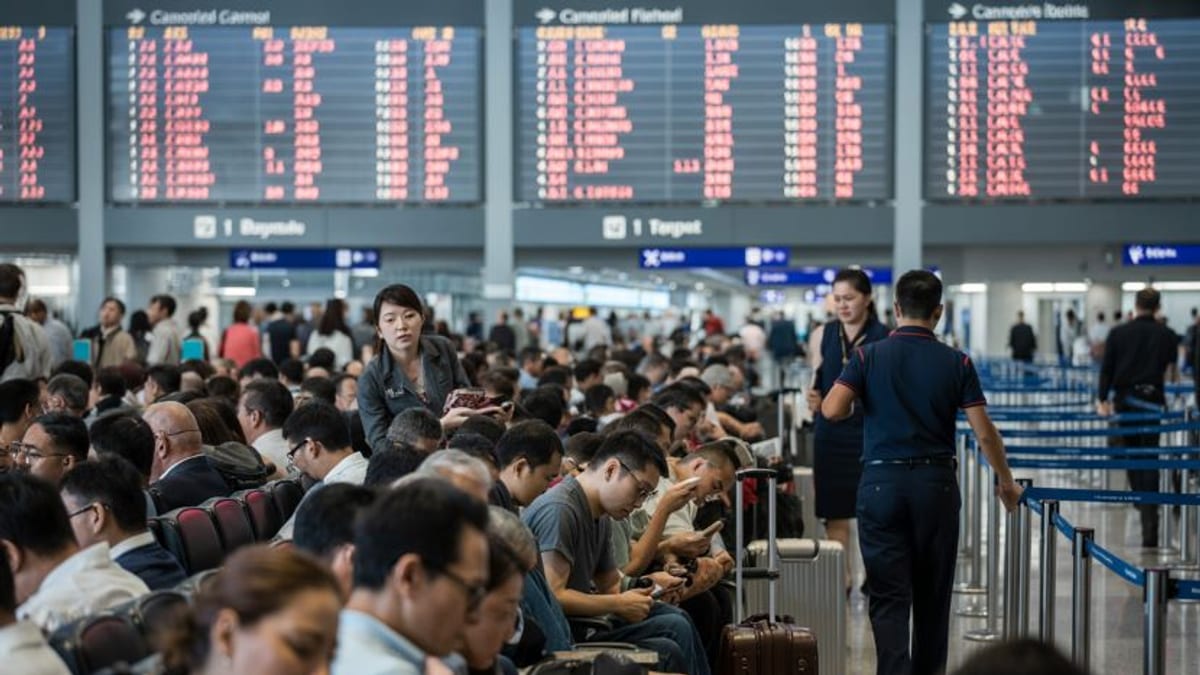
Image by Travel And Tour World
Major Carriers Struggle to Keep Schedules on Track
Publicly available tracking data shows that a broad mix of airlines, including Republic Airways, Frontier Airlines, Alaska Airlines, Southwest Airlines and Delta Air Lines, have scrubbed dozens of departures while hundreds more flights are running late. The disruptions are spread across both mainline and regional operations, affecting everything from short-hop commuter services to longer domestic routes.
Data from flight-tracking platforms indicates that the total number of cancellations attributed to US carriers has climbed to at least 123 flights today, while more than 360 additional services are reporting delays. Those figures represent only a slice of the day’s overall schedule, but they are heavily concentrated in already busy air corridors serving the Northeast and Midwest.
This new round of disruptions comes against the backdrop of a system that has struggled with reliability in recent years. Federal summaries of airline performance show that carriers such as Frontier and Republic historically report higher percentages of cancellations and delays than some larger peers, underscoring the vulnerability of tightly scheduled networks when weather, staffing or technical issues arise.
Recent high-profile crises, including last year’s multiday disruption at Delta linked to a major IT outage, have placed additional attention on the resiliency of airline operations. Today’s problems are smaller in scale but offer another reminder of how quickly conditions can deteriorate for travelers when several carriers falter at once.
Hubs From Boston to Charlotte See Cascading Effects
The operational stress is particularly visible at major connection points. Airports serving Boston, New York, Chicago and Charlotte are among those with elevated numbers of flight changes today, according to airport status boards and aviation tracking dashboards. These hubs act as funnels for domestic and international traffic, so even modest schedule changes can ripple across the country.
In the Northeast, flights into and out of Boston and New York area airports are experiencing a mix of outright cancellations and late departures, which in turn are creating missed connections downline. Travelers connecting through Chicago have also reported disruption, with regional feeder flights operated on behalf of larger brands among the services most affected.
Charlotte, a major connecting point for East Coast and Sun Belt routes, is seeing knock-on effects as delayed aircraft arrive late and crews time out, leading to further adjustments. The result is a patchwork of schedule changes that can be hard for passengers to anticipate, particularly those traveling through multiple hubs in a single day.
Because many flights rely on aircraft that operate several legs in succession, a cancellation or extended delay in one city often propagates to subsequent flights elsewhere in the network. That dynamic helps explain why passengers in secondary markets far from the main hubs can suddenly find their flights canceled or heavily delayed even when local conditions appear normal.
Weather, Congestion and Operational Constraints Collide
Early assessments of today’s disruption point to a familiar blend of contributing factors. Seasonal weather patterns in parts of the country have prompted traffic management programs at several busy airports, reducing the rate at which flights can land and depart. When those constraints intersect with already full schedules, small slowdowns can force airlines to cancel or significantly delay flights to keep the system moving.
Airline performance reports show that delays are commonly attributed to air carrier issues, late-arriving aircraft and national airspace system congestion, with extreme weather ranking as another recurring cause. When multiple categories occur at once, as appears to be the case today, carriers often prioritize longer-haul or high-demand routes, leaving certain short-haul or regional flights more vulnerable to cancellation.
Staffing and equipment availability also remain pressure points. Industry data compiled in recent years highlights how tight crew scheduling can lead to further cancellations if flights run late and workers hit federally mandated duty limits. At the same time, maintenance-related pauses on individual aircraft can leave airlines with little spare capacity to absorb unexpected shocks.
Analysts following airline performance note that some carriers, including ultra-low-cost operators and regional partners, typically operate with leaner spare capacity than the largest network airlines. On days like today, that can translate into a higher share of their flights being canceled or rescheduled when conditions deteriorate.
Passengers Confront Long Lines and Limited Options
For travelers caught up in today’s disruption, the operational nuances translate into crowded terminals, long customer service queues and uncertain itineraries. Reports from airports across the affected cities describe passengers lining up at check-in counters and gate desks seeking rebooking options, meal vouchers or overnight accommodation when stranded.
Consumer information from the US Department of Transportation explains that airlines are generally not required to provide compensation for delays or cancellations, particularly when they are caused by weather or air traffic constraints. However, carriers may voluntarily offer amenities such as hotel rooms, meal credits or fee-free rebooking when disruptions are within their control or when they seek to preserve customer goodwill.
In practice, the level of support offered can vary widely between airlines. Larger legacy carriers and some low-cost competitors publish customer service commitments that outline what passengers can expect during irregular operations, while regional operators that fly under contract for major brands may defer to the policies of the marketing carrier on the ticket.
Travel advocates advise that passengers monitor their flight status frequently on airline apps, keep boarding passes and receipts, and document any additional expenses incurred during an extended disruption. Those steps can help when seeking refunds, future travel credits or, in some cases, reimbursement after the fact.
What Travelers Can Do on a Day of Widespread Disruption
On a day when more than a hundred flights are canceled and hundreds more are delayed, experts suggest that preparation and flexibility offer the best protection. Booking earlier departures can provide more rebooking options if the first flight fails, while allowing longer connection times can reduce the risk of missed onward flights when schedules slip.
Travel guidance from consumer organizations recommends that passengers keep contact details for their airlines close at hand and use multiple support channels when schedules unravel. Airline mobile apps, website chat functions and call centers can all be useful in securing alternative routings, and in many cases online tools update faster than airport departure boards.
Passengers whose flights are canceled outright are typically entitled to a refund of the unused portion of their ticket if they choose not to travel, even on nonrefundable fares. Those who still need to reach their destination may accept a different flight on the same carrier, a rebooking on a partner airline or a later travel date, depending on the options being offered at the time.
With summer and holiday travel periods often bringing elevated congestion and a higher likelihood of irregular operations, today’s pattern of 123 cancellations and 360 delays offers an early reminder that US air travel remains vulnerable to sudden spikes in disruption. For many travelers moving through Boston, New York, Chicago, Charlotte and beyond, it has turned a routine travel day into a test of patience and planning.