

More news on this day
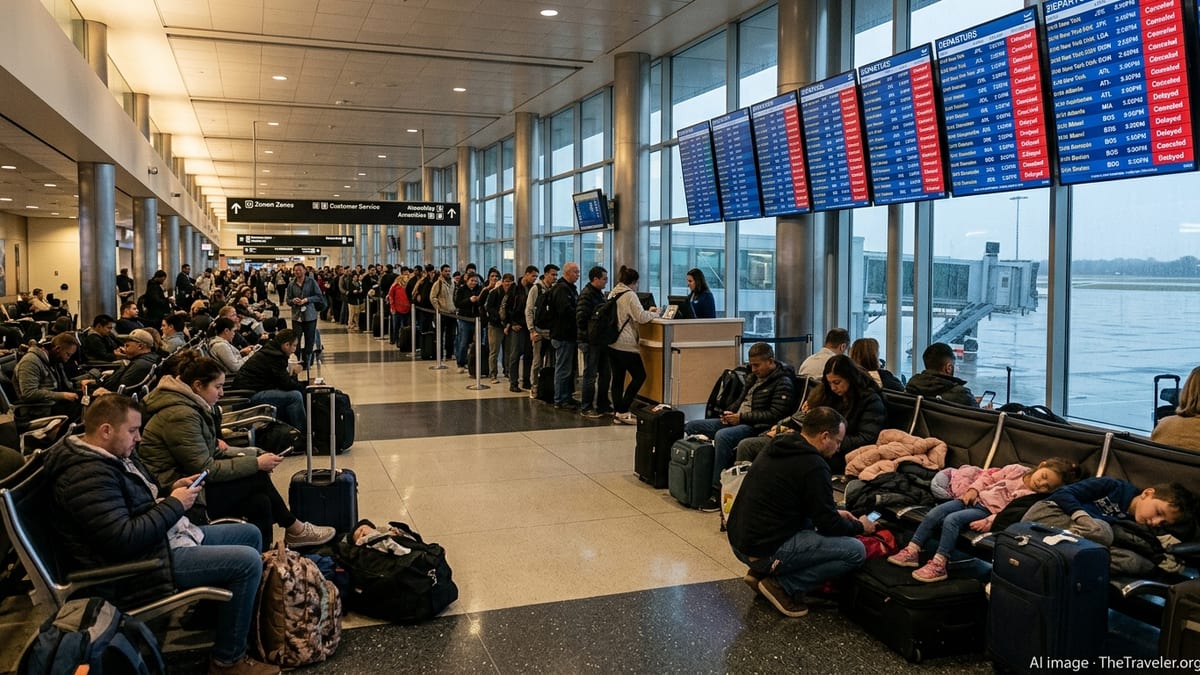
A fresh wave of travel disruption is sweeping across the United States, with more than 200 flights canceled and over 1,000 delays reported at major hubs including New York, Atlanta, Miami, and Boston, leaving thousands of passengers scrambling to rebook journeys and reach their destinations.
Get the latest news straight to your inbox!
Storm System and Systemic Strains Converge
The latest disruption coincides with a powerful storm system moving across the eastern half of the country, building on several days of severe weather that have battered aviation schedules. Publicly available flight-tracking data shows airlines struggling to reset operations after heavy snow, high winds, and thunderstorms rippled through key corridors serving the Northeast and Southeast.
Reports from national outlets indicate that more than 1,100 flights were canceled across the United States on Tuesday, March 17, with thousands more delayed, as carriers attempted to recover from the earlier onslaught of storms. New York area airports, Atlanta’s Hartsfield Jackson, Miami International, and Boston Logan are among the most affected, acting as chokepoints where weather, congestion, and aircraft repositioning problems compound.
The problems are amplified by the broader context of an ongoing partial federal government shutdown, which is placing additional stress on airport operations. Public reporting highlights longer security lines at some airports and thinner staffing at certain checkpoints, factors that can slow passenger flows and exacerbate the knock-on effects of weather-driven schedule changes.
Industry data and recent federal performance benchmarks underline how sensitive the US air travel system remains to weather. Analyses of National Airspace System delays over recent years attribute the majority of significant disruptions to storms, with even short-lived events capable of generating hours of cascading delays as aircraft and crews fall out of position.
Major Hubs Face Heavy Cancellations and Rolling Delays
At Atlanta, one of the world’s busiest hubs, tracking services and passenger accounts describe a particularly difficult stretch. Data compiled on Tuesday shows more than 200 flight cancellations and hundreds of additional delays into and out of the airport, as airlines juggle diverted aircraft, crew duty-time limits, and ground holds while storms move through the region and into the East Coast.
New York area airports, including John F. Kennedy, LaGuardia, and Newark, have been contending with high winds, low clouds, and capacity restrictions that limit the number of arrivals and departures per hour. Even when skies appear to clear locally, delays often persist while air traffic controllers sequence backlogged flights and carriers work through aircraft inspections and maintenance checks after severe weather.
Further south, Miami International has seen significant disruption to both domestic and international operations, particularly on heavily trafficked routes linking Florida with the Northeast and Midwest. Delays at Miami can quickly ripple into Latin American networks, pushing missed connections later into the day and tightening turn times for evening departures.
In Boston, lingering impacts from recent winter storms and gusty coastal winds have left passengers facing rolling departure pushes and arrival holds. The combination of limited runway capacity, deicing requirements, and congested East Coast airspace means that even modest schedule changes can trigger lengthy waits on the ground and in the air.
What Affected Passengers Can Do Right Now
For travelers whose flights are canceled, published airline policies generally offer a choice between a refund for the unused portion of the ticket or rebooking on the next available flight, often at no additional fare. In large-scale disruption events, many carriers also activate flexible travel waivers that allow passengers to change dates within a defined window without change fees or fare differences, provided they keep the same origin and destination.
Passengers experiencing long delays are encouraged by consumer advocates to monitor their flight status frequently through official airline apps and airport departure boards, as estimates can shift quickly. In cases of significant schedule changes, some airlines will proactively rebook travelers onto alternative routings, including connections through less affected hubs, although available seats can be limited during peak disruption.
Federal rules in the United States require airlines to provide prompt refunds when a flight is canceled and a passenger chooses not to travel. However, compensation for delays, meals, or hotel stays is largely governed by individual carrier customer service commitments rather than statute. Several major airlines publish customer service dashboards detailing when they will provide meal vouchers, overnight accommodations, or ground transportation in the event of controllable disruptions such as crew or maintenance issues.
Consumer organizations recommend that travelers retain receipts for unexpected expenses such as meals, ground transfers, or overnight stays, and later submit them to the airline or to their credit card issuer’s trip delay protection program if applicable. Travel insurance policies, including those bundled with some premium credit cards, can offer additional reimbursement for extended delays, missed connections, and lost prepaid arrangements.
Key Advice for Travelers in New York, Atlanta, Miami, and Boston
At large hubs experiencing acute disruption, timing and preparation can make a significant difference. Passengers departing from New York, Atlanta, Miami, or Boston are advised to arrive early, particularly while the government shutdown continues to affect some security operations. Allowing extra time for check-in and screening can help avoid missed departures when airlines are able to operate flights within narrow weather windows.
Experts on air travel reliability frequently stress the value of nonstop flights when possible, as each additional connection introduces another failure point during volatile operating days. When connections are unavoidable, longer layovers can provide a buffer against upstream delays that might otherwise cause missed onward flights, particularly through congested hubs such as Atlanta or New York.
Travel planners also highlight the importance of keeping baggage strategies flexible. Carry-on-only travel, where feasible, can make it easier to accept last-minute rebookings or switch to alternate routings without waiting for checked luggage to be transferred. In cases where checked bags are unavoidable, passengers are advised to pack essential medications, documents, and one change of clothes in their carry-on in case of overnight delays or unexpected diversions.
Those already stranded in terminals may find that customer service lines, both in person and by phone, quickly become overwhelmed during major disruption events. Many airlines now allow same-day changes and rebookings directly through their mobile apps or websites, which can sometimes secure scarce seats more quickly than waiting for an agent. Some travelers report better results by seeking assistance at less crowded help desks elsewhere in the terminal once safely past security.
Outlook for the Days Ahead
Weather forecasts suggest that the current storm pattern will gradually move off the East Coast, but the operational recovery may take additional time as aircraft and crews are repositioned and backlogs in maintenance and scheduling are cleared. Large hub airports typically need several stable operating cycles to fully absorb the effects of a day with widespread cancellations and delays.
Analysts note that March is already a high-demand period for US carriers, with spring break travel and major sporting events adding pressure to flight loads. When disruptions occur during such peaks, rebooking options are more constrained, leaving some passengers facing waits of a day or more to secure alternative itineraries, especially on popular routes linking New York, Atlanta, Miami, and Boston.
Looking ahead, ongoing investments in air traffic technology and weather forecasting are expected to improve the system’s resilience, but for now travelers remain vulnerable to the convergence of severe storms, staffing strains, and tight schedules. For those flying in the coming days, close monitoring of itineraries, flexible planning, and understanding of passenger rights remain the most practical tools for navigating the current wave of travel turmoil.