

More news on this day
Thousands of passengers across the United States are stranded or facing severe disruption after a fresh wave of flight cancellations and delays swept through major hubs including Boston, Chicago, Houston, Kansas City, Orlando, and New York, with data showing 385 flights canceled and 1,857 delayed in a single day, impacting operations at Delta Air Lines, United Airlines, Republic Airways, Endeavor Air, and other carriers.
Get the latest news straight to your inbox!
Major US Hubs Buckle Under Widespread Disruptions
Publicly available flight-tracking data indicates that the latest disruption has hit some of the country’s busiest airports simultaneously, triggering knock-on delays throughout the domestic network. Boston Logan, Chicago O’Hare, Houston’s George Bush Intercontinental, Kansas City, Orlando International, and New York area airports all reported clusters of cancellations and rolling delays as airlines struggled to reposition aircraft and crews.
Although the overall number of outright cancellations, at 385, is well below the most extreme meltdowns seen in recent years, the scale of the 1,857 delays is compounding the impact on travelers. Aviation analysts note that high volumes of delayed departures can prove as destabilizing as large cancellation totals, particularly when they affect multiple hubs used by the same carriers.
Operational strain appears especially visible on regional and feeder routes, many of which are operated on behalf of the largest network airlines. Flights connecting mid-sized cities to major hubs have been disproportionately affected, leaving travelers with fewer alternative options and more complex rebooking paths when services are scrubbed or heavily delayed.
The disruption follows several years in which US aviation has been repeatedly tested by extreme weather, crew shortages, air traffic control constraints, and high-profile technology failures. Each new period of instability has added pressure to an already tight system, where spare capacity is limited and recovery from a bad operational day can take several days.
Delta, United and Regional Partners Under Pressure
Delta Air Lines and United Airlines are among the hardest-hit carriers in the current wave of disruption, according to aggregated delay and cancellation data. Their regional affiliates and partners, including Republic Airways and Endeavor Air, are also seeing elevated disruption as they operate many of the short-haul routes feeding traffic into the mainline networks.
Recent history underscores how vulnerable complex hub-and-spoke systems can be when multiple stressors hit at once. Delta’s extensive meltdown following the CrowdStrike-related IT outage in July 2024 showed how quickly disruptions can multiply across its hubs and linger for days even after an initial trigger is resolved, with thousands of flights canceled and more than a million passengers affected during that episode.
Observers point out that when technology issues, severe weather, or air traffic restrictions coincide with already tight staffing or congested schedules, regional operators are often the first to see cancellations. Their flights, frequently operating smaller jets on high-frequency business routes, tend to be easier for airlines to consolidate than long-haul services, but that can translate into longer waits and unexpected overnights for passengers relying on those links.
In the latest disruption, data patterns show a familiar picture: large network carriers trimming frequencies on regional spokes to protect their core long-haul schedules. This approach may preserve key transcontinental and international routes but leaves travelers on shorter domestic segments facing abrupt changes to their plans.
Stranded Travelers Face Long Lines and Limited Alternatives
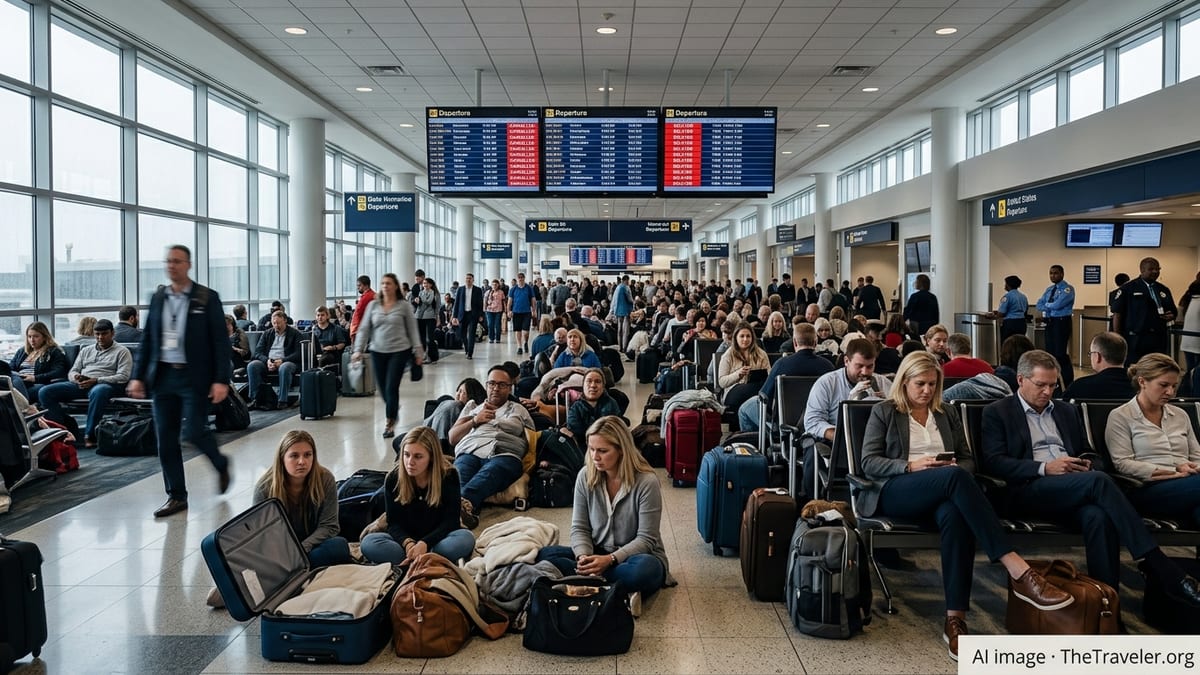
Scenes across affected airports show crowded concourses, long customer-service queues, and departure boards dominated by orange and red delay markers. For many travelers, the combination of cancellations and extended delays has meant missed connections, overnight stays in unfamiliar cities, and difficulty securing new seats on already busy services.
Travel forums and social media posts from affected passengers describe hours-long waits to speak with airline representatives and limited availability of hotel rooms near major hubs as disruption ripples outward. With multiple carriers affected at the same time, nearby airports that might normally absorb spillover demand are themselves struggling with congestion.
Consumer advocates have noted that while some disruptions are clearly tied to weather or airspace constraints, many passengers remain uncertain about what compensation, if any, they are entitled to receive. Previous large-scale breakdowns, including the 2022 Southwest holiday crisis and Delta’s 2024 outage, led to heightened scrutiny of how airlines communicate with customers and handle reimbursements when travel plans collapse.
For travelers caught in the current turmoil, the practical impacts are immediate and personal: missed family events, disrupted business meetings, and additional out-of-pocket costs for food, accommodation, and alternative transport. With relatively few spare seats systemwide, especially on peak-day departures, many stranded passengers are being forced to accept rebookings one or even two days later than originally planned.
Systemic Vulnerabilities in the US Air Travel Network
The latest round of cancellations and delays is renewing questions about the resilience of the US aviation system. Industry data and recent government and industry reports highlight persistent bottlenecks, including limited air traffic control staffing, high utilization of aircraft and crews, and aging IT infrastructure at both airlines and service providers.
Analysts point out that while outright ground stops and major IT outages draw the most attention, smaller operational issues can quietly accumulate and have comparable effects over time. A combination of minor technical faults, crew time-limit rules, and tight connection windows can tip an already full schedule into a cascading series of missed departures and rolling delays.
Regional carriers such as Republic Airways and Endeavor Air play a critical but often overlooked role in this environment. Operating under the branding of major airlines, they serve as the connective tissue between smaller markets and large hubs. When their operations are disrupted, the impact can be felt far beyond the city pairs listed on a cancellation board, as missed inbound aircraft and crews lead to further knock-on effects across the network.
Some recent industry research points to chronic congestion at key airports as another major risk factor. Hubs such as Chicago, New York, Houston, and Boston have repeatedly ranked among the nation’s most delay-prone facilities, meaning that even small operational hiccups can have outsized ripple effects, particularly during peak travel periods.
What Travelers Can Expect in the Coming Days
With more than 2,200 flights affected in a single day, recovery is unlikely to be immediate. Aviation experts note that airlines need time to reposition aircraft and crews, which may result in continued disruptions even after the immediate trigger for the current wave of delays and cancellations has passed.
Travelers scheduled to depart from the hardest-hit hubs are likely to face schedule adjustments, including preemptive cancellations designed to stabilize operations. Even where flights are still operating, departure times may shift as carriers attempt to realign aircraft rotations and honor previously disrupted itineraries.
Publicly available guidance from travel analysts suggests that passengers should monitor their flight status closely, use airline apps when possible to manage rebookings, and be prepared for longer than usual waits at check-in counters and customer-service desks. Those with flexibility in their plans may find it easier to accept alternative routings or off-peak travel times while operations remain strained.
Industry watchers warn that, given the tight margins and high utilization that characterize today’s airline schedules, similar episodes are likely to recur. Until there is more slack in the system in the form of additional staffing, upgraded technology, and more robust contingency planning, even a single bad operational day can leave thousands of travelers unexpectedly grounded across the United States.