

More news on this day
Thousands of airline passengers across the United States are facing severe disruption as a fresh wave of cancellations and delays ripples through major hubs including New York, Austin, Boston, Detroit, Houston, Newark and Atlanta, with tracking data indicating 413 flights cancelled and 2,763 delayed in a single day.
Get the latest news straight to your inbox!
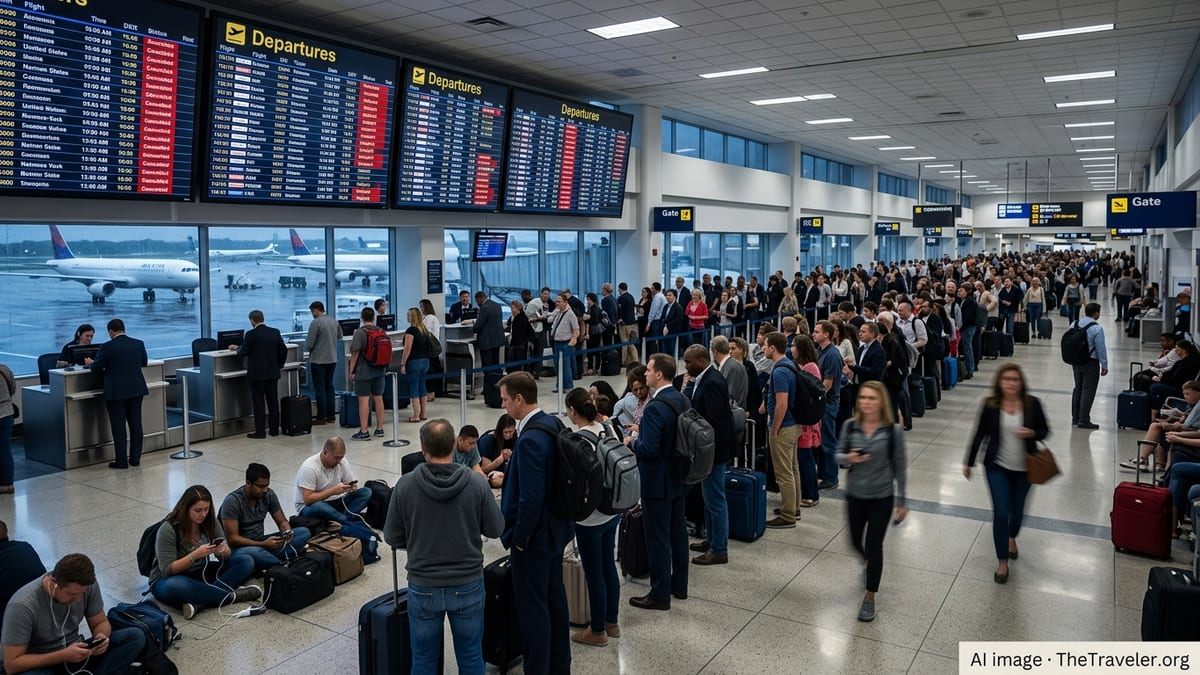
Major US Hubs Buckle Under Widespread Disruption
Publicly available flight-tracking data shows that airports serving New York City, Austin, Boston, Detroit, Houston, Newark and Atlanta have been among the hardest hit, with cancellations and rolling delays piling up through the day. The combined total of 413 cancellations and 2,763 delays has effectively ground operations for thousands of travelers, creating long lines, jammed gate areas and an acute shortage of available seats on remaining services.
Major connecting hubs such as Atlanta, New York area airports and Detroit play an outsized role in the national network, which means disruptions there quickly cascade across the country. When outbound flights are cancelled or heavily delayed, aircraft and crew become out of position for later departures in other cities, compounding the operational strain even after local weather conditions improve.
Reports from passengers on social platforms describe hours-long waits at customer service desks, late-night terminal crowds and repeated schedule changes as airlines attempt to rework crews, aircraft and connections. The pattern reflects how tightly wound the US air travel system remains, with limited spare capacity to absorb sudden shocks.
Republic, Delta, Spirit and SkyWest Among Most Affected Carriers
The disruption has hit a cross-section of large network airlines and regional operators, with Republic Airways, Delta Air Lines, Spirit Airlines and SkyWest appearing prominently in cancellation and delay tallies. These carriers operate dense schedules through the affected hubs, making them particularly vulnerable when conditions deteriorate or staffing falls short.
Regional operators such as Republic and SkyWest fly many of the shorter routes that feed passengers into major hubs for onward connections. When regional flights are cancelled or significantly delayed, travelers can miss long-haul departures, forcing rebookings that fill remaining seats and strain inventory on mainline flights across multiple airlines.
Low-cost carrier Spirit Airlines, which has a strong presence in markets like Houston and the Northeast, has also seen its operations disrupted. Travelers report multiple cancellations on certain routes and long delays as the airline works through crew availability and aircraft positioning. Delta, which relies heavily on Atlanta, Detroit, Boston and New York as key hubs, has experienced a wave of long delays on top of cancellations, amplifying knock-on effects throughout its network.
Weather, Airspace Constraints and Crew Shortages Converge
Recent storms and unsettled weather across parts of the South, Midwest and Northeast have been a key driver of the current wave of cancellations, according to published coverage of recent thunderstorm systems and winter weather episodes. Thunderstorms in particular can sharply reduce arrival and departure rates at busy hubs such as Atlanta, New York and Newark, forcing air traffic managers to slow the flow of flights for safety.
Even when weather cells are relatively short-lived, they can trigger a chain reaction: flights are held on the ground, diverted or placed into holding patterns, leading to crews reaching maximum duty-time limits and aircraft missing their assigned slots. Once crews time out under federal safety rules, flights can be delayed for hours or cancelled outright if replacements are not available.
Passenger accounts and airline communications suggest that ongoing staffing constraints, especially among pilots and cabin crew at some carriers, continue to magnify these problems. When schedules are already tight, a single weather event or airspace restriction can push the system beyond its buffer, leaving airlines with limited flexibility to recover quickly.
Travelers Confront Missed Connections and Limited Rebooking Options
For travelers caught in the middle of the disruption, the immediate consequences include missed connections, unexpected overnight stays and last-minute scrambles for alternative routes. With hundreds of flights cancelled and thousands delayed, many remaining departures are departing full, leaving rebooking options scarce on popular business and leisure routes.
Some passengers have reported opting for long-distance car journeys or overnight buses when feasible, particularly on shorter routes between affected cities such as New York, Boston and Newark, or between hubs like Detroit and nearby regional airports. Others are staying in airport hotels or waiting for seats to open as airlines add recovery flights and upgauge aircraft where possible.
Travel experts typically advise that in situations like this, travelers monitor their bookings closely via airline apps, consider accepting rebookings through alternate hubs, and remain flexible with routing and timing. However, when multiple major hubs are stressed simultaneously, even proactive changes can be difficult, as inventory tightens across the national network.
Ongoing Ripple Effects Expected Across the US Network
Although the worst of the day’s weather-related impacts may ease, the operational shock from 413 cancellations and 2,763 delays is expected to echo into subsequent days. Aircraft and crews will need to be repositioned, and some early-morning departures from secondary markets may operate without their usual connections if inbound planes arrive late overnight or are still out of place.
Travelers with upcoming trips involving New York, Austin, Boston, Detroit, Houston, Newark or Atlanta are likely to feel residual effects, especially at peak travel times. Early reports indicate that airlines are issuing flexible travel waivers on some routes, allowing passengers to move their trips within a limited window without change fees, though exact details vary by carrier and fare type.
With recent months already marked by several major weather systems and associated travel disruption, the latest wave of cancellations underscores how sensitive the US air travel system remains to storms, staffing gaps and airspace constraints. As airlines continue to rebuild schedules and regional networks, travelers passing through key hubs are being reminded again of the value of contingency plans, travel insurance and flexible itineraries when flying into or out of the nation’s busiest airports.