

More news on this day
Travelers across the United States faced a fresh wave of aviation disruption as more than 100 flight cancellations and over 3,000 delays rippled through 27 major airports, snarling operations in key hubs including New York, Los Angeles, Miami, Atlanta, Orlando and Seattle and affecting major carriers such as Delta Air Lines, American Airlines and Southwest Airlines.
Get the latest news straight to your inbox!
Nationwide Disruption Concentrated in the Busiest Hubs
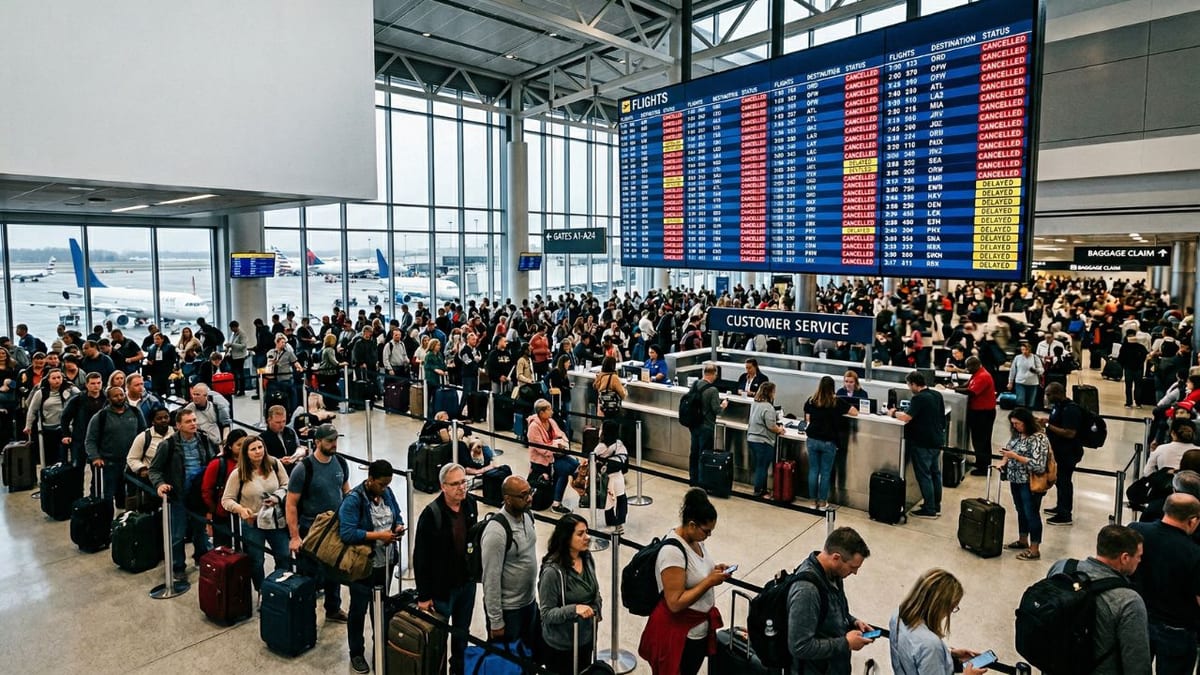
Publicly available tracking data shows that the latest aviation crunch led to at least 114 cancellations and roughly 3,440 delays across the domestic network in a single day, underscoring the continuing fragility of US airline operations. While the totals represent a fraction of the thousands of flights scheduled nationwide, the knock-on effects were magnified because many of the problems occurred at the country’s largest and most interconnected hubs.
New York area airports, including John F. Kennedy, LaGuardia and Newark Liberty, reported clusters of delayed departures and arrivals as congestion built through the day. In Los Angeles, operations at Los Angeles International Airport saw growing delays on both coastal and transcontinental routes, while Miami International logged a surge in late-running flights tied to busy domestic and Caribbean connections.
Atlanta and Orlando, two of the country’s most heavily trafficked airports for both business and leisure travelers, experienced elevated levels of disruptions as well. In Seattle, delays on key transcontinental and regional services added strain to already tight schedules, highlighting how quickly conditions at a handful of large hubs can ripple through the broader system.
Major Airlines Struggle to Contain Ripple Effects
Delta Air Lines, American Airlines and Southwest Airlines were among the carriers most visibly affected, according to operational data posted by flight-tracking services. Each airline faced a mix of outright cancellations and late departures, creating rolling bottlenecks as aircraft and crews fell out of position across the day.
For Delta and American, which rely heavily on complex hub-and-spoke networks centered on cities such as Atlanta, New York and Miami, the wave of delays translated into tight connection windows and missed onward flights for many passengers. Even when individual disruptions were relatively short, they compounded quickly when multiple flights in a sequence departed late.
Southwest, which operates a dense point-to-point schedule across the United States, encountered its own challenges as late-arriving aircraft disrupted subsequent legs. Industry observers note that carriers can often absorb modest disruption in isolated markets, but simultaneous strain at several major airports reduces the flexibility to swap aircraft, reroute crews or rebook passengers without significant schedule damage.
Weather, Congestion and Staffing Combine to Slow Operations
While specific causes varied by region and airport, a familiar mix of factors contributed to the latest round of disruption. Weather systems moving across parts of the country prompted air traffic control programs that slowed the rate of takeoffs and landings, while localized thunderstorms and reduced visibility added to the operational burden at already busy hubs.
Congestion in the national airspace system compounded these issues, as small delays on early-morning departures cascaded into longer waits later in the day. When departure slots tightened in New York and along the East Coast, long-haul routes to and from the West Coast, Florida and international gateways faced additional ground holds and rerouting.
Industry coverage in recent years has also highlighted structural staffing challenges in sectors such as air traffic control and ground handling, which leave airlines and airports with less buffer when conditions deteriorate. Publicly available commentary from aviation analysts suggests that the system remains vulnerable to days when weather, high demand and limited staff capacity converge.
Passengers Confront Missed Connections and Crowded Terminals
For travelers, the statistical footprint of 114 cancellations and 3,440 delays translated into long lines at ticket counters, crowded departure halls and uncertainty about arrival times. Social media posts and traveler reports described passengers sleeping in terminal seating areas, scrambling to rebook missed connections and waiting in extended queues for customer service assistance.
Families heading to and from popular leisure destinations such as Orlando and Miami reported particular difficulty securing same-day alternatives when flights were canceled, as many services were already operating close to capacity. Business travelers connecting through hubs like Atlanta, New York and Los Angeles faced tight turnarounds and, in many cases, overnight stays after missing final departures of the day.
Travel experts regularly advise passengers to build additional time into itineraries, especially when connecting through congestion-prone hubs or during seasons with volatile weather. The latest disruption appears to underscore that guidance, as even relatively modest schedule perturbations led to missed connections for travelers who had booked shorter layovers.
What the Latest Turbulence Signals for the Summer Travel Season
The scale and distribution of the latest disruptions are drawing renewed attention to the resilience of US aviation ahead of the peak summer travel period. Industry forecasts point to strong demand in 2026, with leisure and international traffic expected to remain robust, putting further pressure on airports and airlines to maintain reliability.
Analysts following the sector note that airlines have made incremental improvements to scheduling practices, fleet maintenance planning and staffing compared with earlier post-pandemic years, yet high-profile disruption days continue to emerge when multiple stress factors converge. The pattern raises questions about whether additional investment in infrastructure, technology and staffing will be needed to materially reduce the frequency of large-scale delay events.
For now, publicly available information suggests that airlines are focusing on tactical steps, including schedule pruning on the busiest days, greater use of larger aircraft on constrained routes and proactive waivers that allow travelers to rebook when forecasts point to potential disruption. Whether these adjustments will be sufficient to prevent a repeat of the most severe episodes of recent years remains an open question as the system heads into another busy travel season.