

More news on this day
Thousands of travelers across the United States faced fresh disruption on March 10 as a wave of flight cancellations by Qatar Airways and major US carriers rippled through key hubs in Atlanta, Chicago, Dallas, Los Angeles, Miami, and New York, affecting long-haul links to Doha, Tel Aviv, Brussels, Philadelphia, and other international destinations.
Middle East Airspace Crisis Spills Into US Hubs
The latest round of travel disruption comes as the ongoing closure and restriction of Middle East airspace continues to upend global schedules. Qatar Airways, which has been operating a sharply reduced network after grounding much of its operation in late February, is running only a limited schedule to and from Doha, creating knock-on effects for US-bound connections that normally flow through its hub.
Operational data and airline advisories indicate that services touching Doha remain among the most heavily impacted. With many Qatar Airways flights still cancelled or operating sporadically, US passengers booked on itineraries from cities such as Atlanta, Chicago, Dallas, Los Angeles, Miami, and New York to Doha and onward to Asia, Africa, and Europe are seeing last‑minute schedule changes, prolonged layovers, and in some cases outright cancellations.
Other international routes are also feeling the strain. Tel Aviv remains a sensitive destination, with multiple global carriers, including major US airlines, maintaining expanded travel waivers and selectively cancelling flights on security grounds. Some transatlantic services involving Brussels and Philadelphia are experiencing irregular operations as airlines reshuffle aircraft and crews to cover priority markets.
Weather Turmoil and Tornado Threats Compound Cancellations
On top of the geopolitical shock, severe early‑spring weather is battering the US aviation system. A powerful storm system and tornado risk zone sweeping across parts of the Southeast and Midwest has triggered widespread delays and ground stops, particularly at Atlanta and Dallas, two of the nation’s most important connecting hubs.
Industry trackers and aviation outlets report that more than 600 US flights were cancelled today, with Delta Air Lines, American Airlines, United Airlines, and Southwest among the hardest‑hit carriers. Atlanta and Dallas–Fort Worth have recorded some of the largest clusters of cancellations and delays, with ripple effects spreading to Los Angeles, Miami, Chicago, and New York as aircraft and crews fail to reach their next scheduled legs on time.
In practice, this means that a single grounded aircraft in Atlanta can cascade into multiple cancellations across the domestic and international network. Flights originally scheduled to continue from Dallas or Chicago to East Coast cities such as Philadelphia and New York are being trimmed from schedules or heavily delayed as airlines attempt to reset operations around the storm band.
Major Airlines Trim Schedules and Extend Waivers
Qatar Airways has outlined only a modest slate of services through at least March 12 as it awaits more predictable access to regional airspace, leaving many of its usual links between Doha and US gateways either suspended or operating below normal frequency. The reduced operation is particularly disruptive for passengers using Qatar Airways and partner carriers to connect between North America, the Middle East, and Asia.
US airlines are adjusting their own international offerings in parallel. Delta Air Lines has suspended its New York to Tel Aviv route into late March, while United Airlines continues to maintain a broad travel waiver for Middle East destinations, allowing affected passengers on routes such as Newark to Tel Aviv or connections via European hubs like Brussels to rebook without change fees. American Airlines is leaning on its alliance partnerships but is also trimming some long‑haul and transatlantic sectors on days when aircraft repositioning becomes too constrained.
Domestic networks are not immune. Southwest Airlines, which is heavily exposed at key storm‑hit airports including Atlanta and Dallas, has been forced to cancel a string of departures, particularly during peak morning and evening banks. United and American, each with major hubs in Chicago and Dallas–Fort Worth respectively, have also cancelled select departures and arrivals as they manage crew duty limits and de‑icing delays.
Travelers Face Long Queues, Missed Connections, and Rebooking Challenges
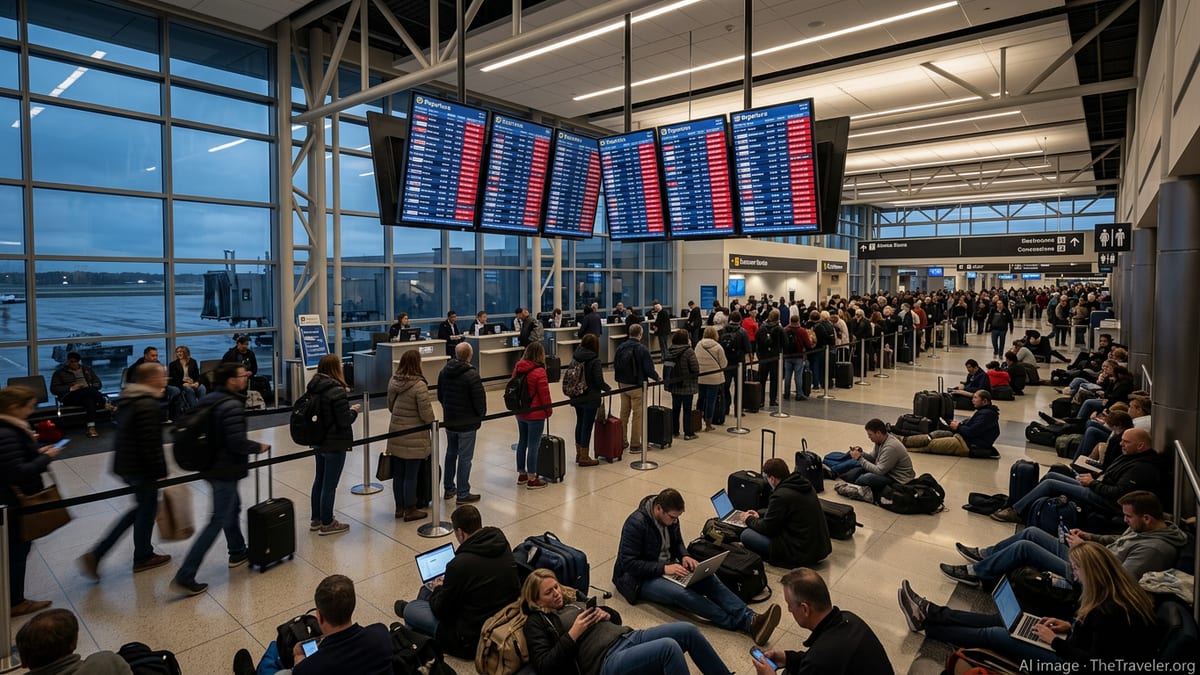
For passengers, the operational complexities playing out behind the scenes translate into long lines at check‑in and customer service desks, packed departure halls, and tense waits at departure gates as status boards flicker between “on time,” “delayed,” and “cancelled.” At major hubs such as Atlanta, Dallas–Fort Worth, Miami, Los Angeles International, Chicago O’Hare, and New York’s airports, travelers are reporting missed connections, overnight layovers, and last‑minute rerouting through unfamiliar cities.
Those booked on Qatar Airways itineraries involving Doha are among the worst affected. With many flights cancelled outright and a reduced number of relief and repatriation services operating, travelers are often being pushed several days out from their original itineraries. Some are being reprotected on partner airlines via alternative hubs in Europe or North America, while others are opting for full refunds and seeking fresh bookings on carriers whose schedules are more stable in the short term.
Passengers bound for Tel Aviv or connecting through European cities such as Brussels and Philadelphia are encountering a maze of waiver rules and capacity constraints. Expanded change policies allow many to alter their travel dates without a penalty, but limited remaining seat availability on alternative flights means that rebooking into the same week is far from guaranteed, especially for those traveling in groups or during busy periods.
What Affected Travelers Can Expect in the Coming Days
Aviation analysts expect disruptions to persist in the near term as airlines navigate both the lingering Middle East airspace issues and the unsettled weather pattern over the United States. Even as storms move on, aircraft and crew misalignment typically takes several days to unwind, particularly for complex long‑haul networks that rely on tight overnight rotations.
Travelers holding tickets over the next several days on Qatar Airways or on US carriers operating through Atlanta, Chicago, Dallas, Los Angeles, Miami, and New York should prepare for possible last‑minute schedule changes. Industry guidance suggests checking flight status frequently on airline apps, monitoring email and text alerts, and considering earlier departures or more spacious connection times where rebooking is permitted.
In many cases, airlines are offering flexible change options for affected routes, especially those involving Doha, Tel Aviv, and other destinations touched by the current crisis. However, with aircraft in short supply and peak‑time seats at a premium, passengers may need to accept alternative routings, different travel days, or downgraded cabin classes to secure a confirmed itinerary. As carriers continue to reset their networks, the picture for US travelers is likely to remain fluid well beyond the immediate wave of more than two dozen cancellations recorded today.