

More news on this day
Travelers across the United States are facing another turbulent day in the skies as widespread operational issues lead to roughly 650 delays and a small but disruptive number of cancellations at major hubs including Miami, Phoenix, Charlotte, and Philadelphia, affecting flights operated by American Airlines, Southwest Airlines, and several other carriers.
Get the latest news straight to your inbox!
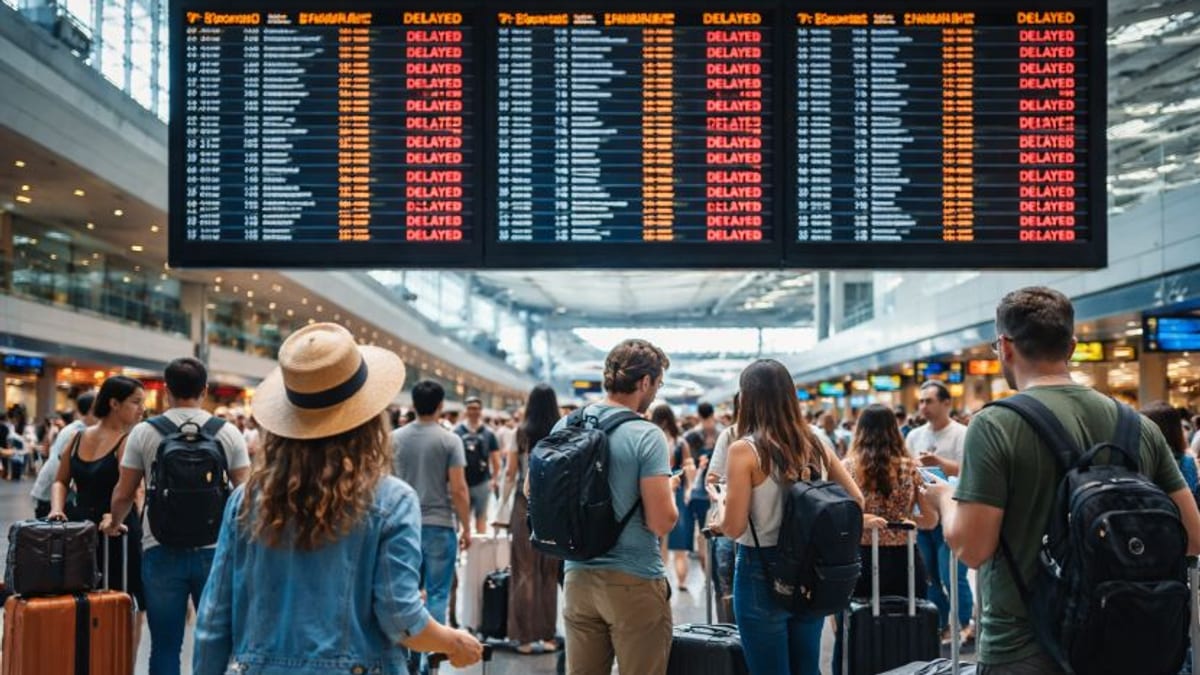
Image by Travel And Tour World
Major Hubs Buckle Under Mounting Operational Strain
The latest wave of disruption is concentrated at four key airports that play an outsized role in the U.S. air network. Miami International, Phoenix Sky Harbor, Charlotte Douglas, and Philadelphia International function as essential connecting points for domestic and international traffic, which means localized delays can quickly ripple nationwide.
Publicly available tracking data and media coverage indicate that on the current travel day, a combined total of about 650 flights linked to these airports have been delayed, with around half a dozen cancellations adding further pressure to already stretched schedules. While the absolute number of cancellations is relatively modest, they are occurring at some of the country’s most important hubs, turning even minor timetable changes into missed connections and long lines at customer-service desks.
The pattern underscores how sensitive the system has become to any disruption. Airlines have been operating with tighter schedules and higher load factors, leaving limited slack to absorb cascading delays. As a result, a single late inbound aircraft or staffing gap can translate into multi-hour waits for passengers both at origin and at downline airports.
For many travelers moving through these hubs, the impact is being felt in extended time on the tarmac, crowded gate areas, and rebookings that push arrivals into the late night or next day. Social media posts and airport departure boards show backed-up departure banks, particularly in the afternoon and evening peaks when hub operations are most complex.
American and Southwest Among Airlines Most Exposed
American Airlines and Southwest Airlines appear to be among the most affected carriers, largely because of the central role these four hubs play in their networks. American has a dominant presence in Charlotte, Philadelphia, and Miami, while Phoenix remains a significant connecting point. Southwest maintains substantial operations at Phoenix and serves all four cities through its point-to-point network.
According to airline schedules and historical route data, American funnels a large share of its East Coast and Latin America traffic through Miami and Charlotte, while Philadelphia handles a mix of domestic and transatlantic services. Phoenix links the carrier’s western operations to the rest of the country. When irregular operations flare at any one of these airports, dozens of American flights can quickly become misaligned with their scheduled departure and arrival windows.
Southwest’s model, which relies on frequent, shorter flights and tight turn times, can be particularly vulnerable when aircraft or crews are out of position. The airline has been expanding and adjusting its network across the Sun Belt and Mid-Atlantic, connecting cities such as Miami and Phoenix with multiple daily frequencies. Even a brief disruption at one station can force schedule adjustments elsewhere as the carrier works to keep aircraft and crews synced with the timetable.
Other major carriers and regional affiliates that operate at these hubs also appear in delay statistics, although typically in smaller numbers. With many routes now shared between mainline and regional partners, a delay attributed to one brand can mask the complexity of contractual carriers, ground handlers, and airport service providers involved in keeping flights moving.
Weather, Congestion, and Crew Positioning Drive Delays
Early indications suggest that a combination of weather-related constraints, heavy traffic volume, and crew-positioning challenges is contributing to the disruptions. Recent storm systems and unsettled conditions over parts of the South and Mid-Atlantic have prompted air-traffic control programs that slow the rate of departures and arrivals, creating bottlenecks at hub airports.
When air-traffic managers reduce arrival and departure rates for safety reasons, flights are metered into and out of busy airspace, which often results in ground holds and airborne holding patterns. Even if storms are not directly over Miami, Phoenix, Charlotte, or Philadelphia at a given moment, weather systems elsewhere on the network can delay the arrival of aircraft and crews, especially for carriers that rely heavily on connections through these hubs.
Crew-duty regulations are another critical factor. Pilots and flight attendants must operate within strict time limits for safety reasons, and when delays stretch across multiple legs, crews may “time out,” triggering last-minute cancellations or extended delays until replacements can be found. Recent public discussion around long wait times in Charlotte and Miami has highlighted how challenging it can be to source reserve crews quickly when many flights are already disrupted.
Airport congestion compounds these issues. High passenger volumes at security checkpoints, extended aircraft taxi times, and limited gate availability can each add minutes to a flight’s timeline. Taken individually, these may appear minor, but in a tightly scheduled system they can collectively push departures beyond their allotted slots, contributing to the day’s overall delay tally.
Passengers Confront Long Waits and Patchwork Solutions
For travelers at the affected airports, the disruption is taking a familiar form: rolling departure-time changes on information boards, long queues at rebooking counters, and difficulty securing same-day alternatives. With load factors remaining high across the industry, many later flights are already near capacity, limiting the options for quick re-accommodation.
Some passengers are turning to alternate routings through less affected hubs, such as Dallas Fort Worth, Atlanta, or Chicago, in an effort to bypass the most congested airports. Others are splitting itineraries between carriers, booking one-way tickets on competing airlines in order to reach their destination, even at additional personal cost.
Publicly shared accounts from recent disruption days suggest that same-day hotel availability near major hubs can quickly tighten when irregular operations stretch into the evening. Families and travelers with limited flexibility may find themselves facing overnight stays or long drives to alternate airports if they hope to salvage their plans.
Airport services are also feeling the strain. Food outlets and lounges often see surges in demand when delays mount, crowding spaces that are already busy during peak travel periods. This can add to the perception of chaos for travelers who are already anxious about missed connections and changing itineraries.
Broader Questions About Resilience in the U.S. Air System
The latest bout of delays and cancellations at Miami, Phoenix, Charlotte, and Philadelphia fits into a broader pattern that has raised concerns about the resilience of the U.S. air transportation system. Government statistics and independent analyses of recent years show that while airlines have restored and in some cases exceeded pre-pandemic capacity, on-time performance has struggled under the combined weight of weather volatility, staffing constraints, and infrastructure limitations.
Large hubs in particular have faced recurring operational flashpoints. Miami has repeatedly ranked among the more delay-prone airports in national comparisons, while Charlotte and Philadelphia have experienced strain during peak travel seasons given their roles as primary connecting points. Phoenix, though generally more stable weatherwise, can be affected by summer heat, airspace congestion, and network knock-on effects.
Industry observers note that airlines have taken steps such as trimming schedules, adding buffer time, and investing in technology to improve recovery from disruptions. Nevertheless, episodes like the current one highlight how even incremental shocks can cascade when traffic is dense and spare capacity is limited. Travelers are increasingly building extra time into itineraries, purchasing flexible tickets, or opting for nonstops when possible in an effort to reduce exposure to hub-related delays.
As peak spring and summer travel periods approach, the performance of major connecting hubs such as Miami, Phoenix, Charlotte, and Philadelphia will remain under close public scrutiny. The experience of this latest day of disruption underscores the ongoing challenge of keeping the complex U.S. air network running on time when any weak link in the chain can quickly reverberate across the country.