

More news on this day
Travelers across the United States faced another day of disruption on March 24, 2026, as more than 140 flights on Delta Air Lines, American Airlines, United Airlines, Southwest Airlines and other carriers were cancelled, affecting busy routes to New York’s LaGuardia, Miami, Los Angeles, London, Toronto and additional domestic and international hubs.
Get the latest news straight to your inbox!
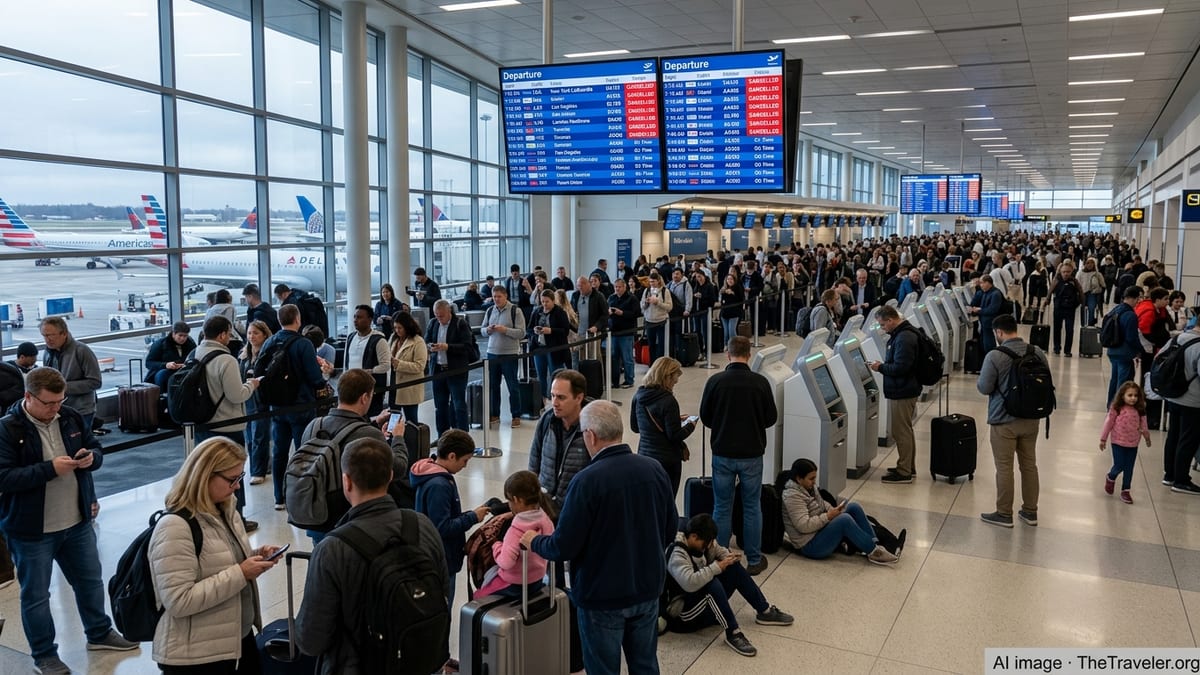
Another Day of Cancellations Across Major U.S. Carriers
Publicly available flight-tracking data for Tuesday indicates that the latest wave of cancellations is spread across the largest U.S. airlines, including Delta, American, United and Southwest. While the total represents a smaller share of the thousands of flights scheduled nationwide, the clustering of disruptions on high-demand routes is amplifying the impact for travelers.
The current problems follow a turbulent first quarter of 2026 for the aviation sector, marked by repeated weather shocks and lingering operational strains. Industry statistics for January and February already show elevated cancellation rates tied to a series of winter storms across the Northeast and Midwest, and observers note that schedules have remained tight even as airlines work to restore normal operations.
Tuesday’s cancellations add to a growing sense among travelers that air travel reliability remains fragile, particularly during periods of adverse weather or when key hubs encounter localized issues. Social media posts and traveler forums through the morning highlighted missed connections, lengthy rebookings and uncertainty around same-day alternatives.
Key Routes Affected: LaGuardia, Miami, Los Angeles, London and Toronto
The latest disruptions are heavily concentrated on routes involving major business and leisure gateways. New York’s LaGuardia Airport continues to be a focal point, following a series of recent weather-related impacts and operational constraints that have periodically slowed arrivals and departures.
Flights into and out of Miami are also seeing cancellations and delays, affecting both domestic connections and long-haul services that rely on the Florida hub as a key transfer point. Miami’s role as a bridge to Latin America and Europe means that schedule changes there often ripple out across multiple regions and carriers.
On the West Coast, Los Angeles is among the cities reporting cancelled departures and inbound flights. Los Angeles International Airport connects a dense network of transcontinental routes to New York, Toronto and other North American points, alongside long-haul services to Europe and Asia, so even a modest number of cancellations can lead to missed onward flights for international travelers.
Transatlantic routes are not immune. Flights linking U.S. hubs with London and Toronto are among those affected, according to publicly accessible flight boards and tracking services. While many of these cancellations involve single daily frequencies rather than wholesale route suspensions, passengers on these long-haul segments typically face fewer alternative departure options on the same day.
Weather Legacy, Tight Schedules and Operational Strain
The current wave of cancellations comes on the heels of an unusually disruptive winter for North American aviation. A series of powerful storms since late January has produced heavy snow, ice and high winds across large parts of the United States and Canada, prompting thousands of cancellations in earlier weeks and forcing airlines to reposition aircraft and crews.
Industry reporting over recent months has highlighted how major winter systems and associated travel waivers have strained airline networks from New York and Boston to Toronto and Chicago. Those disruptions left equipment and staff out of position, and even as conditions improved, airlines have been working through the knock-on effects of that earlier turbulence.
Operational data shared in regulatory filings and airport traffic summaries show that carriers have added capacity back quickly to meet robust demand, particularly on high-yield routes linking LaGuardia, Miami, Los Angeles, London and Toronto. However, analysts note that tight turn times and full schedules leave limited room to absorb additional shocks when localized issues emerge.
Travel industry commentary suggests that, although weather is often the trigger, the underlying vulnerability is linked to how little slack is built into complex airline networks. Once a handful of flights are cancelled or significantly delayed at a hub, crews and aircraft can quickly fall out of sync, forcing further cancellations several legs down the line.
Passengers Face Missed Connections and Limited Same-Day Alternatives
For passengers, Tuesday’s cancellations have translated into long lines at customer service desks and extended waits for call-center support as travelers attempt to secure alternative flights. Reports from airport terminals describe crowded gate areas, with some travelers rebooked onto flights departing much later in the day or even on Wednesday.
Those flying through LaGuardia and Miami appear to be among the hardest hit, especially travelers relying on tight connections to London, Toronto or West Coast destinations. Because many of the affected flights are part of multi-leg itineraries, the cancellation of a single segment can cause entire trips to unravel, forcing re-routing through different hubs or overnight stays.
In some cases, passengers are opting to switch to nearby airports, such as choosing Newark instead of LaGuardia or Fort Lauderdale instead of Miami, when seats are available. However, with demand for spring travel already rising, spare capacity on popular routes is limited, and the most convenient alternatives are often sold out or available only in higher fare classes.
Travelers with flexible plans are being encouraged, in public advisories and airline alerts, to monitor their flight status frequently and to consider adjusting departure days or times to avoid peak disruption windows. Same-day change policies and travel waivers, where offered, are providing some relief but vary by carrier and route.
What Travelers Can Expect in the Coming Days
Industry observers expect that most of Tuesday’s disruptions will be absorbed within the next 24 to 48 hours, provided no new weather systems or technical constraints emerge at key hubs. Airlines have been gradually restoring capacity following the major winter storms of recent weeks, and on-time performance metrics have shown signs of improvement compared with the most severe days of the season.
However, the latest cancellations underscore that the recovery remains uneven. With aircraft utilization still high and many routes running near capacity, even moderate issues at airports such as LaGuardia, Miami or Los Angeles can quickly lead to localized congestion and schedule adjustments.
Travel analysts note that the broader backdrop remains one of strong demand for both leisure and business travel, particularly on transcontinental and transatlantic routes involving New York, South Florida, Southern California, London and Toronto. As a result, airlines are likely to continue operating dense schedules through the spring travel period, which may limit their ability to create meaningful buffers against future disruptions.
For now, travelers booked on Delta, American, United, Southwest and other U.S. carriers are advised, via publicly posted guidance, to keep a close eye on flight notifications, arrive at airports earlier than usual, and be prepared for last-minute gate or timing changes as airlines work to stabilize operations after another challenging day in the skies.