

More news on this day
Flight disruption across the United States intensified on March 24, 2026, as Delta Air Lines, American Airlines, United Airlines, Southwest Airlines and other carriers collectively canceled more than 140 departures, snarling travel plans on busy routes to New York LaGuardia, Miami, Los Angeles, London, Toronto and other major cities.
Get the latest news straight to your inbox!
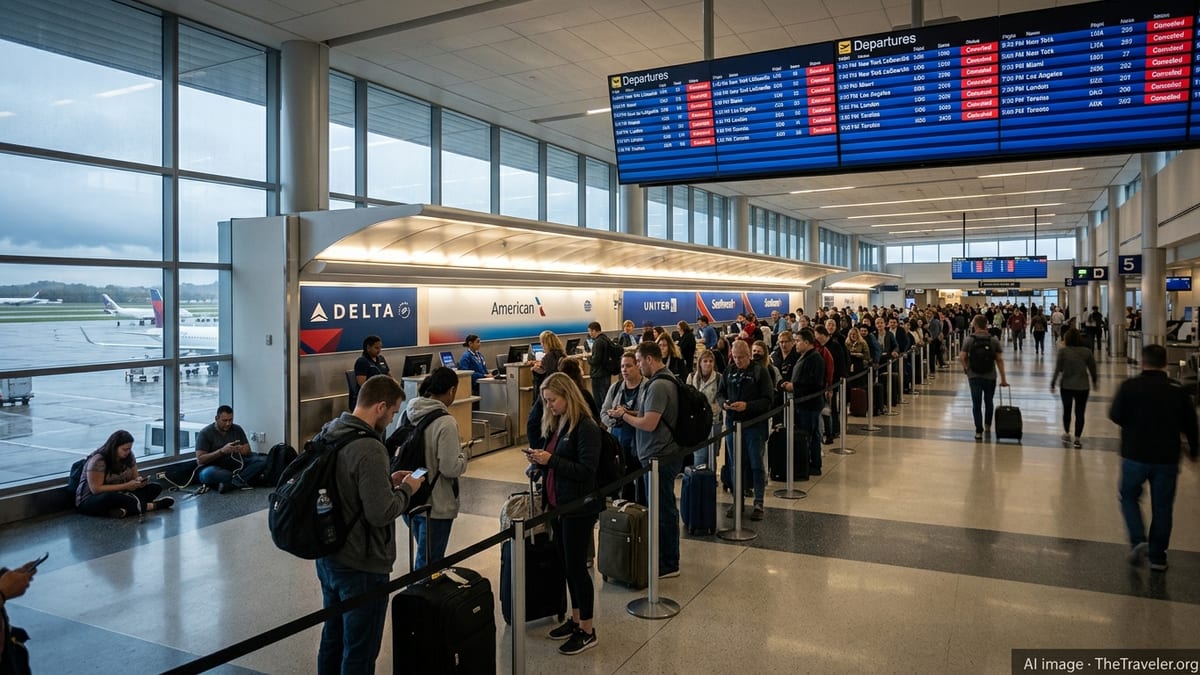
Fresh Wave of Cancellations Hits Key US and International Hubs
Publicly available tracking data on March 24 indicate that over 140 flights linked to major US airlines were canceled nationwide, adding to a volatile first quarter for air travel. The latest disruptions are concentrated on routes connecting major hubs such as New York LaGuardia, Miami, Los Angeles, London and Toronto, where airlines typically operate dense schedules catering to both business and leisure travelers.
Delta, American and United account for a substantial share of the affected services, alongside Southwest and a mix of smaller and regional operators. Several cancellations are clustered around morning and late afternoon departure banks, when aircraft and crew rotations are most sensitive to knock-on delays. Travelers on point-to-point routes as well as those relying on connections through large hubs are experiencing missed links and extended rebookings.
The new round of disruption comes on the heels of an exceptionally turbulent winter for North American aviation, with a series of major storms in January, February and March 2026 already triggering thousands of cancellations across multiple carriers. Industry data for recent weeks show that carriers have repeatedly struggled to restore full schedules after successive weather systems and operational bottlenecks.
Reports from airport operations logs and schedule summaries show that routes linking US cities with London and Toronto have also been caught up in the disruption, reflecting the close integration of transatlantic and transborder traffic with domestic US networks. Even a limited number of cancellations on key long-haul services can cascade across multiple onward connections.
Weather, Winter Storm Aftershocks and Operational Strain
While no single cause explains every cancellation on March 24, the broader backdrop includes lingering effects from the powerful winter systems that have repeatedly swept across North America since late January. A historic winter storm from January 23 to 27 brought one of the largest recorded stretches of winter weather alerts, with tens of thousands of flights disrupted over several days. Subsequent blizzards in February and March added fresh pressure on airlines already running tightly optimized schedules.
According to published coverage and government summaries, January 25 alone saw more than 10,000 weather-related flight cancellations in the United States, one of the worst single days for air travel in recent history. Similar patterns reappeared in late February and mid-March as a series of strong systems brought heavy snow, high winds and ice to key aviation regions of the Midwest, Northeast and Canada, repeatedly forcing airlines to trim or suspend operations at major hubs.
Airlines have highlighted weather as the dominant factor driving cancellations this winter, but operational strain has also played a visible role. Industry analyses and consumer reports point to staffing tightness in some work groups, aircraft positioning challenges and limited slack in schedules, which can make it harder for carriers to recover quickly once severe weather passes. When large hubs experience simultaneous runway or ground delays, even short-duration disruptions can lead to wider cancellations.
For travelers, the result is a patchwork of localized weather problems translating into a national pattern of delayed and canceled flights. Even when skies are clear at departure cities like Miami or Los Angeles, aircraft and crews may be arriving late or not at all from storm-affected regions, forcing last-minute changes.
Impact on Travelers at LaGuardia, Miami, London, Toronto and Los Angeles
The latest cancellations are particularly disruptive at New York LaGuardia, an airport that already operates near capacity during peak hours. Public data for recent months show dense schedules by Delta, American and other carriers on LaGuardia routes to destinations including Miami, Toronto and various Midwestern and Southern cities. When several departures in a single bank are canceled, terminal congestion and customer-service queues can increase rapidly.
Miami and Los Angeles, key gateways for both domestic and international traffic, are seeing a mix of canceled and delayed flights that complicate onward connections to Latin America, Europe and the Pacific. Even modest reductions in capacity on core routes between these hubs and New York can make same-day rebooking difficult, especially for travelers with fixed cruise departures, events or tight business itineraries.
On the international side, services to London and Toronto are also experiencing cancellations tied to US network disruptions and winter weather impacts across parts of Canada and the North Atlantic corridor. Air Canada and US carriers share traffic on some of these routes, meaning an operational issue for one airline can reduce options for passengers booked on another through codeshare agreements.
Travelers caught in the March 24 disruption are reporting longer waits at rebooking counters and call centers, along with limited seat availability on remaining services. Some passengers with flexible plans are opting to delay trips by a day or more rather than risk misconnecting through congested hubs, further shifting demand and load factors across the week.
What Airlines Are Doing to Manage the Backlog
Publicly available information from schedule feeds and airline notices indicates that carriers are using a range of tactics to stabilize operations after the latest round of cancellations. These measures include consolidating lightly booked flights, prioritizing core hub-to-hub services and, in some cases, upgauging aircraft on selected routes to accommodate displaced travelers.
In the wake of previous winter storms this season, airlines have temporarily added capacity on high-demand trunk routes, such as services between New York and Florida, to clear backlogs once weather improved. Earlier in February, for example, larger widebody aircraft were deployed on certain domestic segments to increase the number of seats available to rebooked customers after a severe blizzard affected the Northeast. Similar strategies may be employed again around LaGuardia, Miami and Los Angeles as the current disruption eases.
Carriers are also extending travel waivers on affected days, allowing passengers to change itineraries without standard fees, subject to seat availability. These waivers are typically time-limited and route-specific, but they can significantly reduce the number of travelers showing up for flights that are at risk of cancellation, helping airlines to better match staffing and aircraft to actual demand.
Industry analysts note that while such steps can soften the immediate impact, repeated cycles of weather-driven cancellations and recovery efforts can exhaust available aircraft and crew flexibility. The more often carriers are forced to rebuild schedules on short notice, the harder it becomes to protect all future bookings from ripple effects.
Travelers Face a Season of Persistent Uncertainty
For many passengers, the March 24 wave of more than 140 cancellations is the latest reminder of how fragile air travel can be during an active winter pattern and a period of sustained operational complexity. Data from recent months show that large-scale storms, such as the January 23 to 27 system and subsequent February and March blizzards, have repeatedly turned normal travel days into high-disruption events.
Consumer advocates point to this season as evidence that travelers should build more buffer time into itineraries that rely on tight connections or same-day arrivals for cruises, tours or major events. Booking earlier flights in the day, avoiding very short layovers and considering alternate airports within a region are among the strategies often recommended to reduce exposure to cascading delays.
Looking ahead, airlines and airports will continue to adjust schedules as new weather systems develop and as they assess ongoing staffing and fleet availability. While spring typically brings some relief from the most severe winter storms, the experience of early 2026 suggests that US air travelers may continue to face sporadic but significant disruption, especially on busy domestic and transborder routes connecting cities like New York, Miami, Los Angeles, London and Toronto.
For now, the combination of more than 140 cancellations in a single day and the broader record of winter-related disruption underscores that the current season remains challenging for both airlines and passengers, with operational resilience and flexible planning emerging as critical themes on both sides of the check-in counter.