

More news on this day
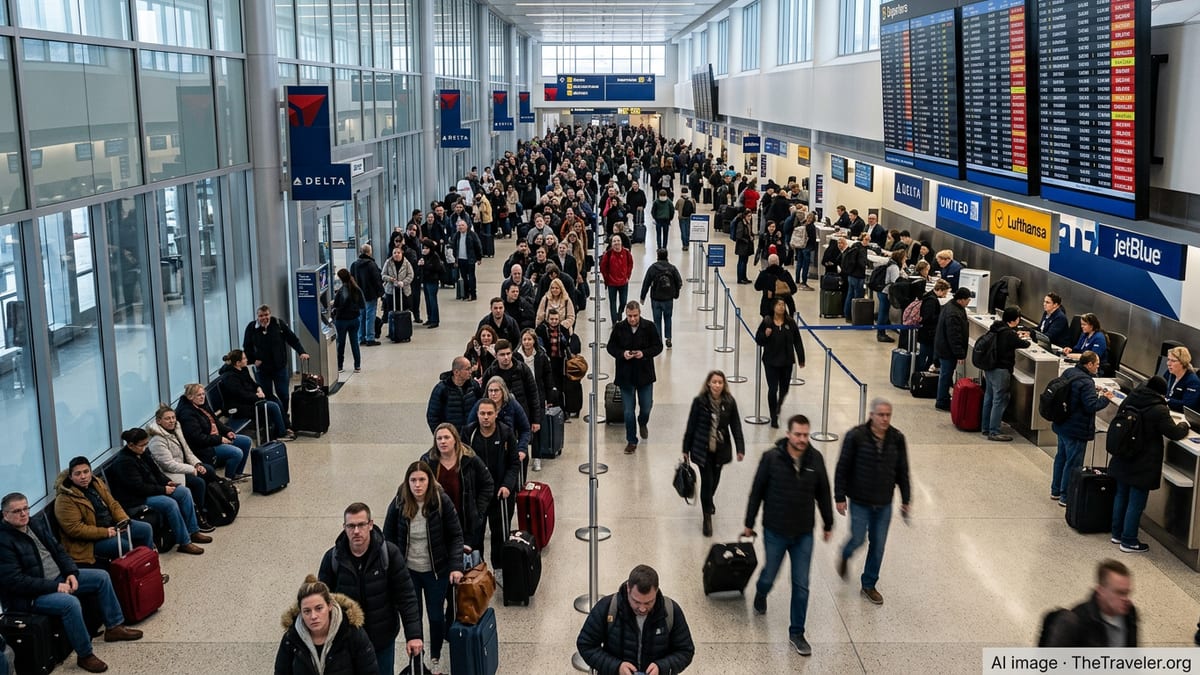
Air travelers across the United States are facing another difficult day as flight disruptions at major hubs from Atlanta and Chicago to New York, Houston and Los Angeles trigger thousands of delays and hundreds of cancellations, snarling connections and stretching airline and airport operations nationwide.
Get the latest news straight to your inbox!
Delays and Cancellations Mount at Key US Gateways
Operational data compiled from aviation tracking platforms and industry coverage indicates that more than 4,000 flights are delayed across the United States today, with at least a few hundred services cancelled outright. One industry report cited around 4,395 delays and just over 200 cancellations affecting airports in cities including Atlanta, New York, Orlando, Boston, Chicago, Los Angeles, Seattle, Houston and Newark, underscoring the broad geographic spread of the disruption.
The pattern is particularly visible at the country’s largest hubs, where even a modest reduction in capacity or a short period of ground delays can ripple outward for hours. Reports show that major network carriers are experiencing hundreds of late departures and arrivals, with some low cost airlines also logging notable disruption as they rely on tightly timed aircraft turns that leave little room for recovery once the system begins to back up.
Although the majority of services are still operating, the level of disruption is significant enough that travelers are being advised through airline channels and media reports to check their flight status before leaving for the airport, build in additional time at the terminal and be prepared for gate changes or missed connections as schedules shift through the day.
Staffing Strains and Airspace Bottlenecks Amplify Impact
While no single nationwide ground stop has been reported today, the disruptions are unfolding against a backdrop of ongoing staffing strains in the air traffic system. Recent coverage of operations at major facilities describes repeated episodes in which controller shortages have led to ground delay programs at busy airports, forcing aircraft to hold at origin points until arrival flows can be safely managed at destination.
Analyses of the US National Airspace System in recent years have highlighted how a small number of highly trafficked regions function as critical nodes. When those nodes experience constraints, even for a few hours, delays can cascade across the network. Research based on federal on time performance data has characterized these episodes as distinct disruption clusters, responsible for a disproportionate share of systemwide delay on a relatively small number of days each year.
Today’s pattern appears consistent with that dynamic. With hubs in the Northeast, Midwest and South all reporting elevated delay levels, the margin for rerouting or rapid recovery is limited. As aircraft and crews fall out of position, schedule reliability later in the day can deteriorate even in regions that were initially unaffected, creating the impression of a rolling disruption that follows the clock across time zones.
Weather, Runway Constraints and Recent Rule Changes Add Pressure
Weather remains a persistent underlying factor in US flight disruption. Although today’s delays are not being attributed to a single severe storm system, scattered convective activity and low ceilings in parts of the country are adding time to arrivals and departures at several hubs. Industry studies have shown that weather contributes materially to national aviation system delays, particularly when it interacts with already congested airspace and tight runway capacity at busy airports.
Structural constraints at individual airports are also playing a role. In San Francisco, for example, newly implemented Federal Aviation Administration rules combined with runway work are reducing permitted arrivals from 54 to 36 per hour. Travel industry reporting indicates that this change, announced in early April, is expected to increase the likelihood of delays for flights into and out of San Francisco, especially during peak periods, and those knock-on effects can reach transcontinental routes that connect through other hubs.
Elsewhere, recent operational incidents and temporary airspace restrictions have served as reminders of how quickly conditions can shift. A mechanical issue that blocked a runway at Orlando earlier this week led to a short term ground stop and a series of delays, while earlier temporary flight restrictions in parts of Texas and New Mexico in February briefly shut down key regional gateways. Although these specific events are not directly tied to today’s nationwide pattern, they have contributed to a generally fragile operational environment in which recovery from any new disruption is more difficult.
Travelers Face Crowded Terminals and Tight Connections
At major hubs today, the cumulative effect of delays is most visible in crowded concourses, full departure lounges and long customer service lines as passengers attempt to rebook missed connections. Even when flights are not cancelled, late arriving aircraft can compress boarding times, prompting airlines to make quick turnarounds that leave little room for passengers who are still making their way through security or across terminals.
Publicly available guidance from airlines and travel advisors emphasizes several practical steps for navigating days like this. Passengers are being encouraged to rely on airline apps for real time updates, enable push notifications for gate and schedule changes, and consider rebooking to earlier services when possible to protect onward connections. For those starting trips at heavily affected hubs, arriving at the airport earlier than usual is widely recommended, particularly for families or travelers checking bags.
Some carriers are also adjusting same day change and standby policies when disruption reaches certain thresholds, providing more flexibility for passengers to shift flights without additional fees. These measures can ease pressure at the margins, but they also depend on the availability of seats on alternative services, which is limited when widespread delays are affecting multiple banks of departures.
Broader Trend of Persistent Disruption Raises Planning Questions
Today’s widespread delays fit into a broader pattern of flight disruption in the United States over the past several years. Insurance and travel data providers have documented elevated levels of cancellations and delays across multiple seasons, citing a mix of weather volatility, staffing challenges, aging infrastructure and occasional technology outages as recurring pressure points.
Industry statistics compiled for late 2025 show that even in months without headline grabbing storms or major operational meltdowns, a significant share of flights arrive late, and a small but notable percentage are cancelled outright. Analysts note that the cumulative effect for frequent travelers and business operations is substantial, influencing decisions about when to schedule critical meetings, how much buffer time to allow between connections, and whether to purchase additional protections such as trip insurance.
For travelers flying today, the immediate focus is simply on reaching their destination. But for airlines, airports and regulators, another day of nationwide disruption will likely feed into ongoing debates about controller staffing, infrastructure investment and schedule planning heading into the peak summer travel season, when volumes are higher and the margin for error becomes even slimmer.