

More news on this day
Flight disruptions across some of the United States’ busiest hubs, including Chicago, Houston, Boston and Newark, are causing fresh headaches for travelers as weather and operational pressures trigger another turbulent stretch for air traffic.
Get the latest news straight to your inbox!
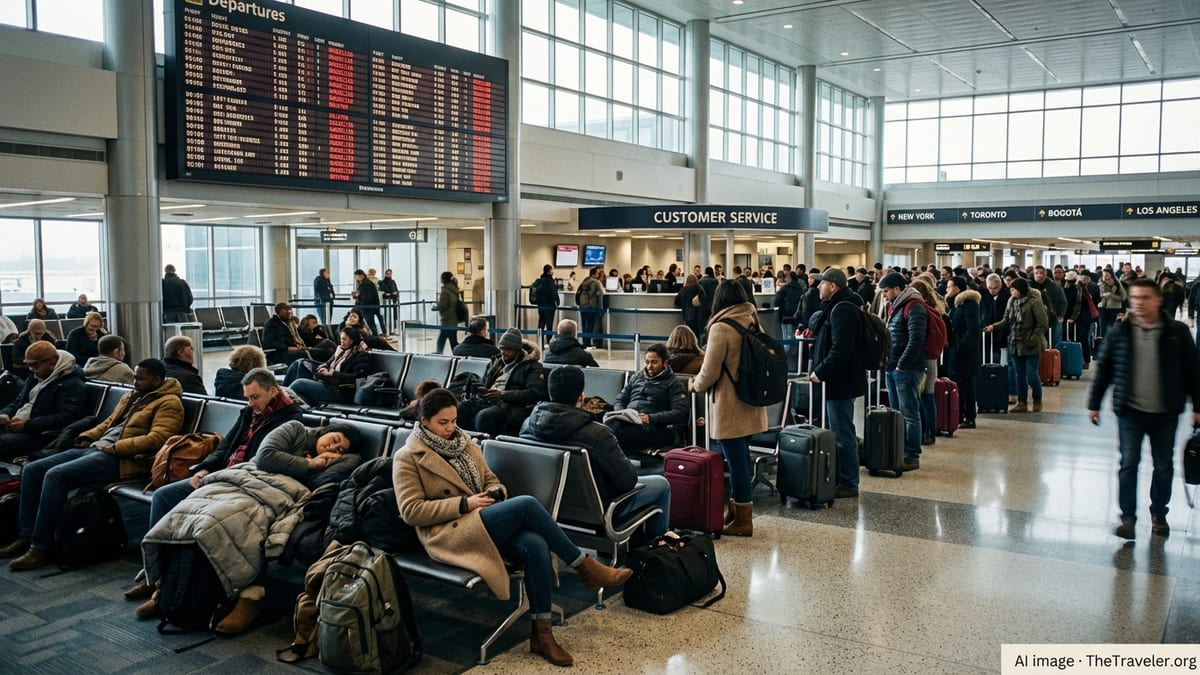
Storms and System Strain Converge on Major Hubs
Published coverage and live tracking data indicate that airlines and travelers faced a difficult operating environment on March 31, with delays and cancellations stacking up across the national network. Chicago, Houston, Boston and Newark were among the airports experiencing notable disruption as thunderstorms, regional flooding and broader scheduling pressures rippled through the system.
Reports focused particular attention on Chicago O’Hare International Airport, where a combination of severe thunderstorms and heavy traffic led to extensive delays and scores of cancellations. Ground stops and subsequent ground delay programs limited departures and arrivals during peak travel hours, slowing operations and creating knock-on effects for connecting traffic nationwide.
Houston George Bush Intercontinental also reported elevated disruption, with publicly available tallies showing dozens of delayed flights and a smaller but meaningful number of cancellations. As a major hub for domestic and Latin American routes, even moderate schedule disruptions at Houston quickly translated into missed connections and rebookings across multiple regions.
In the Northeast, Boston Logan International and Newark Liberty International recorded sustained delays reflecting both local weather and broader congestion in the busy corridor that also includes New York’s LaGuardia and JFK airports. Flight status boards showed a patchwork of late departures and arrivals, with some short-haul services pushed back repeatedly as airlines worked to reposition aircraft and crews.
Thousands of Travelers Face Cancellations and Long Delays
Industry monitoring sites tracking March 31 operations reported nationwide totals of more than one hundred cancellations and several thousand delays across US airports, underscoring how quickly localized weather issues can scale into a national problem. One detailed breakdown for that day highlighted over 3,000 delayed flights and more than 100 cancellations, with Chicago and Boston among the leading trouble spots.
Separate coverage focusing on the latest wave of disruption pointed to an even larger tally, citing more than 4,000 delays and over 250 cancellations across the United States. In that snapshot, Chicago O’Hare emerged as one of the hardest hit single airports, with well over a thousand delays and close to two hundred cancellations, while Houston, New York area airports and other large hubs reported scores of affected flights.
Newark Liberty International, a key gateway for the New York metropolitan region, recorded dozens of delays and a smaller set of cancellations, but the impact on passengers was amplified by tight schedules and high load factors. Even a modest percentage of disrupted departures at Newark can quickly fill rebooking options on remaining flights, stretching airline customer service resources and airport facilities.
At Boston Logan, the numbers were lower than at Chicago but still significant, with several dozen delays and a cluster of cancellations affecting both regional and transcontinental services. Travelers reported crowded gate areas, rolling departure estimates and extended waits on the tarmac as airlines navigated weather windows and air traffic flow restrictions along heavily traveled East Coast routes.
Weather, Congestion and Capacity Limits Drive the Disruptions
Recent days have brought a series of challenging weather events to multiple parts of the country, including severe thunderstorms in the Midwest and unsettled conditions in parts of the Northeast. Chicago’s latest storms added to an already difficult late winter and early spring period, following a sequence of powerful systems that disrupted operations in January and February and again in mid March.
Publicly available aviation statistics show that large hub airports such as Chicago O’Hare, Houston Bush Intercontinental and Newark Liberty rank among the US facilities with the highest raw numbers of cancellations in recent years. Their role as connecting hubs means that any slowdown is magnified across the network, particularly when staffing and aircraft utilization are already running near capacity.
Capacity constraints are also interacting with recently reported cuts and adjustments in air traffic handling, especially at busy coastal and hub airports. Some carriers have previously trimmed schedules at select locations in response to air traffic management changes, leaving less slack in the system when storms or operational issues emerge. As a result, recovery from a day of heavy disruption can take multiple scheduling cycles.
For Boston and other Northeast airports, strong winds, low visibility and runway configuration limits continue to be recurring factors. When weather reduces the number of arrivals that can be safely handled per hour, air traffic managers impose flow restrictions that quickly translate into ground delays at origin airports, lengthening overall journey times even on routes where skies are clear.
Ripple Effects for Airlines and Passengers
The latest disruption has again highlighted how dependent US air travel has become on a relatively small set of high volume hubs. Airlines such as United, American, Delta and Southwest all route substantial traffic through Chicago, Houston, Boston or Newark, meaning issues at one airport often force rolling adjustments across entire route maps.
On March 31, publicly available data pointed to United Airlines in particular as facing heavy pressure, with several hundred delayed flights and a few dozen cancellations tied to its hubs at Chicago O’Hare and Houston Bush Intercontinental. Other major carriers, including American Airlines, Southwest, Spirit and various regional operators, also logged significant numbers of delayed departures as they cycled aircraft through affected hubs.
For passengers, the practical impact went beyond the immediate delays. Missed connections, crew time limits and aircraft repositioning all contributed to secondary cancellations later in the day, even on routes not directly in the path of the worst weather. Travelers arriving late into Chicago or Newark often found that onward flights had already departed, with remaining options heavily booked.
Airport operations also came under strain as gate space, baggage systems and customer service counters filled up. Longer than usual lines formed at rebooking desks and service kiosks, while some passengers turned to airline apps and call centers to secure new itineraries. Those able to switch to early morning flights on April 1 generally fared better than travelers hoping to depart at the height of the disruption.
What Travelers Can Expect Next
Forecasts suggest that while the most intense storms affecting Chicago have begun to pass, scattered severe weather and residual congestion could continue to affect schedules into early April, particularly at large hubs. Airlines are expected to keep some recovery padding in their schedules, but any new system of storms or low visibility in the Northeast could trigger further localized ground delay programs.
Travel analysts commenting on the March 31 disruption noted that the pattern fits a broader trend in which severe weather days are producing outsized effects on the aviation system compared with historical norms. High load factors, tight crew scheduling and heavy reliance on a limited number of hubs have reduced the margin for error, meaning that even relatively short lived thunderstorms can produce all day knock on impacts.
Passengers planning to travel through Chicago, Houston, Boston, Newark or other major hubs over the coming days are being advised in published guidance to monitor flight status closely and build extra time into connections where possible. Flexible tickets and proactive use of same day change options, where available, are being highlighted as ways to reduce the risk of becoming stranded during peak disruption windows.
Regulators and industry observers are also watching how airlines manage customer recovery efforts, including rebooking practices, hotel accommodation policies and compensation under federal rules when disruptions are within carrier control. With another busy summer travel season approaching, the performance of airlines and airports during episodes like the late March disruptions is likely to factor into ongoing debates over capacity, staffing and infrastructure investment.