

More news on this day
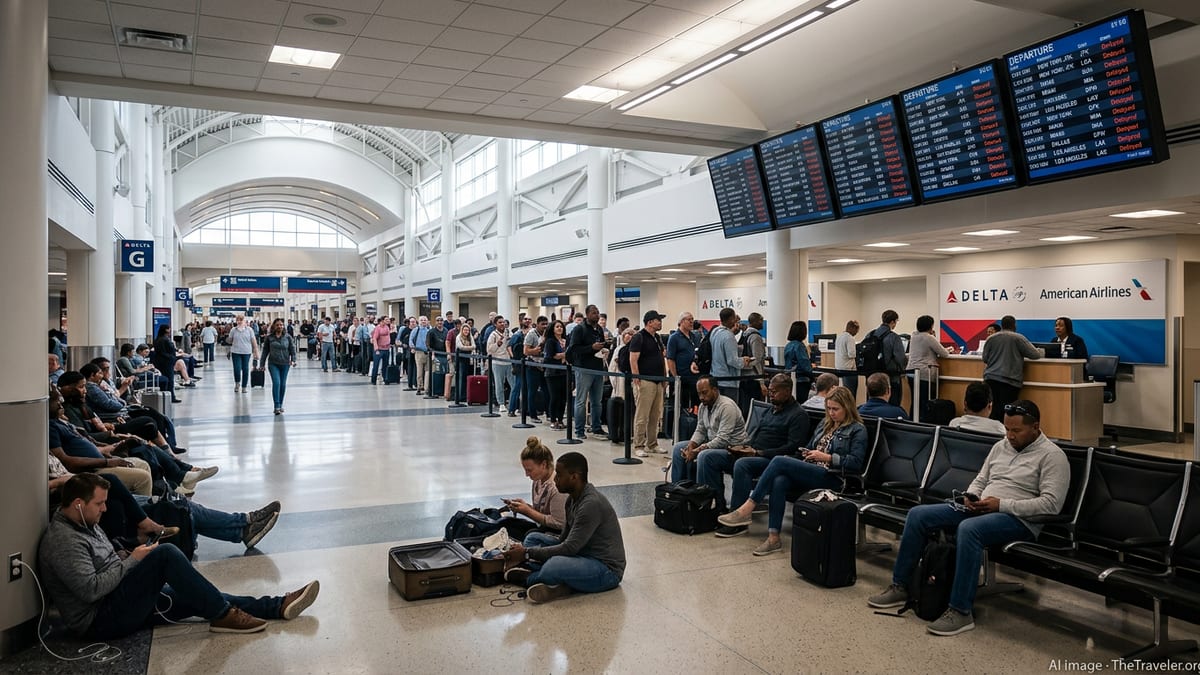
Thousands of air travelers across the United States are facing disrupted plans as flight-tracking tallies point to 93 cancellations and 772 delays in a single day, hitting major hubs in Georgia, Illinois, New York and California and placing particular pressure on Delta Air Lines, JetBlue, United, Lufthansa and American Airlines.
Get the latest news straight to your inbox!
Disruptions Concentrated at Major US Gateways
Publicly available data from flight-tracking platforms indicates that the latest wave of disruption is centered on some of the country’s busiest corridors, with Atlanta in Georgia, Chicago in Illinois, New York area airports and key California gateways such as Los Angeles and San Francisco all reporting elevated levels of delays and day-of-travel cancellations. The pattern reflects how quickly operational strain at a few high-traffic hubs can cascade through domestic and transatlantic networks.
At these airports, airlines including Delta Air Lines, JetBlue, United, Lufthansa and American Airlines feature heavily in the disruption tallies, reflecting both their large schedules and their reliance on complex banked operations. Even when cancellations are comparatively limited, a high volume of late departures and arrivals can snarl gate availability, push crews toward duty-time limits and upend connections for passengers attempting to move between regions.
Reports from recent disruption days at hubs such as Chicago O’Hare and New York’s major airports describe departure boards dominated by late flights, rolling delay estimates and tight connection windows collapsing into missed trips. While the headline figures for cancellations remain well below the levels seen during major holiday meltdowns, the concentration of problems in a handful of critical markets has been enough to strand travelers far from home or their intended destination.
Weather, Congested Skies and Fragile Operations
Recent coverage of US aviation conditions points to a combination of factors behind the latest round of delays and cancellations. Spring weather patterns, which can swing rapidly from thunderstorms to low clouds and gusty winds, are a recurring trigger for air-traffic control programs that slow the rate at which aircraft can take off and land. When these conditions coincide with peak travel days, bottlenecks quickly emerge at hubs like Atlanta, Chicago, New York and Los Angeles.
Analysts note that airline and airport operations remain highly interconnected and, in some cases, fragile. Episodes over the past two years involving winter storms, technology failures and air-traffic system outages have shown how even a short ground stop or regional weather cell can create knock-on impacts for hours or days as aircraft and crews fall out of position. Carriers such as American, Delta, United and JetBlue have all experienced periods when recovery from a single disruptive event extended well into subsequent travel days.
International partners are not immune. Lufthansa, for example, relies on US gateways such as New York and California for transatlantic feed, meaning that a delay on a domestic leg can ripple into missed long-haul departures and disrupted onward connections in Europe. The result is that relatively modest cancellation counts, when combined with several hundred delays, can translate into thousands of travelers needing to be rebooked across multiple carriers and alliances.
What the Numbers Mean for Passengers
For passengers, the distinction between a delayed and a canceled flight is often academic when connections are involved. With 772 services running late, even by margins of 45 to 90 minutes, missed onward flights become inevitable at hubs where minimum connection times are already tight. As seats on later departures fill, travelers can find themselves stuck overnight in cities like Atlanta, Chicago or New York, or diverted through unfamiliar airports as airlines attempt to clear backlogs.
Travel data from recent disruption days in North America shows that delays tend to outnumber cancellations by a wide margin, yet the overall impact on customer experience can be similar. Extended waits on the tarmac, crowded gate areas and long lines for rebooking or customer service quickly erode any buffer time built into itineraries. Families traveling with children, international visitors unfamiliar with US hub airports and those on tight schedules for events or business commitments are among the most acutely affected.
Financial and logistical knock-on effects can also be significant. While some airlines provide hotel and meal vouchers in certain circumstances, coverage is not uniform and may depend on whether the disruption is attributed to weather, air-traffic control constraints or carrier-controlled factors. Travelers who must arrange their own accommodations or alternative transport at short notice can face steep costs, especially in major metropolitan areas where demand for last-minute rooms surges whenever flights are disrupted.
How Flyers Can Reduce Their Risk
Travel specialists and consumer advocates consistently advise passengers to treat days with elevated disruption statistics as a signal to tighten their own planning. Booking the first flight of the day where possible, opting for nonstop routes instead of connections and avoiding itineraries with very short layovers can all reduce the chances that a delay will turn into an overnight stranding. On routes linking Georgia, Illinois, New York and California, where competition is strong, some passengers may also find it worthwhile to compare multiple carriers in case one airline shows a more stable operational record on a given day.
Real-time information has become a crucial tool. Passengers are increasingly encouraged to monitor their journeys through airline mobile apps, independent flight-tracking services and airport notification systems, rather than relying solely on departure boards at the terminal. Early awareness of a creeping delay can give travelers a better chance of securing alternative routings before later flights fill up, particularly when disruptions affect widely used carriers such as Delta, United, American, JetBlue and Lufthansa.
Experts also recommend that travelers understand the basic contours of airline customer-service commitments on the routes they are flying. While formal compensation regimes differ between domestic US flights and services touching regions such as Europe, many carriers offer rebooking at no additional fare when disruptions are significant. In some cases, customers can make changes through apps or websites rather than waiting in long airport queues, a step that can be critical when several hundred flights are already running late.
Growing Calls for Stronger Passenger Protections
The recurring nature of large-scale disruption in recent travel seasons has fueled renewed debate over passenger rights in the United States. Advocacy groups point to episodes where thousands of travelers were stranded after weather events or IT breakdowns, arguing that current standards for care and compensation lag behind frameworks in some other regions. They cite instances in which major carriers canceled or delayed large percentages of their schedules over several days, leaving passengers to navigate complex refund policies and inconsistent assistance on the ground.
Policy discussions have increasingly focused on clearer, enforceable obligations around hotel accommodation, meal support and automatic refunds when flights are canceled or subject to extreme delays. Some proposals highlight the need for greater transparency in how airlines schedule their operations, particularly around peak periods where even modest disruptions can have outsized consequences for hubs in Georgia, Illinois, New York and California.
For now, the immediate reality for travelers caught up in the latest set of 93 cancellations and 772 delays is a familiar one of rebooked tickets, improvised airport overnight stays and uncertain arrival times. As demand for air travel remains strong heading into the busier spring and summer periods, the strain on airline networks is unlikely to ease, placing a premium on both resilient operations from carriers and proactive planning from passengers hoping to avoid becoming part of the next wave of stranded flyers.