

More news on this day
US air travelers are facing another turbulent spring, as a mix of severe weather, evolving airspace rules and long‑running infrastructure strains combine to disrupt flights across major hubs in April 2026.
Get the latest news straight to your inbox!
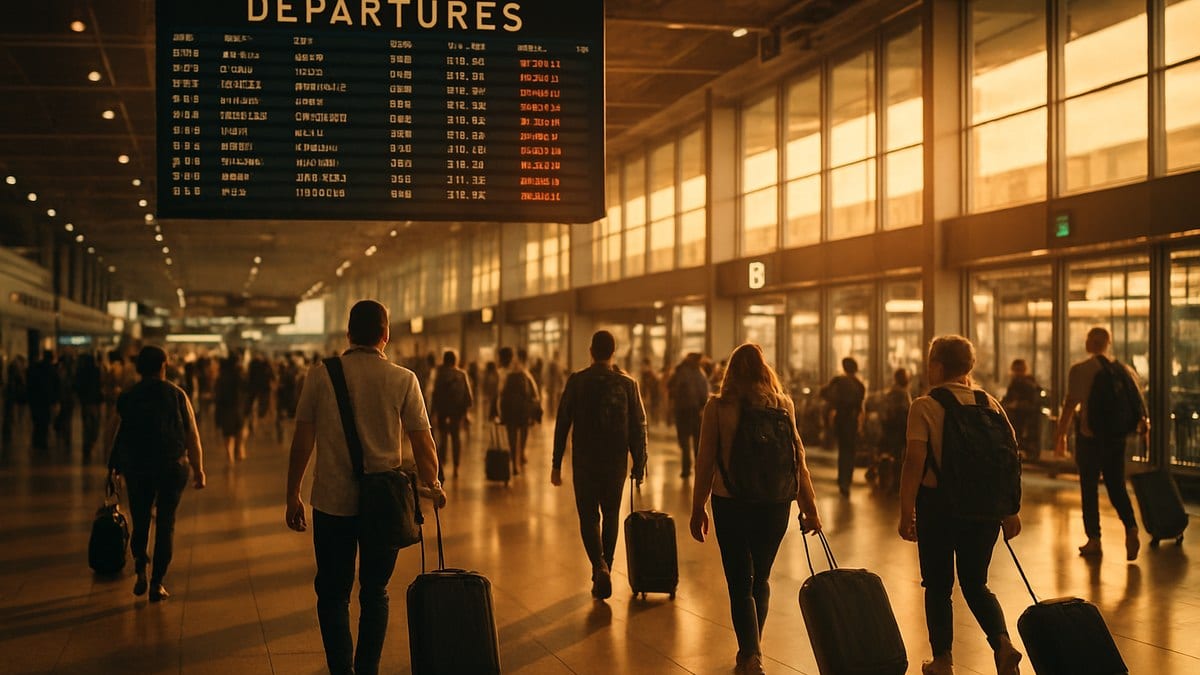
Storm Systems Trigger Fresh Nationwide Disruptions
Early April has brought a series of storm fronts sweeping across large parts of the United States, repeatedly tangling airline schedules at key connecting airports. Industry disruption trackers report that severe thunderstorms, high winds and associated air traffic control restrictions on April 8 alone disrupted more than 3,500 flights at 27 major US airports, illustrating how quickly weather can ripple through the network during a busy spring travel period.
Reports from aviation analysts describe this latest cluster of weather events as one of the more intense non-holiday disruption waves of the year so far, coming on the heels of an already busy March. With airlines carrying well over two million passengers a day through the end of April, relatively small slowdowns at large hubs are translating into extended queues, missed connections and late-evening arrivals for travelers across the country.
Recent coverage from travel industry publications highlights how the Easter and post-Easter storm pattern has repeatedly targeted heavily trafficked corridors in the Midwest, Mid-Atlantic and Northeast. Short but intense bouts of lightning, low cloud ceilings and crosswinds have prompted ground stops and flow restrictions that slow departures and arrivals, quickly exhausting schedule buffers built into airline operations.
Weather-related disruption has been particularly challenging during peak afternoon and evening banks, when aircraft and crew are most tightly scheduled. Once those periods are hit by delays, airlines often struggle to reposition planes and staff in time for early morning departures the following day, extending the impact for passengers well beyond the initial storm window.
Major Hubs From Detroit to San Francisco Feel the Strain
Some of the sharpest impacts so far in April have been recorded at large connecting hubs that funnel passengers across regions. Detroit Metropolitan Wayne County Airport has featured prominently in recent reporting, with travel news outlets describing “massive travel chaos” as storms and congestion combined to trigger extensive delays and cancellations across key domestic routes. The disruption there has spilled over into other Midwestern airports as airlines worked to reroute aircraft and rebook stranded travelers.
On the West Coast, San Francisco International Airport has also experienced significant weather-related interference. Local coverage on April 11 pointed to hundreds of delays and a smaller but notable number of cancellations as thunderstorms moved through the Bay Area, forcing temporary holds and stretched arrival queues. Even when other nearby airports remained largely unaffected, the combination of terrain, runway layout and new approach rules at San Francisco has made it especially vulnerable to spring weather.
Chicago and New York, perennial chokepoints in the national system, have seen repeated bouts of congestion as storms have crossed the Great Lakes and Northeast. Airline-issued travel waivers tied to thunderstorms in the Chicago area, along with earlier waivers for East Coast and Midwestern systems in March, underscore how frequently carriers now anticipate weather-related bottlenecks at these high-volume hubs.
Atlanta, Dallas–Fort Worth and other southern gateways are also contending with the seasonal uptick in convective storms. While these airports are designed to handle large traffic volumes, even short-lived thunderstorm cells can shut down ramp operations and pause departures for safety reasons, leading to arrival holds for inbound flights and a cascade of missed connections for passengers heading to smaller cities.
Systemic Vulnerabilities Amplify Weather Shocks
While storms remain the immediate trigger for many April disruptions, recent analysis suggests that structural weaknesses in the US aviation system are amplifying the impact on travelers. A report from the US Department of Transportation’s inspector general this month highlighted cybersecurity and data-management gaps affecting dozens of critical Federal Aviation Administration systems that support automation, communication, navigation and weather capabilities. The findings pointed to outdated records and incomplete tracking of known vulnerabilities, underscoring concerns that key elements of the national airspace system have been slow to modernize.
Travel risk specialists have drawn attention to how high aircraft utilization, tight turnaround times and staffing constraints allow relatively localized weather to produce nationwide ripple effects. Research summarized in aviation and insurance trade publications describes how modern hub-and-spoke networks, optimized for efficiency, can leave limited slack when multiple hubs experience even moderate disruption at once.
Persistent pressure on air traffic control staffing continues to loom in the background of the April disruptions. Commentary from pilots and controllers has stressed that many facilities are operating with thin margins, relying heavily on overtime to sustain normal traffic levels. That environment can complicate recovery from severe weather, particularly when facilities must manage reroutes and holding patterns while maintaining safety and separation standards.
Airlines, for their part, are still balancing aggressive spring and summer schedules with the need to maintain resilience in the face of volatile weather and infrastructure constraints. Publicly available planning documents and carrier guidance acknowledge that operational buffers are limited, making it more likely that intense weather clusters will translate directly into visible disruption for passengers.
Regulatory Changes Add New Operational Challenges
Alongside weather and staffing pressures, evolving regulatory measures are reshaping how traffic flows through some of the busiest airspace in the country this spring. In the San Francisco Bay Area, a new Federal Aviation Administration order limiting parallel landings on San Francisco International Airport’s closely spaced runways has drawn particular attention. Aviation-focused forums and local commentary indicate that the shift away from side-by-side approaches, even in clear conditions, is expected to reduce arrival throughput and extend delays during peak periods, especially when combined with adverse weather.
Nationally, the agency is pressing ahead with updates to core information systems used by pilots and controllers. Industry notices describe an upcoming changeover to a new Notices to Air Missions platform in mid-April, part of a broader modernization push following a high-profile system failure in 2023. While the transition is designed to improve long-term reliability and clarity of safety information, airlines and flight operations teams are preparing for potential teething issues as new software and procedures come online during an already busy travel season.
Aviation policy developments from Washington are also shaping expectations for the months ahead. Recent government communications have emphasized the need to upgrade aging air traffic infrastructure and address cybersecurity, while also responding to heightened public scrutiny after previous outages and ground stops. For travelers, these behind-the-scenes changes can translate into short-term unpredictability as new procedures are tested and refined.
Airports themselves are adjusting local operations to accommodate both regulatory directives and shifting traffic patterns. That can mean revised runway use, updated departure procedures and new spacing standards between arriving aircraft, all of which can subtly reduce capacity and extend delay chains when weather or demand spikes.
What April Disruptions Mean for Travelers
For passengers flying in and out of US hubs this April, the combined effect of weather volatility, system constraints and regulatory change is a more fragile travel experience, particularly on tightly timed itineraries. Travel rights organizations tracking recent storm-related disruption note that while severe weather often falls outside airlines’ control, the practical impact for passengers is the same: longer days at the airport, missed connections and unexpected overnight stays.
Consumer advocates stress that the cascading nature of modern disruptions makes it essential for travelers to build in additional time for connections when routing through busy hubs such as Chicago, New York, Atlanta, Dallas–Fort Worth, San Francisco and Detroit. Published guidance from airlines and third-party advisories increasingly encourages travelers to monitor forecasts several days in advance and to be prepared for schedule changes as systems approach.
Analysts also point out that April’s disruption pattern is likely a preview of the broader spring and summer travel season. With demand expected to remain high through late April and into the peak vacation months, any combination of severe weather, technology hiccups or staffing bottlenecks at major hubs could produce similar waves of interference. Publicly available traffic and delay statistics from recent years show that spring storms often set the tone for operational performance in the months that follow.
For now, aviation data indicates that most flights are still operating, but with slimmer on-time margins and a higher probability of schedule adjustments on stormy days. Travelers planning April trips through US hubs are being urged by industry observers to keep plans flexible, stay alert to changing conditions and anticipate that the wider system may take longer than usual to recover from each new round of spring weather.