

More news on this day
Thousands of airline passengers across the United States are facing schedule upheaval as publicly available tracking data shows at least 101 flight cancellations and 3,309 delays affecting major carriers including Delta Air Lines, Spirit Airlines, Hawaiian Airlines and regional operators such as Republic Airways and PSA Airlines at key hubs from New York to Miami and San Francisco.
Get the latest news straight to your inbox!
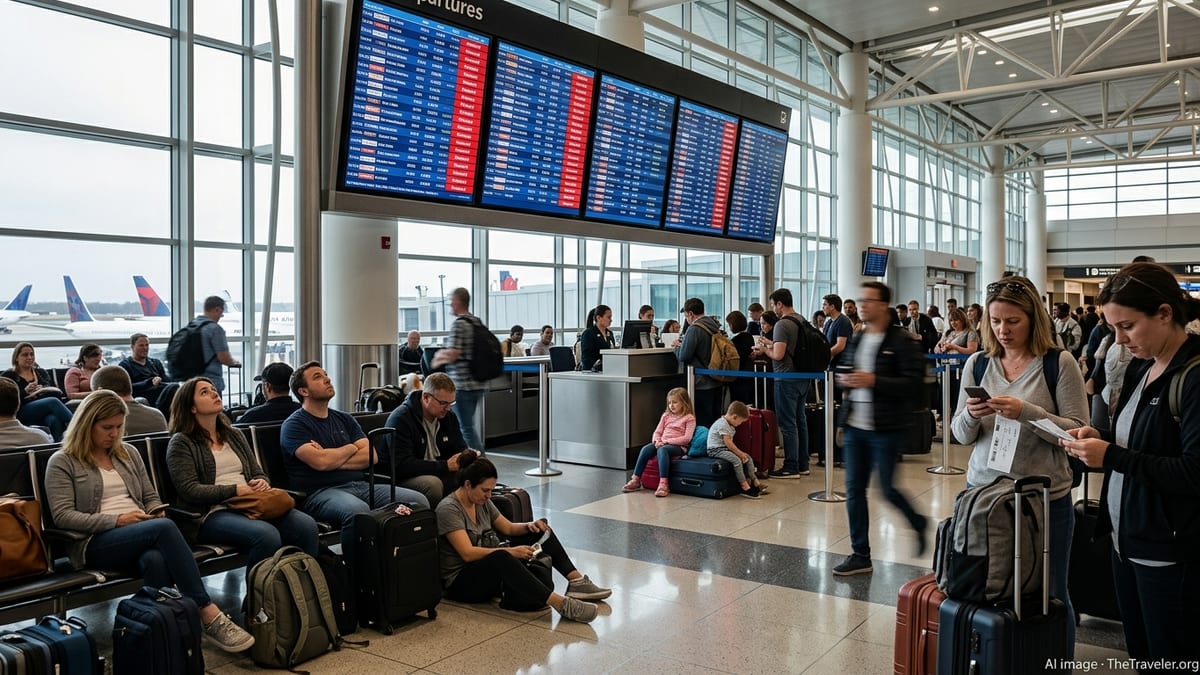
Major US Hubs Struggle With Wave of Disruptions
Real-time aviation tracking platforms and operational reports indicate that the latest disruption is concentrated at some of the country’s busiest airports, including New York area gateways, Miami, Fort Lauderdale, Orlando and San Francisco. The pattern reflects how quickly knock-on effects at a handful of key hubs can ripple across the national network, leading to missed connections and extended delays even at smaller regional airports.
In New York, passengers at John F. Kennedy, LaGuardia and Newark Liberty have reported rolling departure time changes, gate shifts and crowding around customer service desks as delayed arrivals push aircraft and crew assignments out of position. Similar conditions are being described at Florida’s major leisure gateways, particularly Miami, Fort Lauderdale and Orlando, where full spring travel schedules leave airlines with limited slack to absorb disruption.
On the West Coast, San Francisco International has also been among the airports with elevated delay counts, affecting both transcontinental flights and connections to Hawaii and the Pacific. Publicly available information suggests that once delays pass the two or three hour mark on key banked departures, airlines often face difficult choices between extended holds and outright cancellations of later flights to reset their operations.
Delta, Spirit, Hawaiian and Regional Partners Among Hardest Hit
According to aggregated flight status data, Delta Air Lines features prominently among the carriers wrestling with delays, reflecting its large footprint at New York, Florida and West Coast hubs. Delta’s reliance on regional partners for feeder traffic, including operators such as Republic Airways and PSA Airlines, means that cancellations and delays on shorter routes can have outsized effects on passengers booked on long-haul connections.
Spirit Airlines, which maintains a significant presence at Fort Lauderdale and Orlando, is also seeing a notable share of the disruption. Publicly available coverage in recent months has highlighted the ultra-low-cost carrier’s efforts to stabilize its schedule as it contends with financial pressures, aircraft utilization constraints and tight crew availability on peak days, all factors that can magnify the impact of adverse weather or air traffic control programs.
Hawaiian Airlines, whose mainland operations depend heavily on on-time departures from West Coast gateways such as San Francisco, is reported among the airlines experiencing delays and select cancellations. When departure times from the mainland slip, knock-on effects can cascade through overnight returns to Honolulu and onward island-hopping services, complicating rebooking options for passengers headed to or from the Pacific.
Regional operators, including Republic and PSA, play a crucial behind-the-scenes role in this disruption pattern. These carriers operate many of the shorter flights that feed larger hubs, and when their schedules are thinned by cancellations, mainline airlines can be forced to reroute or rebook passengers through alternative cities, often resulting in longer travel days and overnight stays.
Weather, Congestion and Crew Positioning Drive Chain Reactions
Recent weeks have brought episodes of severe weather and strong winds across portions of the eastern United States, with published coverage describing thousands of weather-related cancellations nationwide. When storm systems roll through major metropolitan regions such as New York or the Southeast, the Federal Aviation Administration can introduce ground delay programs and flow restrictions that slow departures and arrivals across a broad area.
Once those constraints are in place, airlines begin to accumulate late inbound aircraft and crews that reach the end of their legally permitted duty hours before they can operate onward flights. Publicly available operational analysis indicates that this kind of crew positioning problem has become a leading cause of late-day cancellations, particularly on regional routes where turnaround times are short and schedules are tightly packed.
Congestion at popular leisure destinations such as Miami, Fort Lauderdale and Orlando adds another layer of complexity. These airports are handling heavy seasonal demand while operating within airspace that can quickly become saturated when thunderstorms or low ceilings move through. Even modest delays at peak times can back up departure queues, leaving aircraft waiting on taxiways and eroding the buffer that airlines build into their daily rotations.
Further west, San Francisco’s well-known susceptibility to low clouds and wind shifts can disrupt runway configurations and arrival rates, feeding into the broader system-wide picture. When combined with already high load factors, the margin for absorbing schedule shocks without significant passenger impact becomes very small.
Thousands of Travelers Face Missed Connections and Overnight Stays
With more than three thousand delayed flights and over one hundred cancellations recorded in a single operating period, the cumulative effect on travelers is substantial. Industry data from the US Department of Transportation and congressional research has shown that even comparatively short delays translate into millions of lost passenger hours annually, along with added expenses for meals, lodging and alternative arrangements.
For many travelers caught in the current disruption, the most immediate impact is missed connections at hubs such as New York, Miami and San Francisco. When a first leg into a hub arrives late, available seats on later departures can disappear quickly, leaving passengers queued for rebooking onto flights departing the following day or rerouted through less direct paths.
Families heading to cruises or package holidays from Florida ports, business travelers connecting to international services and visitors flying to time-sensitive events are among those most affected when schedules unravel. Publicly available consumer advocacy guidance notes that, in such situations, passengers often face a patchwork of rebooking options, meal vouchers and, in some cases, hotel accommodations that vary widely by airline and by the cause of the disruption.
Travelers are also encountering the knock-on effects of aircraft and crew displacement. A cancellation at one end of a route can leave the next day’s first departure without an aircraft, resulting in fresh delays for passengers who had not yet been directly affected by the original disruption.
What Today’s Turbulence Signals for the Spring Travel Season
The scale of the latest cancellations and delays raises broader questions about how resilient US airline operations will be during the forthcoming spring and early summer peak. Industry analyses of recent disruptions have pointed to the combination of strong travel demand, lean staffing, aging aircraft in some fleets and increasing exposure to extreme weather events as key vulnerabilities.
Carriers including Delta, Spirit and Hawaiian have outlined capacity adjustments, hiring plans and schedule refinements aimed at improving reliability, yet the current pattern of rolling delays suggests that margins remain thin when multiple stressors converge on the same day. Regional partners, which are responsible for a large share of domestic departures at hubs across the country, also continue to face pilot hiring and retention challenges that can limit flexibility.
Publicly available policy discussions in Washington have focused on strengthening passenger protections around cancellations and long delays, including clearer standards for meal and hotel support during controllable disruptions. While any regulatory changes would take time to filter through to day-to-day operations, ongoing episodes of widespread delays keep the issue at the forefront for travelers and lawmakers alike.
For now, the experience of passengers at New York, Miami, Fort Lauderdale, Orlando, San Francisco and other affected airports underscores how quickly the US system can become strained. With 101 cancellations and 3,309 delays logged in a single period, travelers heading into the spring travel season are being reminded to build extra time into their plans and remain prepared for last-minute changes.