

More news on this day
US air travelers are confronting a turbulent start to April 2026, as a combination of severe weather, tight airline schedules and heavy holiday demand fuels widespread delays and cancellations across major hub airports.
Get the latest news straight to your inbox!
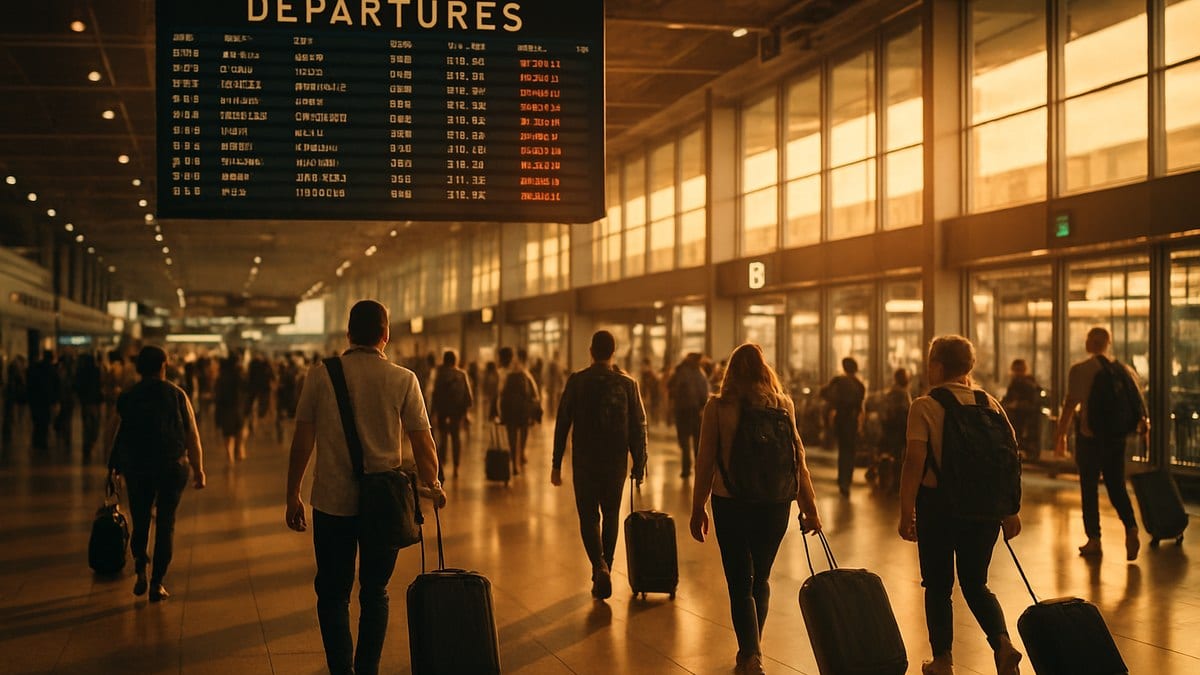
Stormy Start to April Sends Disruptions Surging
Across the first full week of April, publicly available flight-tracking data shows a sharp rise in delays and cancellations at some of the country’s busiest airports. Reports compiled from industry trackers for April 5 and 6 indicate that more than 8,600 flights were delayed and over 700 were canceled worldwide in just two days, with a large share of the disruption involving services within, into or out of the United States.
Travel-focused analyses of those days point to a concentration of problems at major connecting hubs. Facilities such as Hartsfield-Jackson Atlanta International Airport, Chicago O’Hare International Airport, the main New York metropolitan airports, Houston’s George Bush Intercontinental Airport, Las Vegas’s Harry Reid International Airport, Minneapolis–Saint Paul International Airport and Philadelphia International Airport all featured prominently in disruption tallies as the post-Easter travel wave collided with unsettled spring weather.
Early April also brought localized trouble spots that intensified the national picture. At Austin-Bergstrom International Airport in Texas, one recent breakdown of operations for April 4 highlighted dozens of delays and a cluster of cancellations across multiple carriers, as strong storms and low clouds forced schedule adjustments and created knock-on impacts for flights to and from larger hubs including Dallas, New York and Boston.
These early-April interruptions arrived on the heels of a volatile winter, including a powerful February blizzard and a late-season March storm system that had already exposed the limits of North America’s aviation network during periods of simultaneous weather and operational stress.
Major Hubs Feel the Strain of Tight Networks
The latest data underscores that the worst impacts are being felt at the country’s biggest and most tightly scheduled hub airports, where any early-morning disruption can ripple throughout an airline’s daily operation. Analyses of the first week of April show that when arrival rates into key hubs are reduced by thunderstorms, low visibility or air traffic flow restrictions, departure delays quickly climb and connection banks become more vulnerable.
United Airlines’ network illustrates how quickly problems can escalate. On April 3, one review of tracked operations found more than 835 United flights delayed and 44 canceled, with disruption clustered around major hubs including Chicago O’Hare, Newark Liberty and Los Angeles International. At some of these airports, over one third of departures were reported to be running late at the peak of the event, a pattern that reflects how hub-and-spoke systems leave little slack when early flights fall behind schedule.
Industry observers note that these hubs are central to how US airlines move passengers around the country, offering frequent connections between smaller cities and major destinations. Yet the same design means that a ground stop, lightning hold or short-lived storm cell over a single airport can quickly translate into aircraft and crews being out of position across an entire network, making it harder to absorb subsequent weather or technical issues later in the day.
Recent coverage of delay statistics from 2025 also shows that several of the airports now experiencing April turmoil already had elevated disruption rates in the previous year. Chicago O’Hare and Newark Liberty, for example, ranked among the US facilities with the highest share of late and canceled flights, pointing to structural congestion and weather exposure that set the stage for the current round of problems.
Weather, Demand and System Weak Points Combine
Publicly available reports on early 2026 aviation performance suggest that April’s wave of disruption is not driven by a single cause, but by the interaction of multiple stressors. Severe thunderstorms, late-season snow in parts of the Northeast and flooding in sections of the central United States have all contributed to capacity reductions and temporary ground stops at various airports this month.
At the same time, airlines are operating into a period of sustained demand. The post-Easter travel surge, overlapping school holidays and early spring leisure trips have pushed passenger numbers higher, leaving carriers with fuller flights and less flexibility to rebook affected travelers. Once a cancellation occurs at a hub, fewer empty seats are available on later departures, increasing the likelihood that passengers will face overnight delays or extended layovers.
Analyses published by aviation and travel outlets also highlight underlying system vulnerabilities. With aircraft scheduled tightly between multiple daily legs and reserve crews limited, a single delay in a storm-affected hub can cascade into missed connections for both passengers and crew. Technology issues, including strain on reservation and crew-scheduling platforms during disruption events, have compounded those pressures in some recent incidents, prompting renewed questions about the resilience of key operational systems.
Although airlines and aviation agencies have invested in upgraded radar, digital air traffic tools and expanded terminal capacity in recent years, travel industry commentary on the first quarter of 2026 indicates that these improvements have not eliminated bottlenecks when several forms of stress hit the network at once.
Travelers Confront Longer Queues and Changing Plans
For passengers, the practical impact is increasingly visible in crowded gate areas, extended customer service lines and rapidly shifting departure boards at major hubs. On some of the worst recent days, data compiled from flight-tracking services showed more than 4,000 delayed flights and several hundred cancellations within the United States alone, leaving travelers facing missed connections and forced overnight stays.
Reports from airports such as Atlanta, Chicago, Houston and the New York metropolitan area describe long waits at rebooking counters as passengers seek alternative routings around storm-affected regions. With many flights operating close to capacity, same-day options can be limited once disruption takes hold, especially for travelers starting their trips at smaller regional airports that rely heavily on single daily connections through a hub.
Observers note that the pattern of delays this April often involves rolling pushbacks, where departure times are repeatedly adjusted in small increments as thunderstorms, lightning holds or airspace flow programs come and go. While this approach can eventually allow flights to operate, it complicates connection planning and can result in passengers arriving just after their onward flights have departed.
In response, consumer-facing guidance from travel publications and passenger-rights organizations is placing renewed emphasis on practical preparation. Recommendations include building wider buffers between connections, favoring early-morning departures from hubs where possible, traveling with carry-on luggage to maintain flexibility in the event of last-minute rebookings, and using airline and airport apps to monitor gate changes and revised aircraft arrival times in real time.
Outlook for the Rest of April 2026
With spring storms historically common through much of April, analysts following public flight-performance data caution that elevated disruption levels may persist in the coming weeks. Forecast discussions from weather agencies point to additional rounds of unsettled conditions across portions of the South, Midwest and Northeast, regions that are home to several of the country’s most important hub airports.
Travel and aviation commentators reviewing recent events suggest that the system is likely to remain sensitive to even short-lived weather disturbances while airlines operate with limited spare capacity and lean staffing. Any future technology outages, crew imbalances or air traffic management restrictions layered on top of active weather could again translate into nationwide knock-on effects.
For travelers, the current pattern means that planning and flexibility remain essential, particularly for itineraries that depend on tight connections at major hubs or involve critical arrival times for events and business meetings. As April 2026 continues, the experience of the opening weeks indicates that while most flights are still operating, the margin for error is narrow on busy days, and a passing storm or brief slowdown at a single airport can still cascade into widespread disruption across the US network.