

More news on this day
Air travel across the United States faced fresh disruption today as major hubs including Atlanta, Boston, Chicago, Dallas, Houston, Los Angeles and New York collectively reported 135 flight cancellations and 1,910 delays, straining airline operations at Delta Air Lines, American Airlines, United Airlines, Spirit, JetBlue and other carriers.
Get the latest news straight to your inbox!
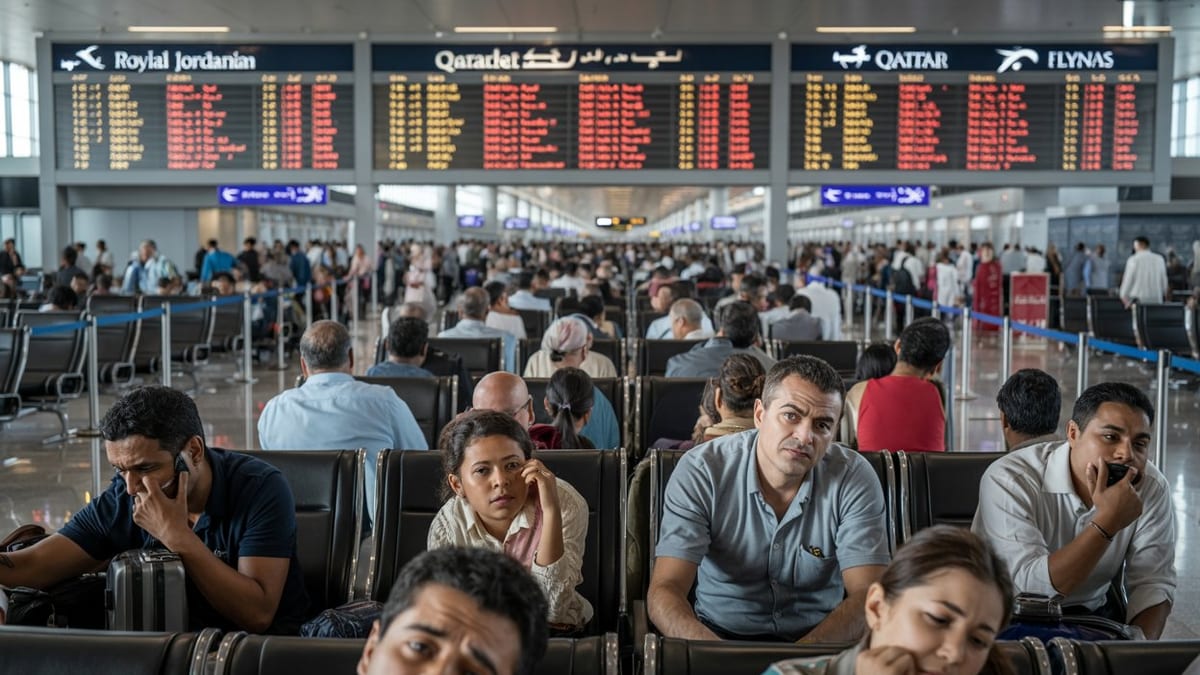
Major Hubs From Coast to Coast Under Pressure
Publicly available tracking data indicates that the latest disruption is spread across a wide arc of the US aviation network, with large hub airports bearing the brunt of operational strain. Hartsfield–Jackson Atlanta International, Boston Logan, Chicago O’Hare, Dallas–Fort Worth, Houston George Bush Intercontinental and William P. Hobby, Los Angeles International and the New York area’s three main airports all reported elevated numbers of late and canceled departures.
Reports from flight tracking platforms show that, while the absolute cancellation tally of 135 flights is modest compared with the worst nationwide meltdowns, the 1,910 delayed flights represent a significant share of daily traffic. That imbalance points to an operating environment in which airlines are attempting to preserve as much of the schedule as possible, even as congestion, weather and air-traffic constraints push departure and arrival times well behind plan.
Patterns seen in previous disruption days suggest that the impact is most acute at large connecting hubs, where a single late arrival can cascade across multiple onward legs. In practice, this means that delays in cities such as Atlanta, Chicago, Dallas, Houston and New York quickly ripple into knock-on schedule problems at smaller regional airports across the country.
For travelers, the practical effect can be similar whether their flight is formally canceled or simply pushed back repeatedly, as missed connections, missed hotel check-ins and disrupted work or family plans accumulate over the course of the day.
Delta, American, United and Low-Cost Carriers Affected
Operational data summarized today shows the burden of disruption falling across all segments of the market, from legacy network airlines to low-cost and ultra-low-cost carriers. Delta Air Lines, American Airlines and United Airlines all saw clusters of delayed flights at their principal hubs, reflecting their heavy dependence on precisely timed connecting banks.
Reports indicate that low-cost and ultra-low-cost operators including Spirit and JetBlue were also caught up in the turbulence, particularly on dense leisure routes linking major coastal cities and popular sun destinations. These airlines typically operate tighter aircraft rotations and have fewer spare planes or crews available, making it harder to absorb schedule shocks once delays start to build.
Recent analyses of US airline performance highlight the fine margins within which carriers are currently operating. Industry statistics for 2024 and early 2025 show on-time arrival rates hovering around the upper seventies in percentage terms, with cancellation rates near or slightly above one percent, leaving limited slack to accommodate sudden weather or airspace constraints without significant disruption.
On days like today, when delays far outnumber cancellations, airlines may opt to keep aircraft and crews moving even if schedules slip considerably. That strategy can ultimately reduce the total number of passengers needing overnight accommodations or full rebookings, but it often translates into long hours in terminals and on tarmacs for travelers.
Weather, Congestion and Structural Strain
Published coverage of recent US aviation performance points to a familiar combination of triggers behind days with elevated disruption: unsettled weather patterns, structural congestion at a handful of very busy hubs and ongoing staffing and equipment constraints for both airlines and air traffic control.
Thunderstorms, low clouds and shifting wind patterns can require increased separation between aircraft, rerouted traffic flows and temporary ground stops in affected regions. Even brief interruptions at a single hub can create hours of downstream schedule complications, especially during peak morning and late-afternoon departure waves.
At the same time, major US hubs such as Atlanta, Chicago O’Hare, Dallas–Fort Worth, Los Angeles and the New York airports continue to operate close to capacity on busy days. When traffic is this dense, even minor operational hiccups translate quickly into long queues for takeoff and landing, and recovery to normal flows can take much of the day.
Industry data and regulatory reviews in recent years have also drawn attention to the underlying fragility of some airline and air traffic systems, highlighting how software outages, crew scheduling constraints and equipment bottlenecks can amplify the effects of weather and congestion.
Passenger Rights, Refunds and Rebooking Options
With cancellations and long delays continuing to affect travelers, passenger rights and remedies remain a central concern. Publicly available guidance from the US Department of Transportation outlines when travelers are entitled to refunds for canceled or significantly changed flights, as well as how airlines are expected to handle major schedule disruptions.
Under current federal rules, passengers whose flights are canceled and who choose not to travel are generally entitled to a refund of the unused portion of their ticket rather than a credit, regardless of the reason for the cancellation. Some recent regulatory actions have focused on making these refunds more automatic and transparent, reducing the burden on consumers to navigate complex request processes.
Airlines maintain their own customer service commitments for issues that are within their control, such as crew or mechanical problems, which may include rebooking on later flights, meal vouchers or hotel accommodation. Weather-related disruptions and wider air traffic control restrictions are often treated differently, but in practice many carriers still provide some level of support to maintain customer goodwill.
Travelers caught up in today’s disruption are being encouraged by consumer advocates to monitor airline apps closely, enable text and email alerts, and explore self-service rebooking options, which can sometimes secure alternative itineraries faster than waiting at crowded airport service counters.
Preparing for Continued Volatility in US Air Travel
The latest wave of cancellations and delays arrives against the backdrop of a historically busy period for US aviation, with passenger volumes pushing back toward or above pre-pandemic levels and leisure demand remaining strong. Industry forecasts for 2026 point to continued growth in scheduled capacity, but also warn that systemic pressures may keep disruption risk elevated.
Travel analysts note that nationwide disruption days, even when involving fewer than 200 cancellations, can still affect tens of thousands of passengers once nearly 2,000 or more delayed flights are taken into account. For many travelers, the most disruptive experience is not necessarily a single canceled segment but a chain of missed connections that forces unplanned overnight stays or rerouting through unfamiliar airports.
In this environment, flexible planning is becoming an essential part of US air travel. Some advisory coverage recommends building in longer layovers when connecting through the most delay-prone hubs, opting for earlier flights in the day when possible, and considering nonstop options even at a slight fare premium to reduce the number of potential failure points.
Today’s tally of 135 cancellations and 1,910 delays underscores how quickly routine schedules can unravel when multiple large hubs face simultaneous strain. With spring and summer travel peaks approaching, passengers across the United States are likely to continue navigating a landscape where on-time performance can vary dramatically from one day to the next.