

More news on this day
Thousands of travelers across the United States faced fresh disruptions today as United Airlines, PSA Airlines, Alaska Airlines and Spirit Airlines reported 53 flight cancellations and more than 130 new delays at major hubs including Washington, Chicago, Miami, Orlando, Fort Lauderdale, Anchorage and Honolulu.
Nationwide Disruptions Concentrated at Key Hubs
The latest wave of operational turbulence swept across the US network on March 3, compounding an already difficult late-winter travel period. While overall volumes were lower than during peak holiday periods, the clustering of cancellations and delays at a handful of busy airports created outsized knock-on effects for passengers with tight connections and long-haul itineraries.
Washington-area airports reported clusters of delayed departures to and from Midwest and West Coast cities as crews and aircraft arrived late from earlier disrupted rotations. In Chicago, one of the nation’s main connecting hubs, short-haul regional routes operated by PSA Airlines were among the most affected, with morning and early afternoon bank departures particularly vulnerable to crew and aircraft availability issues.
In Florida, Orlando International, Miami International and Fort Lauderdale-Hollywood International each saw a wave of schedule changes, particularly on high-frequency leisure routes. Spirit Airlines, which maintains significant operations at these airports, logged a mix of cancellations and rolling delays that rippled through the day’s schedule, affecting both outbound and inbound passengers.
Farther afield, disruptions reached Anchorage and Honolulu, underscoring how issues in the continental US can quickly cascade along longer domestic and trans-Pacific routes. Alaska Airlines, a major operator in both markets, reported cancellations and delays tied to aircraft positioning challenges and recovery from earlier weather and operational impacts.
Weather, Congestion and Operational Pressures Combine
Airline and airport officials pointed to a familiar mix of factors behind today’s problems: pockets of adverse weather, air traffic control flow programs, and ongoing staffing and fleet utilization pressures. Intermittent winter conditions across parts of the Midwest and Northeast triggered de-icing operations and slower turn times, while thunderstorms in parts of the Southeast forced temporary ground stops and reroutes that cascaded through carrier networks.
At major hubs such as Chicago and Miami, air traffic controllers implemented spacing measures to safely manage congested arrival and departure corridors. These restrictions, even when brief, can push already tight flight banks off schedule. Once a morning bank is affected, carriers often spend the rest of the day working to realign crews and aircraft, leading to additional delays even after the underlying weather has improved.
Regional operator PSA Airlines, which flies feeder services on behalf of larger network carriers, felt the strain in several connecting markets. Because these smaller aircraft often operate multiple short segments per day, the impact of a single delay can multiply quickly. That dynamic was visible in and out of Washington and Chicago, as passengers on regional jets encountered last-minute gate changes and extended waits on the tarmac.
In the Pacific and Alaska networks, long flight times and limited alternative routings make recovery more complex. When a single aircraft or crew pairing on routes linking Anchorage or Honolulu to the mainland is disrupted, options for reaccommodating passengers can be limited, resulting in lengthier delays and, in some cases, overnight stays.
Thousands of Travelers Scramble to Rebook
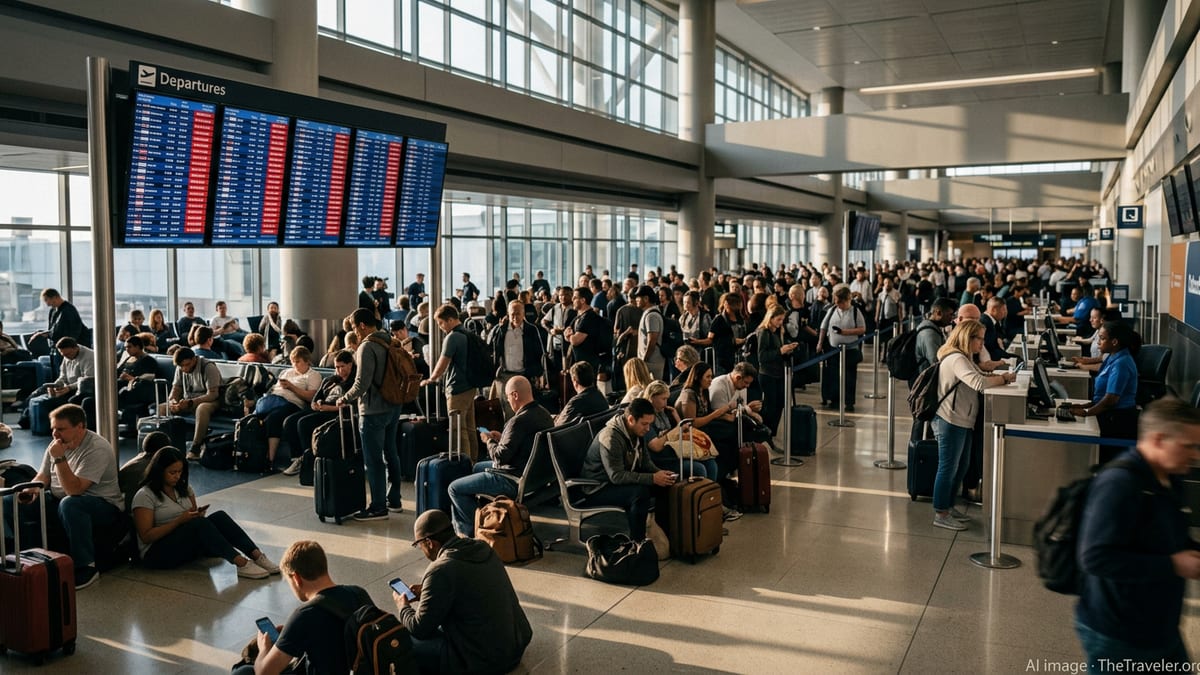
For passengers, the numbers translated into hours of uncertainty and rebookings at check-in counters and via airline apps. Families returning from winter getaways in Florida reported scrambling to secure seats on later flights as Spirit adjusted its schedule. At Orlando and Fort Lauderdale, long lines formed at customer service desks as travelers sought meal vouchers, hotel accommodations and new itineraries.
In Chicago and Washington, business travelers attempting to complete same-day round trips found their plans upended by rolling delays and missed connections. Some opted to overnight and fly out on early-morning departures, while others turned to alternative airports or ground transportation. Airport concourses saw many passengers charging phones and laptops as they monitored shifting departure times on overhead boards.
United Airlines, Alaska Airlines, PSA Airlines and Spirit Airlines all encouraged affected customers to use digital tools for real-time updates and rebooking options where possible. However, high volumes of changes meant that popular later flights and nonstops filled quickly, leaving some travelers with circuitous routings or arrivals many hours later than planned.
Airports also felt the strain, with concessionaires and lounges busier than usual during off-peak hours as passengers waited out multi-hour gaps. At leisure-focused gateways like Honolulu and Anchorage, visitors finishing vacations were advised to arrive earlier than usual and to check flight status frequently given the fluidity of the day’s operations.
Airlines Issue Flexible Policies as Networks Recover
In response to the disruption, several carriers moved to ease the pain for affected customers by waiving certain change fees and fare differences on impacted routes and dates. While formal systemwide waivers remained limited, targeted flexibility around specific hubs and time windows allowed many passengers to shift travel by a day or adjust routing without incurring additional costs.
Alaska Airlines, which has maintained a series of winter travel advisories in recent weeks, continued to highlight its policies allowing customers on eligible tickets to change or cancel trips without penalty when their flights are covered by a disruption notice. Similar approaches from United and other major carriers, tailored to today’s operational picture, aimed to reduce pressure on airport counters and call centers by enabling self-service changes.
Industry analysts noted that airlines are increasingly deploying these limited waivers to manage irregular operations, particularly when multiple carriers are affected across overlapping hubs. By enabling some travelers to voluntarily rebook away from peak congestion periods, airlines can spread demand more evenly and restore schedules more quickly.
Even with such measures, full recovery from a day of concentrated cancellations and delays often stretches into the following day’s operations. Aircraft and crews must be repositioned, maintenance windows adjusted and catering and ground handling schedules realigned before networks can return to normal rhythm.
What Travelers Should Do If Their Flight Is Affected
With irregular operations likely to continue intermittently through the remainder of the winter season, travel experts recommend that passengers build extra flexibility into their plans. Booking earlier departures, avoiding tight connections and considering alternative airports in multi-airport cities such as Washington, Chicago and Miami can provide more options if schedules unravel.
Passengers whose flights are canceled or significantly delayed are urged to rebook via carrier apps or websites as soon as disruption alerts are received, since available seats on later flights can disappear quickly. Enrolling in airline text or push notifications, and checking flight status before leaving for the airport, can help travelers avoid unnecessary hours in terminal queues.
At the airport, travelers should keep boarding passes, receipts and documentation of delays handy, both for discussions with airline agents and for any potential insurance or credit card claims. Those facing overnight stays should inquire promptly about hotel and meal assistance, as policies can vary by airline and cause of disruption.
For now, today’s 53 cancellations and more than 130 delays serve as another reminder that even outside traditional peak seasons, US air travel remains vulnerable to clusters of weather, congestion and operational challenges. For thousands of passengers moving through Washington, Chicago, Miami, Orlando, Fort Lauderdale, Anchorage, Honolulu and other affected airports, patience and flexibility have once again become essential carry-on items.