

More news on this day
Travelers across the United States are facing a fresh round of disruption as more than 130 flights on major carriers including Delta Air Lines, United Airlines, American Airlines and Southwest were canceled, stranding passengers at key hubs and disrupting routes to New York LaGuardia, Dallas, Newark, Vancouver, Amsterdam and other popular destinations.
Get the latest news straight to your inbox!
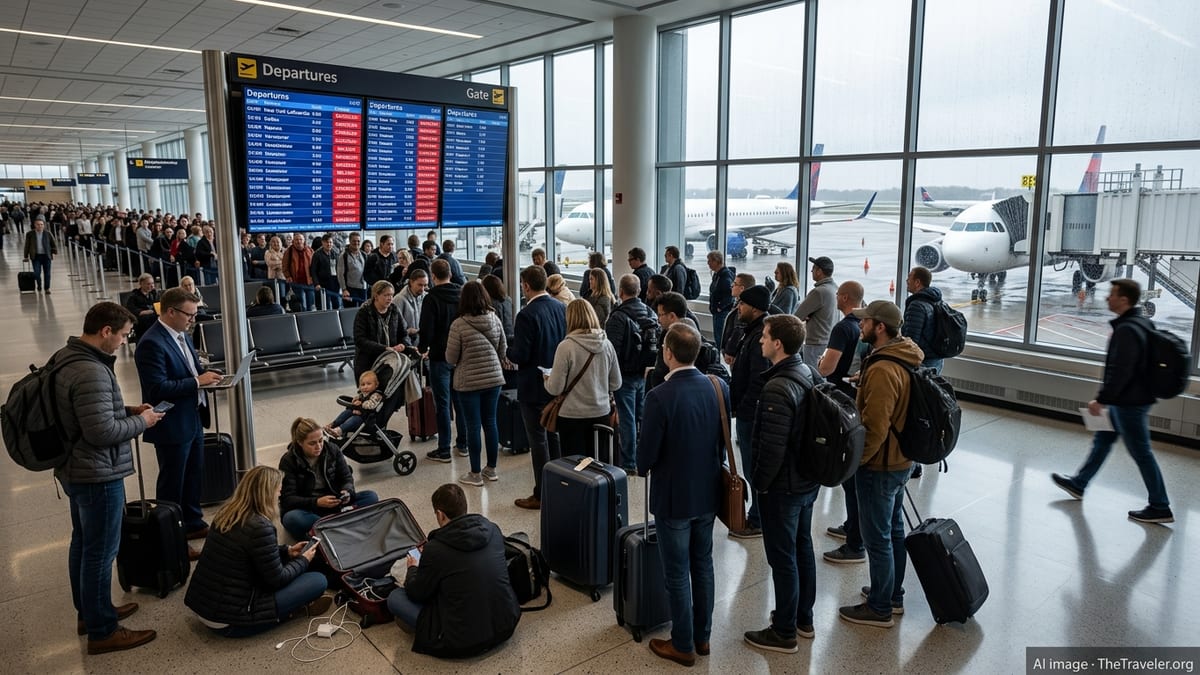
Weather Systems and Network Strain Trigger New Disruptions
Tracking data from flight-status platforms indicates that the latest wave of cancellations is concentrated at some of the country’s busiest airports, as airlines once again struggle to keep schedules intact in the face of unsettled spring weather and already stretched networks. New York area airports, including LaGuardia and Newark, have seen a notable share of grounded services, with ripple effects radiating through domestic and transborder routes.
Reports show that carriers such as Delta, United, American and Southwest have each removed multiple departures and arrivals from their timetables, collectively surpassing 130 cancellations across the US system within the current travel day. While this figure is modest compared with the worst weather-related meltdowns of recent years, it is enough to create congestion in terminal buildings, long rebooking queues and tight seat availability on remaining flights.
The latest disruptions come on the heels of an exceptionally active winter and early spring for North American storms, which have repeatedly tested airline resilience. A powerful March 2026 blizzard, for example, brought heavy snow, high winds and severe weather across broad swaths of the country, forcing hundreds of flight cancellations and underscoring how quickly carefully balanced schedules can unravel once weather begins to interfere with takeoff and landing windows.
Industry observers note that today’s cancellations, though limited in number compared with major storm days, are occurring in a system that has had little time to fully reset. Aircraft and crews remain tightly utilized, meaning even small pockets of bad weather, airspace restrictions or ground delays at a few hubs can cascade into missed connections and lost flying hours elsewhere.
Key Hubs Affected: LaGuardia, Dallas, Newark, Vancouver and Amsterdam
Among the hardest-hit airports, New York LaGuardia is again a focal point. The compact, high-traffic facility has long been vulnerable to knock-on delays and cancellations because it operates with limited runway capacity and tight slot controls. When operations slow, departures to and from cities across the US and Canada can quickly back up, affecting business and leisure travelers who rely on LaGuardia for short-haul connectivity.
Dallas, a major connecting point for both American Airlines at Dallas Fort Worth International Airport and Southwest Airlines at Dallas Love Field, has also registered a cluster of cancellations. Publicly available information shows that weather systems sweeping across the central United States in recent weeks have regularly forced traffic-management initiatives in Texas airspace, leaving airlines with little choice but to trim schedules when conditions deteriorate or when ground stops are issued.
Newark Liberty International Airport, a critical hub for United Airlines, remains another pressure point. According to published coverage and traveler accounts, even modest disruptions at Newark can rapidly spill into transatlantic schedules, given its role as a gateway to Europe. Canceled or delayed departures from Newark complicate onward journeys for passengers headed to major European hubs such as Amsterdam, where tight slot regimes and evening curfews leave limited flexibility for late-arriving aircraft.
Vancouver and Amsterdam are among the international destinations feeling the indirect impact of the current US disruptions. When domestic feeder flights into New York, Dallas or Newark are canceled, passengers booked onward to Canada or Europe can miss connections, requiring complex re-routing across multiple carriers. This can lead to overnight stays, additional expenses and lost vacation or work time, particularly when local hotels near major hubs quickly sell out during irregular operations.
Knock-On Effects for Passengers Across the Network
For individual travelers, the numbers involved in the latest disruption do not tell the whole story. Even a relatively contained cancellation count can affect thousands of passengers when those flights are full or connect into long-haul services. Many routes operated by Delta, United, American and Southwest are currently running with high load factors, leaving limited spare capacity to absorb displaced customers.
Publicly available data and traveler reports suggest that some stranded passengers are facing multi-hour lines at airport customer-service desks, with online rebooking tools and call centers also under heavy demand. On busy days, options to rebook later the same day can disappear quickly, especially for those flying between constrained airports such as LaGuardia, Dallas, Newark, Vancouver and Amsterdam, where slot availability and aircraft rotations limit the number of extra seats that can be offered.
Travelers whose flights are canceled late in the day can find themselves stuck overnight if there are no remaining departures to their destination. In those cases, rebooking often involves circuitous options, such as flying to an alternate hub and connecting onward the following morning, or shifting to another airline entirely if interline agreements and seat availability allow. Such changes can add many hours to journeys and disrupt tightly planned itineraries for business meetings, cruises or tours.
Some passengers are also dealing with the secondary effects of cancellations, including checked bags that do not follow revised itineraries and missed ground-transportation connections. Ride-share drivers, hotel shuttles and regional train and bus services around major hubs are often crowded when a wave of flight disruptions hits, further complicating the final legs of already delayed trips.
Operational Pressures: Staffing, ATC Constraints and System Upgrades
While weather remains the most visible trigger for flight cancellations, the broader context for the current disruption includes staffing, air traffic control capacity and airline technology. In the past year, published analyses have repeatedly highlighted the strain on US air traffic control resources, particularly at high-density airports. Periods of reduced staffing, whether due to long-term shortages or temporary constraints, typically result in flow restrictions that force airlines to cut back schedules on short notice.
Airlines are also navigating their own staffing and scheduling challenges. The rapid recovery in demand for air travel has required carriers to ramp up pilot and cabin-crew rosters, but training pipelines and regulatory requirements limit how quickly new personnel can be brought online. When storms, illnesses or other issues remove pilots or flight attendants from a particular rotation, airlines can struggle to find replacements without causing delays or cancellations later in the day.
Technology is another piece of the puzzle. Large carriers periodically conduct system upgrades that can temporarily disrupt reservations, check-in and dispatch functions. Recent notices from major US airlines have outlined planned outages during low-traffic overnight windows to improve reliability, but even short technical issues during busy hours can cause flights to miss departure slots or force manual workarounds that slow operations. When combined with weather and airspace constraints, these technical factors can contribute to the kind of multi-airline disruption seen today.
Industry analysts point out that the system’s current fragility means that cumulative pressure from several modest factors can produce outsized effects. A single weather line over the Northeast, a staffing gap at a key air traffic facility and a slow-running check-in platform may each appear manageable in isolation, yet together they can sharply reduce the margin for error at crowded hubs such as LaGuardia, Newark and Dallas.
What Travelers Should Watch in the Coming Days
With the latest cancellations hitting at the start of the busy spring break period for many regions, travelers are being urged by airlines and travel advisers to keep a close eye on flight status and to prepare contingency plans. Publicly accessible guidance from carriers typically recommends checking in as early as possible, enabling flight-status notifications on mobile apps and considering earlier departures when schedules allow, particularly for trips that connect to long-haul flights to destinations such as Vancouver and Amsterdam.
Travel waivers are a key tool for reducing disruption. When weather or operational pressures are expected to affect specific airports, airlines often publish flexible-change policies for travel over a defined date range. These waivers can allow passengers to move flights to earlier or later days, or to reroute through different hubs, without standard change fees. Monitoring whether such waivers are issued for New York, Dallas or other key nodes in the coming days may help travelers adjust plans proactively.
Experts in travel planning also encourage passengers to think about alternative routings and even alternate airports when cancellations begin to climb. For example, when LaGuardia is heavily impacted, some New York-bound travelers may find better options into JFK or nearby regional airports, while those connecting onward to Europe from Newark may be able to reroute via other transatlantic gateways if seats are available. Being flexible with times and routings can significantly increase the chances of arriving close to schedule during a period of rolling disruptions.
For now, the nationwide cancellation tally remains far below the worst peaks recorded during major storms and systemwide outages, but the new wave of scrapped flights is a reminder that the US air travel network remains vulnerable to sudden strain. With more unsettled weather possible and airline schedules running near capacity, passengers planning trips in the days ahead should remain vigilant, build extra time into connections and be prepared for further changes as the situation evolves.