

More news on this day
The U.S. government has suspended the Global Entry trusted-traveler program while keeping TSA PreCheck operational during an ongoing Department of Homeland Security shutdown, creating fresh uncertainty for frequent flyers and international travelers just as winter storms and peak travel crowds strain airports nationwide.
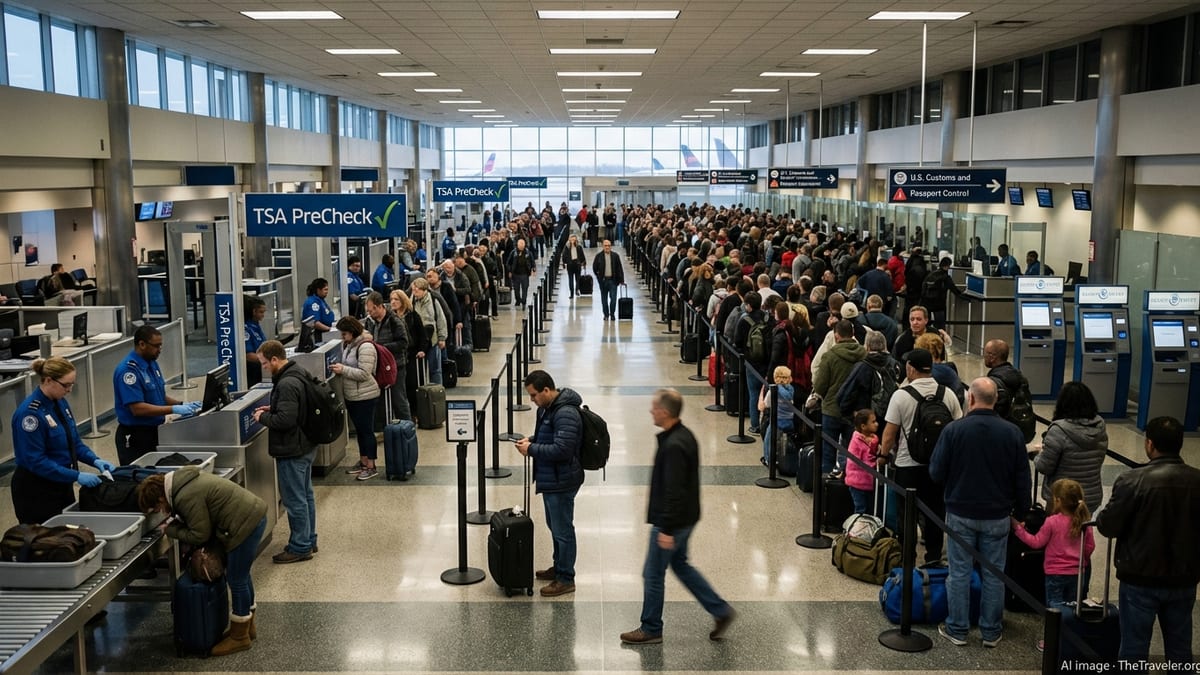
Shutdown Standoff Freezes One Key Program and Spares Another
The partial shutdown affecting the Department of Homeland Security, which began on February 14, has now reached deep into some of the most widely used air travel services. After days of internal debate and public outcry, officials confirmed that Global Entry is suspended until further notice, while TSA PreCheck lanes will remain open for the traveling public, at least for now.
The bifurcated decision follows an unusually turbulent weekend of announcements and reversals inside DHS. An initial plan to halt both TSA PreCheck and Global Entry as part of emergency cost-cutting measures was quickly walked back for PreCheck following pressure from airlines, airport operators and traveler advocacy groups. Global Entry, however, did not receive the same reprieve and is being paused as resources are redirected to what officials describe as essential frontline operations.
The contrasting fates of the two programs highlight how DHS is triaging services during the funding lapse. While agencies are legally required to maintain core security functions, they have broad discretion to curtail fee-funded programs and premium services, even when those programs help keep passengers flowing smoothly through crowded airports and ports of entry.
What Travelers Will Notice at Airports and Border Crossings
For most domestic flyers, TSA PreCheck continues to function much as it did before the shutdown. Eligible passengers flying out of U.S. airports can still use dedicated PreCheck lanes, keep shoes and light jackets on, and leave laptops in their bags. The Transportation Security Administration has said there is “no change for the traveling public” using PreCheck, though it warns that localized staffing shortages could affect hours of operation or lane availability at some airports.
At international arrival halls, the changes are more visible. Global Entry kiosks that normally speed pre-approved travelers through passport control are being taken offline or left unmanned at many major airports. Travelers who previously relied on the service to bypass long immigration lines are being directed back into standard processing queues, where they face the same wait times as other passengers arriving from overseas.
Enrollment and renewal services are also affected. Interviews at Global Entry enrollment centers are being canceled or postponed, and applications may sit unprocessed until funding is restored. TSA PreCheck enrollment, by contrast, is continuing through private contractors in many locations, although any CBP-related vetting for combined Global Entry and PreCheck memberships will be delayed as long as Global Entry remains on hold.
Airports have reported that, as of Monday morning, the most acute operational impacts still stem from winter weather and routine congestion rather than the program suspension itself. But industry officials warn that as more Global Entry members return from trips abroad in the coming days, the loss of expedited processing could ripple into longer lines, missed connections and added strain on already thinly stretched customs staff.
How TSA PreCheck Survived a Suspension Threat
The weekend began with DHS signaling that both TSA PreCheck and Global Entry would be paused as part of an emergency plan to conserve scarce shutdown-era funds. That announcement set off alarms across the travel sector, given that the two trusted-traveler programs collectively serve tens of millions of passengers who pay fees for faster, more predictable journeys through airports and border checkpoints.
Within hours, however, TSA issued a clarifying statement that PreCheck would, in fact, remain operational. Officials described the shift as a product of “ongoing evaluations” and conversations with the White House and security agencies. In practical terms, TSA appears to have concluded that closing PreCheck lanes risked slowing down the entire screening process, not just for enrolled travelers but for the general flying public.
Industry groups, including major airline trade associations and travel lobbying organizations, had argued that PreCheck offers a net gain for security and efficiency by segregating low-risk, pre-vetted passengers into streamlined lanes. Removing that pressure valve in the middle of a staffing crunch, they warned, could increase checkpoint backups and heighten tension at airports, particularly during already busy travel periods.
Ultimately, DHS leadership opted to preserve TSA PreCheck while trimming around the edges. Courtesy escorts and some special-access services for government officials and other VIP travelers have been suspended, and TSA continues to caution that if the shutdown stretches on, additional adjustments or targeted reductions could be considered.
Why Global Entry Was Paused and What It Means for International Travel
Global Entry, run by U.S. Customs and Border Protection, has long been the international counterpart to TSA PreCheck. It allows low-risk, pre-approved travelers to clear passport control through self-service kiosks rather than traditional inspection lines, significantly cutting connection times and easing congestion in arrival halls at major international gateways.
In the current shutdown, however, CBP is reallocating personnel away from trusted-traveler conveniences and toward baseline inspection and enforcement duties. Officials argue that with funding constrained and many staff working without pay, the agency must prioritize screening every arriving passenger and maintaining border security, even if that means withdrawing expedited processing for frequent travelers until normal operations resume.
The suspension does not prevent enrolled Global Entry members from entering the United States, nor does it revoke their underlying security vetting. Instead, it removes their access to the physical kiosks and fast lanes that distinguish the program. Travelers accustomed to breezing through in minutes should budget extra time on arrival, especially at hub airports that see heavy volumes of international traffic.
The pause also complicates the combined membership that many travelers hold, since Global Entry typically includes TSA PreCheck benefits for domestic departures. For now, existing members can still use PreCheck on outbound flights, but they will not see their usual advantages when coming back through U.S. customs, underscoring the fragmented nature of the current shutdown workarounds.
Confusion, Mixed Messages and Political Fallout
The rapid sequence of announcements, reversals and partial clarifications over the weekend has left many travelers unsure about what to expect the next time they head to the airport. Social media filled with contradictory posts as different agencies, airlines and airports tried to interpret DHS guidance in real time, while some local TSA and CBP operations appeared to continue business as usual even after Washington said changes were imminent.
Lawmakers from both parties criticized the communications missteps and broader decision-making behind the program suspensions. Opposition leaders accused the administration of using popular travel services as leverage in a budget fight, arguing that fee-funded programs like Global Entry and PreCheck should be insulated from shutdown politics. Administration allies countered that DHS must retain maximum flexibility to move people and dollars where they are most urgently needed when Congress fails to pass full-year appropriations.
For travelers, the political blame game offers little practical guidance. With funding negotiations in Congress still at an impasse, DHS agencies are operating under contingency plans that can change quickly as conditions evolve. That means policies announced one day may be updated the next, especially if public backlash, legal concerns or on-the-ground operational realities make initial shutdown strategies untenable.
Travel analysts note that this episode highlights how deeply modern air travel depends on fee-funded enhancements layered on top of core security functions. When those enhancements are removed, even temporarily, the resulting friction can be felt far beyond the relatively small share of passengers who pay directly for expedited privileges.
Practical Advice for Flyers During the Shutdown
For domestic travelers holding TSA PreCheck, the immediate guidance is straightforward: arrive at the airport as normal, look for clearly marked PreCheck signs, and be prepared for occasional inconsistencies if a particular airport or checkpoint is short-staffed. Officials say PreCheck access should remain unchanged overall, but lines may be longer at peak times if some lanes are closed or consolidated.
International travelers returning to the United States should plan conservatively. Even if airports have not yet seen major customs backups linked directly to the Global Entry suspension, the risk of longer lines grows with each day the program remains offline. Frequent overseas flyers, including business travelers accustomed to tight connections, may want to build in extra time between flights or avoid the tightest itineraries until the situation stabilizes.
Those with upcoming Global Entry interviews or pending applications should assume delays. Enrollment centers may reschedule appointments once full funding is restored, and processing times are expected to lengthen as backlogs build. Travelers who primarily use PreCheck for domestic trips may still be able to proceed with that portion of their enrollment through airport-based contractors, but any linkage to Global Entry benefits will likely be deferred.
Experts also recommend closely monitoring airline communications, airport advisories and official statements from TSA and CBP, as local conditions can vary. Some airports may deploy additional signage or staff to help redirect former Global Entry users through standard customs lines, while others may rely more heavily on automated passport control systems already in place for general passengers.
Airlines, Airports and the Travel Industry Brace for Longer Disruptions
Airlines and airport operators, already contending with winter storms and lingering staffing issues, are modeling what a prolonged Global Entry suspension could mean for operations. While the number of travelers enrolled in Global Entry is relatively small compared with total international arrivals, these passengers often represent a high share of premium-cabin, frequent-flyer and business customers whose itineraries are tightly scheduled.
If customs hall wait times increase and connection windows become riskier, carriers may see greater pressure to rebook missed connections, hold flights or adjust minimum connection times in global distribution systems. Airport managers, meanwhile, worry that losing the “fast lane” for trusted travelers could add stress to facilities that were designed with assumptions about how much passenger flow would be diverted to kiosks and automated channels.
Travel industry groups are urging DHS and lawmakers to find ways to protect fee-funded facilitation programs from the most severe shutdown effects. They argue that programs like Global Entry and PreCheck pay for themselves through application and renewal fees, and that suspending them delivers little budgetary relief while risking disproportionate disruption for travelers and tourism-dependent economies.
Some industry leaders are also watching how international partners respond. Several foreign trusted-traveler arrangements are linked to Global Entry, and any extended interruption in U.S. operations could raise questions for reciprocal programs abroad. For now, most foreign airports continue to process U.S. travelers as usual, but prolonged uncertainty could complicate efforts to expand automated border control initiatives worldwide.
What Could Happen Next if the Shutdown Continues
The future of both Global Entry and TSA PreCheck hinges on the trajectory of the DHS funding standoff. If lawmakers broker a deal and restore full-year appropriations in the near term, DHS could move quickly to restart Global Entry kiosks, resume interviews and clear application backlogs, while maintaining PreCheck in its current form.
If the shutdown drags on for weeks, however, officials may be forced to revisit even the partial protections now in place. TSA has been clear that while PreCheck is operational, it is not immune to staffing realities. A rise in unscheduled absences among unpaid workers, or new security demands tied to major events or seasonal travel peaks, could prompt targeted lane closures or reduced hours, eroding some of the program’s value.
Policy debates may also intensify over how trusted-traveler programs are structured and funded. Some lawmakers have floated the idea of legally insulating fee-funded security enhancements from future shutdowns, while others have questioned whether premium travel services should be maintained when rank-and-file federal employees are working without pay. Those competing viewpoints are likely to shape not only the resolution of the current impasse but the resilience of travel programs in future budget crises.
For now, travelers face a patchwork landscape: Global Entry suspended, TSA PreCheck operating under a cloud of uncertainty, and the broader air travel system balancing on a fine line between resilience and disruption. Until the political stalemate in Washington breaks, airports and passengers alike will be left to navigate that uncertainty one flight at a time.