

More news on this day
International air arrivals to the United States slowed in the third quarter of 2025 while Americans continued to travel abroad in growing numbers, widening an already notable imbalance between inbound and outbound air travel.
Get the latest news straight to your inbox!
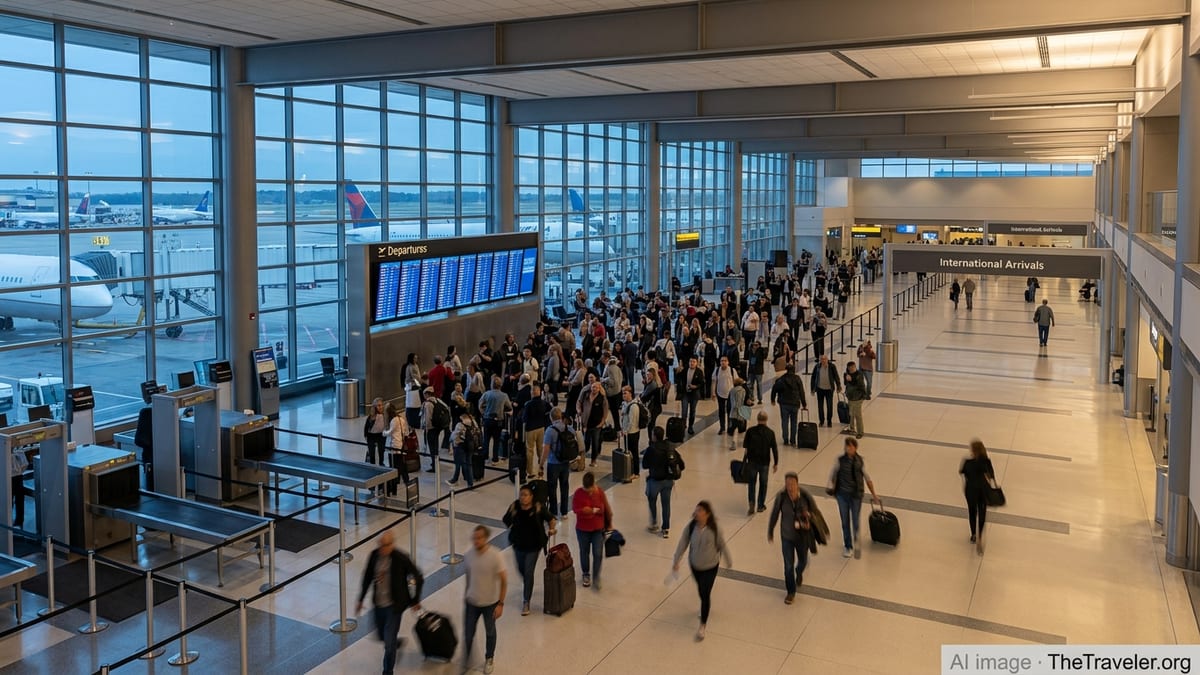
NTTO data show softer inbound air demand in Q3
New figures from the U.S. National Travel and Tourism Office for the third quarter of 2025 indicate that non U.S. resident air arrivals have lost momentum compared with earlier in the recovery cycle. The Survey of International Air Travelers reports 12.3 million international visitors arriving in the United States by air over the quarter, including 9.6 million from overseas markets and the remainder from Canada and Mexico. While the absolute volume remains high by post pandemic standards, publicly available information shows that monthly arrivals have been trailing year earlier levels since the spring of 2025 and remain below 2019 benchmarks.
Analysis of NTTO monitors and industry summaries suggests that the slowdown is broad based across several key source regions. Arrivals from parts of Europe and Asia that were leading the rebound in 2023 and early 2024 have flattened or retreated, while air arrivals from Canada have weakened after an initial surge. Trade and tourism analysts point to a run of year over year declines through mid 2025 and into the autumn, breaking the strong catch up pattern seen immediately after international borders reopened.
The third quarter picture also reflects a shift in composition. Overseas markets still account for the bulk of inbound air passengers, but Canada and Mexico are supplying a smaller share than before the pandemic. Industry commentary notes that some Canadian travelers are substituting domestic trips or choosing non U.S. destinations, while Mexican travel patterns are increasingly oriented toward regional tourism and VFR travel that may not always be captured in air arrival totals.
Outbound air travel from the U.S. continues to rise
In contrast to the softer inbound picture, outbound travel by U.S. residents continued to edge higher in the latest quarter. NTTO outbound survey results for 2024 already showed a record 107.7 million U.S. international travelers by all modes, and more recent monthly updates point to further growth through 2025, with particular strength in air departures to Mexico, the Caribbean and Europe. Industry digests of NTTO’s air passenger monitors for mid 2025 highlight steady single digit percentage gains in U.S. citizen air departures compared with the same months in 2024.
By June 2025, outbound air departures from the United States had reached more than 11 million for the month, comfortably above pre pandemic levels. Commercial tourism analytics for September 2025 show another year over year increase in U.S. citizens flying to foreign destinations, underscoring that Americans are maintaining or even extending their appetite for international trips despite inflation and economic uncertainty.
Several factors are helping to sustain this outbound strength. A strong U.S. dollar against a range of major currencies has made many overseas destinations relatively more affordable for American travelers. At the same time, airlines have restored and, in some cases, expanded long haul capacity out of major U.S. hubs, creating more options and competitive fares. New and resumed routes into Mediterranean Europe, secondary Mexican beach destinations and island hubs in the Caribbean have opened additional gateways for leisure travelers looking abroad rather than domestically.
Price dynamics and capacity shifts shape Q3 travel flows
Domestic U.S. airfare trends provide important context for international flows. Bureau of Transportation Statistics data show that the average domestic air fare fell to roughly 370 dollars in the third quarter of 2025, down almost 5 percent from the previous quarter in inflation adjusted terms. While this easing has supported robust domestic demand, average ticket prices on some long haul international routes have not followed the same trajectory, particularly where capacity remains constrained or demand is highly seasonal.
Carriers serving transatlantic and transpacific routes have been selective in how they restore capacity, prioritizing high yielding markets and shifting widebody aircraft to leisure oriented corridors where Americans are traveling in large numbers. As a result, outbound flights from the United States on certain routes routinely depart at or near full load factors, whereas inbound services from some overseas gateways are reported to be less consistently filled. Industry briefings suggest that this imbalance is especially visible on shoulder season flights from Western Europe and parts of Asia into the United States.
Airport level statistics also point to an uneven pattern. While total passenger numbers at many U.S. international gateways have recovered or reached new highs, a greater share of that growth is coming from U.S. residents departing than from foreign visitors arriving. Some secondary airports that gained new international services during the recovery period have seen schedules adjusted or aircraft downgauged as demand from overseas origin markets softens, even as outbound leisure demand from their catchment areas remains resilient.
Competitive headwinds from other global destinations
The United States is facing renewed competition from other destinations that have surpassed their pre pandemic tourism performance. Recent tourism data show countries such as Spain and several Mediterranean and Gulf destinations posting record international arrival numbers in 2025, helped by focused promotion campaigns, simplified entry procedures and aggressive air service development. Industry coverage describes a global tourism map where more travelers are spreading beyond traditional long haul favorites and experimenting with new or once niche destinations.
In this environment, the relative position of the United States as an international tourism draw has shifted. While overall global tourism volumes have climbed back above 2019 levels, the U.S. share of that traffic remains lower than before the crisis. Analysts note that other countries have capitalized on pent up demand with streamlined e visa systems, expanded low cost long haul service and, in some cases, targeted incentives for airlines and tour operators. These competitive moves stand in contrast to the more incremental recovery of inbound air capacity to the United States from certain long haul markets.
Perceptions and practicalities also play a role. Travelers comparing long haul options weigh visa processing times, entry experiences, onward connectivity and trip costs in addition to headline airfare. Published commentary from trade associations and think tanks indicates that for some international travelers, the combination of alternative destinations and lingering concerns over entry formalities has nudged the United States slightly down their priority list, even as Americans themselves feel increasingly comfortable heading overseas.
Implications for U.S. destinations and the travel economy
The divergence between softening inbound air arrivals and rising outbound travel carries significant implications for the U.S. travel economy. When more spending leaks abroad through American travelers than flows in through foreign visitors, the country’s travel trade balance weakens. Analysts tracking travel related exports and imports note that the United States has already moved into a sizeable travel trade deficit, reflecting the fact that international visitors are not yet back in the numbers or spending patterns that previously supported a strong surplus.
For destinations that have historically relied heavily on long haul international visitors, such as major coastal cities and national park gateway communities, a prolonged period of subdued inbound air demand could lead to slower growth in hotel revenues and visitor spending compared with domestic focused leisure hotspots. Convention and major event business is also exposed, as organizers weigh the attractiveness and accessibility of U.S. cities for overseas delegates relative to alternative venues.
Industry groups and policy analysts have been calling attention to this imbalance and urging a mix of measures to rebuild inbound demand, from streamlined visa processing and modernized arrival infrastructure to renewed brand marketing in key overseas markets. At the same time, many destinations are adapting by developing products and campaigns that cater more directly to domestic and outbound linked travelers, such as packages built around U.S. hub stopovers or cross border itineraries. How quickly international air arrivals to the United States can regain lost ground while outbound travel continues to expand will be a central question for the sector as it looks beyond 2025.