

More news on this day
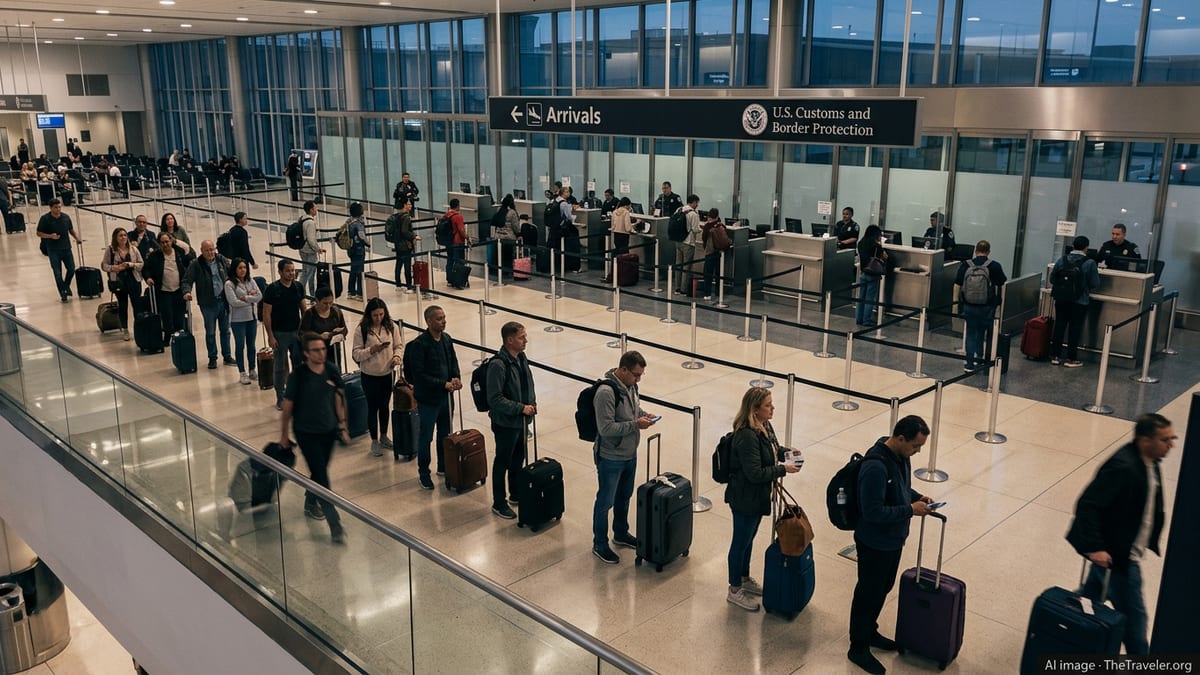
After several years of post pandemic recovery, international tourism to the United States has entered a more turbulent phase in 2025, with fresh data showing a rare decline in inbound visitors even as global travel keeps expanding.
Get the latest news straight to your inbox!
What the 2025 Inbound Decline Actually Looks Like
Updated forecasts from industry groups and travel economists show that the United States is one of the few major destinations where international arrivals and visitor spending are expected to fall in 2025, even as global tourism continues to grow. Estimates compiled by the U.S. Travel Association and Tourism Economics indicate that visits could slip from roughly 72 to 78 million international arrivals in 2024 to around 68 million in 2025, pulling total volume back from the cusp of a full recovery to pre pandemic levels.
This marks the first year since 2020 in which international inbound travel to the U.S. is projected to contract rather than grow. Research cited by several outlets, including national trade bodies and global tourism councils, suggests that inbound arrivals may end 2025 at around 85 percent of 2019 levels, even as many competing destinations in Europe and Asia approach or surpass their pre pandemic benchmarks.
Published analysis from Tourism Economics notes that overseas arrivals have posted consecutive month on month declines in the second half of 2025, with notable drops from Western Europe and parts of Asia. The firm estimates that total inbound visitor spending could fall by more than 4 percent this year, erasing billions of dollars in expected revenue for U.S. destinations that had planned for continued growth.
Separate coverage in international media points to the scale of the shift. One widely cited report notes that, according to global tourism data, the U.S. is alone among more than 180 countries in being forecast to see a decline in international visitor spending in 2025, underscoring how sharply it has diverged from broader global trends.
Why Travelers Are Hesitating: Policy, Prices and Perception
Several overlapping factors are being blamed for the downturn, many of them visible to would be visitors abroad. Analysts highlight a more restrictive policy environment, including a second Trump era travel ban targeting citizens of specific countries and a stepped up focus on border controls and immigration enforcement. These measures do not affect all travelers, but the broader perception of heightened entry barriers appears to be weighing on demand beyond the directly affected nationalities.
Visa related costs and procedures have also drawn attention. A new visa integrity fee approved in 2025 will add a refundable charge, reportedly in the hundreds of dollars, for many applicants from certain countries. At the same time, observers say wait times for visa interviews remain lengthy in some markets, with additional documentation checks and uncertainty about approvals contributing to a sense that visiting the U.S. has become more cumbersome than choosing rival destinations in Europe or Asia.
Cost and currency dynamics are another major driver. The strong U.S. dollar has made hotels, dining and internal transport markedly more expensive for many international visitors when priced in their home currencies. Economic forecasts published earlier this year suggested that a weaker Canadian dollar and slower growth in key European economies are particularly discouraging for traditional source markets such as Canada, the United Kingdom, France and Germany.
Finally, perception issues around safety and politics are influencing trip decisions. High profile news coverage of gun violence, mass shootings and sharp political polarization has shaped how some travelers abroad view the risks of a U.S. holiday. Recent reporting from Canadian and European outlets describes tour operators seeing clients pivot to alternative destinations after expressing unease about security, racial tensions or the tone of political debate in the U.S.
How the Decline Varies by Market and Destination
The downturn is far from uniform. Industry data and national press reports show that some long haul markets, particularly in Asia and Latin America, are holding relatively steady or continuing a slow recovery. Others are retrenching sharply. Analysts have identified Canada as the standout weak spot, with inbound travel from Canada in 2025 falling by double digits compared with the previous year, amid a consumer boycott movement, currency weakness and concerns about treatment at the border.
Western Europe has also softened. French media, for example, report a noticeable year on year drop in France to U.S. bookings, with 2025 visitor numbers estimated to have fallen several percentage points from 2024, even though they remain substantial in absolute terms. Travel companies in Germany and the United Kingdom have described a similar cooling, particularly for first time visitors and families weighing long haul options.
Within the U.S., the impact is concentrated in classic gateway cities and major leisure states. New York, Florida, California and Nevada depend heavily on overseas arrivals for hotel occupancy and tourism spending. Analysts warn that a slump in international visitors can ripple into jobs in hospitality, retail and transportation, particularly in neighborhoods that cater to foreign tourists. Some regions that rely more on domestic travelers, such as secondary cities and rural destinations, have been less exposed so far.
National parks and iconic natural sites could also feel a sharper squeeze from international changes in 2026 and beyond. The National Park Service has announced that from 2026 an additional charge will be applied to foreign visitors at selected flagship parks, and that fee free days will be limited to U.S. residents. Travel experts say these changes may further discourage some budget conscious international travelers who are already facing higher airfares and accommodation costs.
Planning a Safe and Rewarding Trip in a Softer Market
For global travelers, the 2025 inbound downturn is not only a warning sign about policy and perception, it is also a potential opportunity. Softer international demand can ease crowding at popular attractions, make last minute bookings easier and, in some markets, give visitors more leverage on hotel and tour rates. Travelers who prepare carefully can take advantage of a quieter landscape while minimizing risk and hassle.
Experts advise starting with documentation. Prospective visitors should check visa requirements well in advance, review any new application fees that may apply and allow extra time for interviews or security checks. Travelers who qualify for visa waiver programs should verify that their electronic travel authorization is valid for their entire trip and that they meet the conditions for entry, including return tickets and proof of accommodation.
Safety planning has become an integral part of trip preparation. Many foreign ministries now provide detailed guidance on travel to the U.S., including recommendations on avoiding high crime areas, understanding local laws and preparing for emergencies. Travelers are encouraged to follow this official advice, stay attentive to local news in the regions they plan to visit, and purchase comprehensive travel insurance that covers health care, trip disruptions and, where available, security incidents.
On the ground, common sense precautions remain important. Visitors can reduce exposure to risk by favoring well lit, busy areas at night, staying alert around large gatherings, securing valuables, and familiarizing themselves with emergency contact numbers in each city or state they visit. Urban incidents are typically localized, and many U.S. destinations continue to offer high quality visitor experiences with strong hospitality infrastructure and active community tourism initiatives.
Strategies to Make a US Trip More Affordable and Enjoyable
The same economic and policy shifts that are discouraging some travelers can help others stretch their budgets if they plan creatively. With the dollar strong and headline prices high in the most visited cities, travel specialists suggest looking at shoulder seasons, alternative gateways and less conventional itineraries. Flying into secondary airports, combining a major hub with a smaller nearby city or focusing on a single region rather than multiple cross country flights can significantly cut costs.
Accommodation strategies also matter. International visitors may find better value in neighborhood hotels, locally run guesthouses or longer stays in serviced apartments rather than concentrating solely on central business districts and major resort corridors. Booking cancellable rates and monitoring prices can pay off in a softening market where properties occasionally discount closer to arrival to fill remaining rooms.
Transportation and experiences present further room for savings. Travelers who are comfortable driving may consider renting a car for part of their trip to access smaller towns and state parks where lodging and dining are often more affordable. Those who prefer not to drive can look for regional rail and bus passes, city tourism cards and bundled attraction tickets that lower the per day cost of sightseeing. Many museums and cultural institutions maintain free entry days or discounted hours that can be factored into an itinerary.
Despite the current headwinds, analysts and tourism boards still expect the U.S. to benefit from major international events from 2026 onward, including the men’s football World Cup matches hosted in U.S. cities and nationwide celebrations tied to the country’s 250th anniversary. Travelers who understand the present challenges, watch evolving entry rules and plan with flexibility can still find the United States a compelling destination, with the added benefit in 2025 of smaller crowds at some of its best known landmarks.