

More news on this day
Chicago’s transit network is facing its most intense federal scrutiny in years as the United States government launches sweeping safety oversight measures, responding to violent incidents, infrastructure concerns and questions about how Illinois regulators have supervised the Chicago Transit Authority.
Get the latest news straight to your inbox!
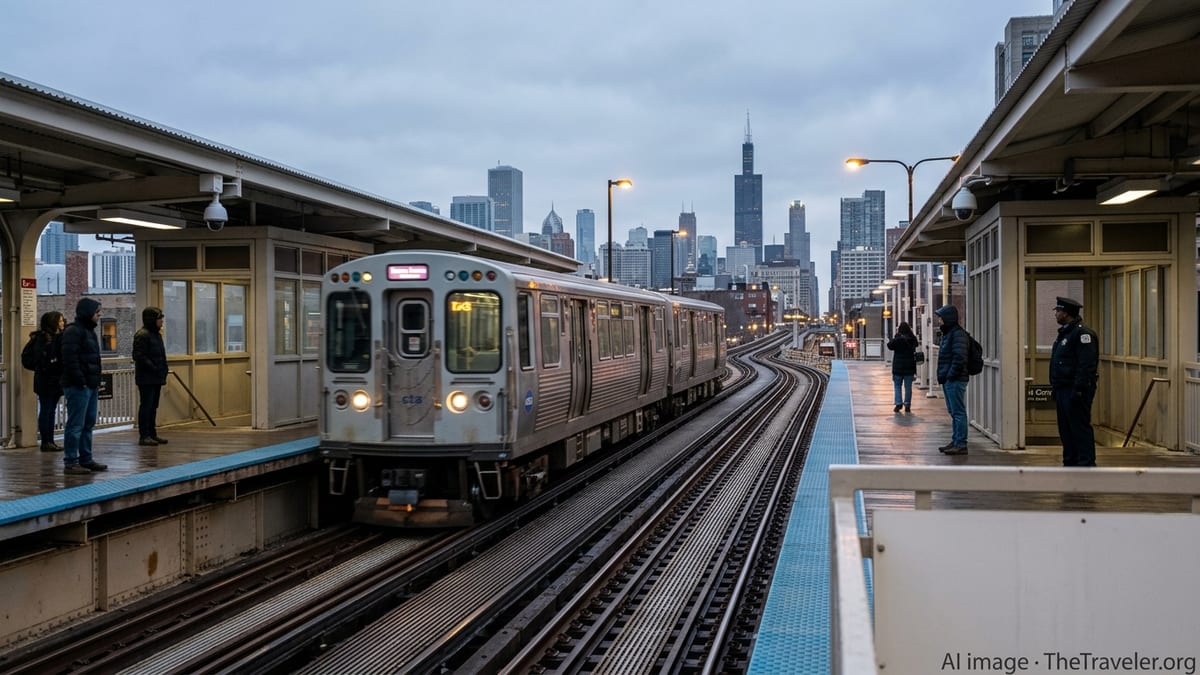
Federal Safety Crackdown Targets Oversight Gaps
Recent federal actions have placed Chicago’s buses and trains under a microscope, with the Federal Transit Administration moving to enforce tougher safety standards across the system. According to publicly available information, the agency has cited repeated shortcomings in how the Illinois Department of Transportation monitors the Chicago Transit Authority, describing a pattern of weak accident investigations and slow responses to known risks.
Reports indicate that the federal government has opened a formal Safety Management Inspection focused on state-level oversight of CTA rail operations. This form of review allows federal inspectors to examine policies, data and past incidents to determine whether Chicago’s transit network is adequately protecting riders and workers. The inspection follows several years of warnings about safety culture, infrastructure failures and violent crime on trains and platforms.
At the same time, federal officials have linked safety improvements to the future of key grants, putting hundreds of millions of dollars in annual support and major capital projects at potential risk. Program summaries from the Federal Transit Administration show that agencies which fail to correct identified safety hazards can face heightened monitoring, restrictions on how funds are used or, in more serious cases, a pause in new federal commitments.
For Chicago, this escalated oversight arrives as the region’s transit agencies confront budget pressures, workforce shortages and changing rider patterns. The combination of financial strain and tighter federal supervision is likely to influence how quickly the CTA and state regulators move to implement new protections.
Violent Incidents and Crime Concerns Drive Federal Action
Publicly available federal documents show that a series of high-profile incidents on the CTA have become a central factor in Washington’s response. A recent special directive from the Federal Transit Administration cites what it describes as a years-long pattern of elevated assaults on workers and riders, along with serious violent crime on trains and at stations. Those concerns intensified after a woman was set on fire aboard a Blue Line train, an attack that drew national attention to conditions on Chicago’s rail network.
Crime data compiled by local agencies and summarized in regional transportation reports paint a complex picture. Overall reported crime on the CTA has fallen modestly from its recent peaks, but violent offenses remain above pre-pandemic levels and isolated incidents have become more visible. Coverage in city and regional outlets notes that riders frequently express anxiety about disorder, from harassment and theft to weapons and drug use in stations.
Federal correspondence made public in recent months indicates that Washington is not satisfied with existing security strategies, including temporary surges in patrols and technology-based solutions. Analysts following the transit sector say the latest measures reflect a belief that safety issues are systemic, involving not just police presence but also staffing levels, station design, incident reporting and coordination between the CTA, the city and state regulators.
While experts emphasize that serious crime is still relatively rare when measured against millions of annual trips, the reputational impact has been significant. Perception of risk, they note, can deter riders, reduce fare revenue and ultimately undermine the financial stability needed to maintain and upgrade the system.
What Riders Can Expect on Trains, Buses and Platforms
For everyday passengers, the federal safety push is expected to translate into a visible mix of enforcement, operations and infrastructure changes. Based on recent directives and public reporting, riders are likely to see more uniformed personnel on trains and platforms, along with expanded use of cameras and other monitoring tools. The CTA has already highlighted steps such as redeploying security staff, coordinating with Chicago police and adjusting schedules to reduce long gaps between trains, which can leave platforms crowded for extended periods.
Federal guidance for transit systems places particular emphasis on “safety management systems,” an approach that requires agencies to regularly analyze risk, track leading indicators and respond quickly to emerging hazards. In practice, that could mean more frequent safety inspections of rail equipment, closer control of work zones along the tracks and tighter rules around how and where workers can access active lines.
Riders may also notice operational changes intended to lower the chances of collisions or derailments, especially after recent National Transportation Safety Board investigations into Chicago-area rail incidents. According to published reports, those investigations have scrutinized decisions to disable automatic braking systems, the design of older equipment and training practices for train operators. Federal officials have signaled that they expect these findings to be directly reflected in new operating rules and investments.
Some changes may be less visible but still important, including revised protocols for reporting assaults, medical emergencies and track intrusions. Transit safety specialists say that consistent reporting and follow-up help agencies spot trends early, from problem locations to recurring equipment failures, giving managers a chance to intervene before a serious event occurs.
Funding Leverage and Deadlines for Safety Reforms
One of the strongest tools the federal government is using in Chicago is its control over funding. Coverage from transportation-focused outlets indicates that the Federal Transit Administration has tied compliance with new safety directives to tens of millions of dollars in annual formula funds, as well as to major capital programs such as rail line extensions and station upgrades. This approach mirrors actions taken in other cities where significant safety lapses have come to light.
Recent letters and directives made public show specific timelines for Chicago to revise its agency safety plans, submit updated crime and incident data, and document steps taken to protect workers and riders. These documents describe required actions such as improving coordination between the CTA and the Illinois Department of Transportation, updating rail safety procedures, and demonstrating that corrective actions are being implemented rather than remaining on paper.
Regional transportation analysts note that failure to meet those deadlines could complicate long-planned investments, including modernizing aging track segments and rebuilding heavily used stations. With the Chicago area’s transit agencies already facing projected budget gaps in the coming years, the prospect of delayed or reduced federal support adds urgency to the safety conversation.
Advocates for riders and workers are watching closely to see whether the new oversight produces sustained improvements or only short-term responses. They argue that stable funding, transparent data and clear accountability for decisions are essential if Chicago’s system is to remain both safe and attractive for residents and visitors.
How Passengers Can Stay Informed and Navigate the Changes
As federal oversight of Chicago’s transit system intensifies, travelers are being urged by safety experts and advocacy groups to pay closer attention to official communications from the CTA and local agencies. Service alerts, public safety bulletins and board meeting materials can offer early signals of changes to schedules, station access or staffing levels linked to new safety initiatives.
Passengers are also encouraged in public campaigns to report suspicious behavior, vandalism and harassment through existing channels such as text-message reporting systems, station intercoms and transit security hotlines. Safety specialists stress that timely reporting not only helps in emergencies but also supplies the data agencies need to identify recurring problems, justify targeted patrols and prioritize capital spending.
Riders planning trips are advised to allow extra time when major safety projects are under way, particularly on rail lines undergoing track work or signal upgrades. Past experience in Chicago and other large cities suggests that intensive safety programs can temporarily reduce frequencies or close sections of track, even as they aim to prevent more serious disruptions later.
For visitors and infrequent users, transit commentators recommend checking recent rider guides and local news coverage to understand current conditions. They note that despite the scrutiny, Chicago’s network remains one of the most extensive in the United States, and that millions of passengers continue to complete their journeys safely each week while reforms move forward.