

More news on this day
Air travel across the Middle East has been plunged into its worst crisis since the pandemic as escalating conflict between the United States and Iran forces Gulf governments to shut vast swaths of airspace, grounding flights at major hub airports and leaving hundreds of thousands of travelers stranded worldwide.
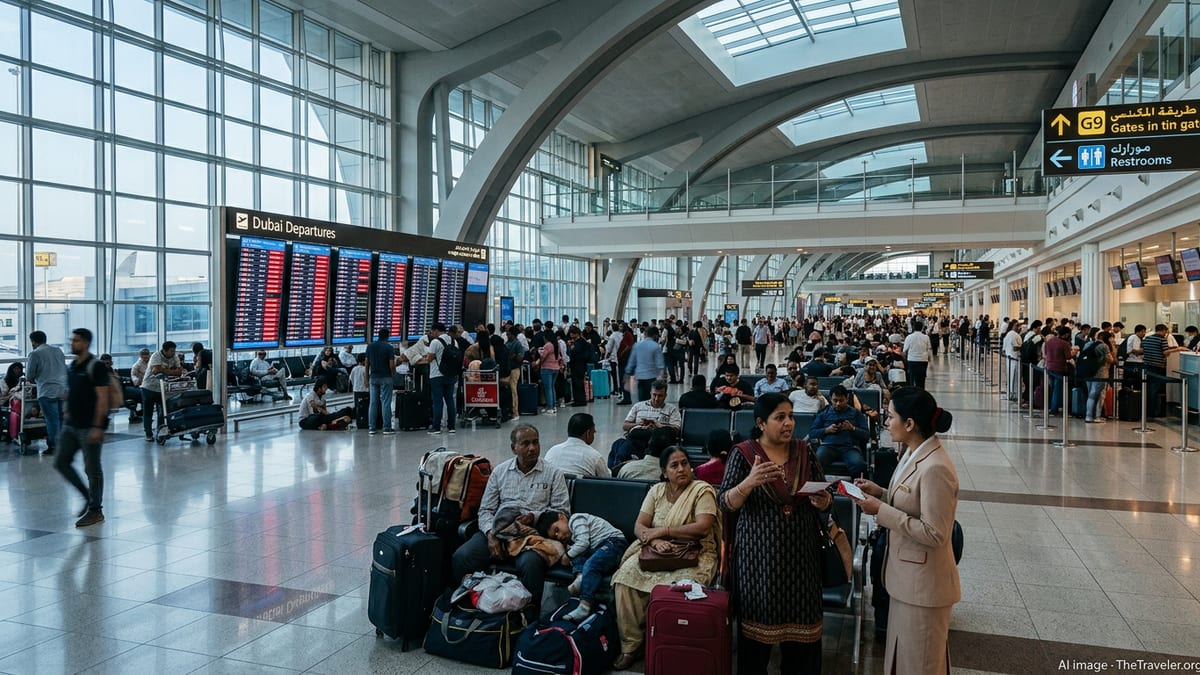
Gulf Gateways Fall Silent as Airspace Closes
As of March 3, 2026, some of the world’s busiest aviation gateways, from Dubai and Abu Dhabi to Doha and Manama, remain effectively shut to regular commercial traffic after a wave of US and Israeli strikes on Iran and Iranian retaliatory attacks triggered sweeping airspace closures across the region. Aviation data providers report that more than 11,000 flights have been canceled over several days, with cancellations and diversions rippling far beyond the Middle East into Europe, Asia and North America.
Dubai International, typically the world’s busiest international airport, has been reduced to a fraction of its normal operations. Limited departures have resumed for select repatriation and priority flights, but Emirates has extended widespread cancellations and urged passengers not to travel to the airport unless specifically instructed. Abu Dhabi’s Zayed International Airport is operating on a similarly skeletal schedule as Etihad prioritizes stranded passengers and essential services.
Hamad International Airport in Doha, a critical junction for Europe–Asia itineraries, remains largely at a standstill after Qatari authorities closed national airspace. Bahrain’s airport and airspace are also heavily restricted, forcing Gulf carriers such as Gulf Air and Saudia to suspend or sharply curtail services around the region, including to Amman, Kuwait City, Moscow and South Asian destinations.
Beyond the Gulf, national authorities in Iran, Iraq, Jordan and Israel have either fully closed or significantly restricted their skies, effectively shutting airports in Tehran, Baghdad, Erbil, Amman and Tel Aviv to routine passenger operations. Industry analysts describe the result as a cascading “airspace compression” event, where a cluster of closed flight information regions leaves only narrow, congested corridors for any remaining traffic.
Travelers Stranded From Dubai to Delhi and London
The sudden closures have upended the travel plans of an estimated million passengers who were either transiting through Gulf hubs or heading to destinations across the Middle East. Departure halls in cities including Dubai, Doha, Kuwait City and Beirut have filled with travelers sleeping on luggage carts, corkscrewing queues at airline service desks and improvised rest areas as passengers wait for news of replacement flights.
Particularly hard hit are long-haul travelers connecting between Europe and Asia, who rely on Gulf hubs for one-stop itineraries. With air corridors over Iran, Iraq, Kuwait, Qatar and Bahrain closed or severely restricted, many carriers have opted to cancel services outright rather than attempt complex, fuel-intensive detours. European airlines have scrubbed flights to popular Gulf and Levant destinations, while some Asian and Indian carriers are operating only a sparse schedule via southern routes that avoid conflict zones.
In India, major airports in Mumbai and Delhi have reported waves of disrupted passengers after airlines suspended or curtailed flights using Middle East airspace. Some Indian carriers have announced limited relief operations aimed at bringing home citizens stranded in the Gulf, but have warned that services remain subject to last-minute changes while regional skies are in flux.
At major European gateways, including London and Frankfurt, information boards are dotted with cancellations or long delays on routes to Dubai, Doha, Riyadh, Jeddah and beyond. Travel agents report a surge in calls from customers seeking rerouting via more northerly or southerly connections, such as Istanbul or East African hubs, often at sharply higher prices and with lengthy layovers.
Governments Urge Citizens to Leave as Security Fears Climb
The aviation turmoil comes as Washington intensifies warnings about regional security. The US State Department has issued urgent advisories urging Americans to leave more than a dozen countries and territories in the broader Middle East, including Iran, Iraq, Israel, Lebanon, Saudi Arabia and the United Arab Emirates, while commercial options remain available. Officials have cautioned that further escalation could trigger additional closures or restrictions without warning.
European governments are issuing similar alerts. The United Kingdom and several European Union states have dispatched crisis response teams to key hubs and are coordinating with airlines to prioritize evacuation of their citizens and residents. Some are weighing state-backed charter operations in the event that commercial capacity tightens further or particular national airspaces lock down completely.
Regional authorities, meanwhile, are balancing security imperatives with mounting pressure to restore at least limited connectivity. Civil aviation regulators in Gulf states have framed the restrictions as precautionary steps amid the risk of further missile or drone strikes targeting infrastructure, warning that any reopening will be calibrated carefully in line with military assessments and international safety standards.
For now, the message from governments and airlines to travelers in the region is to remain in close contact with carriers, embassies and official information channels, and to avoid heading to airports without a confirmed booking on an operating flight. Many consulates have expanded opening hours to handle emergency travel document requests as travelers rebook via alternative routes or seek temporary refuge in nearby countries with open skies.
Shockwaves for Global Aviation and Tourism
The closure of multiple Gulf and Levant airspaces is reverberating through the global travel and tourism economy. Airlines already grappling with high fuel costs and uneven post-pandemic demand recovery now face complex rerouting decisions, higher operating expenses and uncertain booking patterns as travelers lose confidence in itineraries touching the region.
Industry analysts note that the Gulf super-hub model, built on seamless connections between Europe, Africa and Asia, is uniquely exposed when regional skies close simultaneously. With Dubai, Abu Dhabi and Doha all heavily constrained, carriers must either pull capacity altogether or attempt lengthy detours over the Arabian Sea or via the eastern Mediterranean and North Africa, routes that add hours of flight time and strain crew and aircraft utilization.
Tourism destinations that rely heavily on Gulf feeder traffic, from Indian Ocean resorts to East African safari circuits and Southeast Asian beach hubs, are bracing for a sharp short-term downturn. Travel companies have begun offering flexible change policies and partial refunds for upcoming departures, but many are also warning of limited availability for alternative routings as the northern summer and Easter holiday seasons approach.
Travel insurance providers report a spike in inquiries about coverage for war-related disruptions and airspace closures. Policies that allow for cancellation or rerouting in the event of government travel advisories are in particularly high demand, though insurers caution that many standard plans exclude conflict-related risks, leaving some travelers exposed to out-of-pocket expenses.
What Travelers Should Expect in the Coming Days
Airlines and aviation authorities stress that the situation remains highly fluid, with schedules and restrictions under near constant review. Major Gulf carriers have tentatively signaled that broad suspensions will remain in place at least through Thursday, March 5, with only a limited number of repatriation and essential flights operating before then. Any broader resumption of traffic will depend on security assessments and the pace of diplomatic efforts to de-escalate the conflict.
Passengers with itineraries involving the Middle East in the coming days are being urged to check their flight status frequently, keep contact details updated with airlines and avoid making nonrefundable onward travel or accommodation bookings until their primary flights are confirmed. Many carriers are waiving change fees and fare differences for affected tickets, but capacity on alternative routes is increasingly scarce.
Travel planners expect that even once airspace restrictions begin to ease, it could take days or weeks for schedules to normalize as airlines reposition aircraft, clear backlogs of stranded passengers and restore complex global connection banks. Some carriers may choose not to immediately reinstate all previous frequencies or destinations, focusing instead on core routes and markets while security risks remain elevated.
For travelers who must transit the region for essential reasons, experts recommend building in significant buffers between connections, considering routings that avoid known hot spots and registering travel plans with embassies where possible. Until the skies over the Gulf fully reopen and the trajectory of the US–Iran confrontation becomes clearer, global aviation is likely to continue navigating one of its most volatile periods in years.