

More news on this day
Escalating conflict between the United States, Israel and Iran has triggered sweeping airspace closures across the Gulf, grounding thousands of flights and raising urgent questions about whether it is safe or even possible to travel to major hubs such as Dubai and Abu Dhabi.
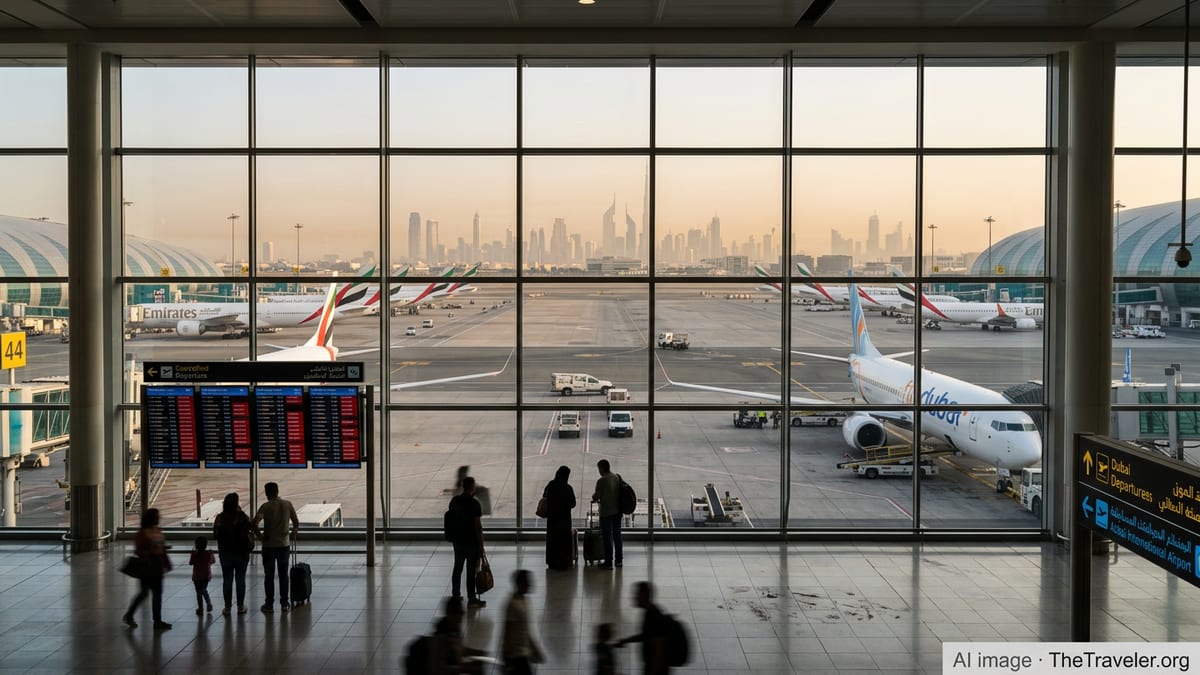
Airspace Closures Hit Key Gulf Corridors
The latest round of US and Israeli strikes on Iran, and Tehran’s retaliatory missile and drone attacks, have rapidly transformed the skies over the Gulf into one of the world’s most restricted aviation zones. Authorities in Iran widened the closure of the Tehran flight information region, advising civilian aircraft to stay clear of large swaths of the Persian Gulf and Gulf of Oman amid heightened military activity.
Neighbouring states including Qatar, Bahrain, Kuwait and Oman also moved to shut or severely limit their airspace, forcing global carriers to cancel or reroute services between Europe, Asia and Africa that typically rely on Gulf overflight corridors and hubs. Analysts describe the disruption as the most severe aviation shock since the peak of the Covid-19 pandemic, with ripple effects reaching far beyond the Middle East.
European regulators have added to the pressure. A high‑risk conflict zone bulletin from the EU Aviation Safety Agency covering the Persian Gulf warns operators of elevated danger from potential misidentification and stray weapons, and urges careful routing decisions. That guidance, while not a blanket ban, is pushing many airlines to avoid the region entirely until the situation stabilises.
Dubai and Abu Dhabi: Hubs Temporarily Frozen
Dubai International and Abu Dhabi’s Zayed International, normally among the busiest transit hubs on the planet, have been reduced to operating only a handful of special services. Emirates, flydubai and Etihad have all temporarily suspended regular departures and arrivals after multiple Gulf states closed their airspace, with official statements stressing that passenger safety outweighs commercial considerations.
Some carriers initially targeted short suspensions, announcing pauses until set times on March 2 and 3, but schedules remain highly fluid. Aircraft already en route to the UAE when closures took effect were forced to divert back to origin points or to alternative airports, leaving crews and passengers scattered across continents and adding to the logistical challenge of restarting normal operations.
For now, most travellers cannot board a routine flight to or through the UAE, even if their ticket does not list a Middle Eastern destination. With hubs effectively frozen, long‑haul itineraries that would usually connect through Dubai or Abu Dhabi are being cancelled outright rather than rebooked via lengthy detours, particularly where overflight rights remain uncertain.
Is It Safe to Travel to Dubai and Abu Dhabi?
Aviation safety experts stress that commercial airlines do not operate in airspace where credible threats cannot be mitigated. The current wave of cancellations and suspensions is itself a reflection of the safety‑first approach: flights are being grounded not because of accidents but to avoid placing aircraft in contested skies while missiles and drones are in use.
On the ground, there have been no confirmed strikes on Dubai or Abu Dhabi airports. The United Arab Emirates maintains some of the region’s most sophisticated air defence systems, and authorities are working closely with international partners to monitor threats. However, the country’s proximity to the Strait of Hormuz and other potential flashpoints means risk levels are tied directly to the broader conflict, which remains volatile.
For travellers weighing whether it is “safe” to go, the more immediate question may be practicality rather than raw danger. With the US State Department and several European governments now urging citizens to leave parts of the Middle East and to avoid non‑essential travel, routes could close again at short notice even if limited services resume. Insurance policies may also exclude cover for trips to regions under active travel warnings or conflict advisories.
What Stranded and Prospective Travelers Should Do Now
Hundreds of thousands of passengers are believed to be stranded across the region as airlines work through backlogs and governments organise repatriation flights. The UAE has arranged hotel accommodation for many travellers caught in transit, while carriers are waiving change fees, offering refunds or rebooking on later dates where seats are available.
Anyone currently in Dubai or Abu Dhabi is being urged by consular authorities to register with their embassy, ensure contact details with their airline are correct and monitor official channels for evacuation or special flight options. Travellers with imminent bookings to or through the UAE should assume that schedules may change repeatedly and avoid heading to the airport without a confirmed, operating flight.
Those planning future trips are being advised to postpone discretionary travel until the security picture and airspace status are clearer. Where travel is essential, experts recommend booking flexible fares, checking both airline advisories and government travel alerts, and considering routings that avoid the Gulf altogether by using alternative hubs in Europe or South and Southeast Asia.
Outlook: Gradual Reopening, Persistent Uncertainty
Airlines and aviation authorities are signalling that closures are intended to be temporary, but few are willing to put firm dates on a return to normality. Any sustainable reopening of airspace around Iran and the Gulf will depend on a reduction in missile and drone activity, clearer de‑confliction between military and civilian operators, and coordinated guidance from regulators.
Even once flights begin to move again, travellers should expect a protracted period of irregular operations. Rerouted long‑haul services may take significantly longer, connections will be fragile, and last‑minute cancellations are likely as carriers adjust to changing risk assessments and crew positioning constraints.
For now, the consensus among safety specialists and diplomats is that travel to Dubai and Abu Dhabi is not recommended unless essential, and that transiting the Gulf as a shortcut between other regions will remain unattractive until the conflict eases. The skies over the Gulf may reopen in stages, but confidence will take longer to rebuild for airlines and passengers alike.