

More news on this day
Air travel across the United States is reeling as New York joins New Jersey, Virginia, Florida, California, Massachusetts and other states in facing waves of flight delays, cancellations and diversions linked to the rapidly escalating conflict involving the United States, Israel and Iran, leaving thousands of travelers stranded or uncertain about when they will reach their destinations.
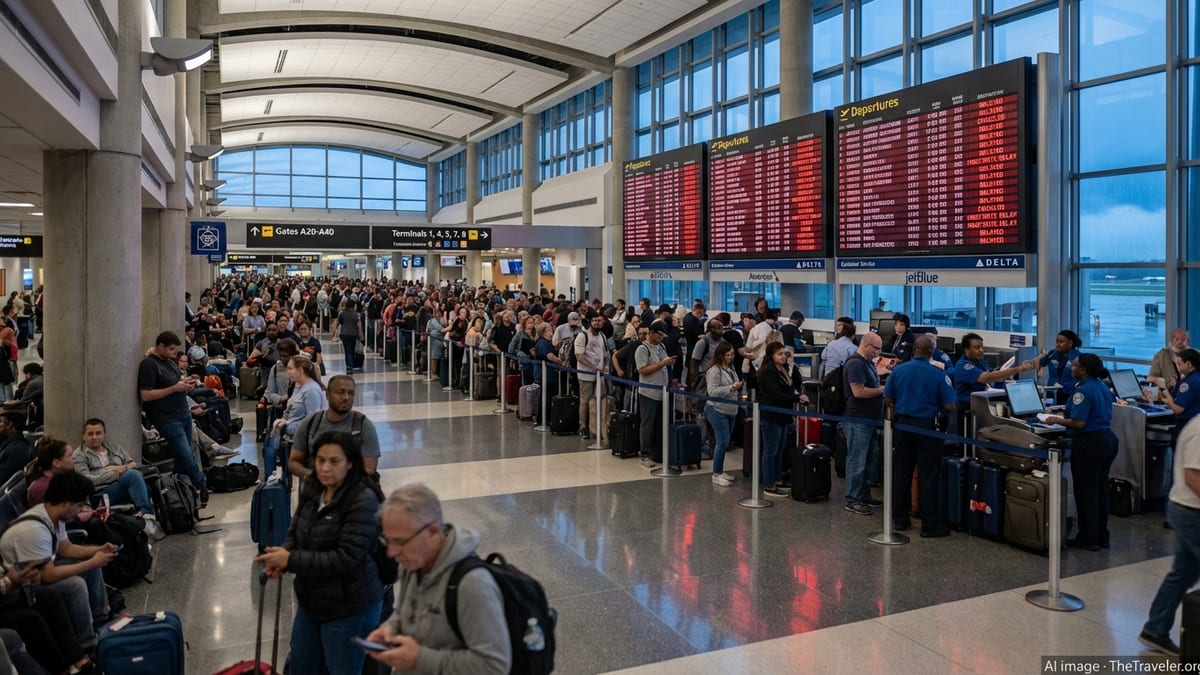
Global Conflict, Local Gridlock at US Gateways
The aerial standstill over much of the Middle East has rippled directly into New York area airports, particularly John F. Kennedy International Airport, where more than 170 flights have been delayed and additional services canceled as airlines scramble to replan long-haul routes that once depended on overflying Iran and neighboring countries. Disruptions are concentrated on services connecting New York with Dubai, Tel Aviv and major European and Asian hubs, but knock-on effects are reaching domestic connections as aircraft and crews fall out of position.
Newark Liberty International and LaGuardia are also feeling the strain as carriers adjust schedules, swap aircraft and reassign crews to keep at least a skeleton network running. Passengers arriving to check in for international departures over the weekend have found departure boards peppered with red notices, while check-in lines for rebooking snake through terminals as agents work flight by flight to find alternative routings.
Similar scenes are playing out in other coastal and hub states. Airports in New Jersey and Massachusetts are still working to clear backlogs created by last week’s historic blizzard, now compounded by the Middle East conflict. In Florida and California, where many ultra long-haul flights connect North America with Asia and the Gulf, airlines are having to add hours to flight times or cancel services outright, further constricting already tight schedules.
In Virginia and the wider Mid-Atlantic region, Washington-area airports are managing a complex mix of diverted international flights, military movements and heightened security procedures. Aviation officials say the combination of weather-related congestion, security-driven reroutes and crew time limits has created a fragile operating environment where small disruptions can quickly cascade into widespread delays.
Why the US-Israel Conflict with Iran Has Grounded So Many Flights
The current wave of cancellations and delays stems from a sudden closure or restriction of large swaths of airspace across the Middle East following joint US and Israeli strikes on targets in Iran and retaliatory missile attacks on US-linked facilities. In response, Iran, Israel, Iraq, Kuwait, Qatar, Bahrain, and the United Arab Emirates, among others, have either partially or fully shut their skies to civilian traffic, forcing airlines to reroute or suspend flights that normally use these corridors as the most direct path between continents.
Flight-tracking data shows what is normally one of the world’s busiest aviation highways, the east–west corridor over Iraq and Iran, now almost empty of commercial traffic. Major hubs such as Dubai, Abu Dhabi and Doha have temporarily suspended many operations, cutting off vital transfer points for travelers moving between North America, Europe, Asia and Africa. With these hubs offline or heavily curtailed, connecting itineraries that would usually carry US passengers to destinations across South Asia, Southeast Asia and Africa have been thrown into disarray.
Airlines and regulators have also imposed their own risk thresholds, at times going beyond official closures. Several European and Asian carriers have announced that they will avoid Iranian and adjacent airspace entirely, even if parts are technically open, citing security assessments that classify these routes as high risk. That has added distance and complexity to routes between Europe and Asia, with many detouring north or south, increasing flying times, fuel burn and crew requirements.
Because US airports like New York JFK sit at the western end of many of these disrupted long-haul journeys, local passengers are feeling the impact of decisions taken thousands of miles away. Aircraft that were scheduled to arrive from the Gulf or South Asia never depart, crews time out due to extended detours, and carefully planned rotations unravel, forcing carriers to trim schedules in New York, Newark, Boston, Miami, Orlando, Los Angeles and San Francisco.
States Hit Hard: New York, New Jersey, Virginia, Florida, California and Massachusetts
New York has emerged as one of the most visible flashpoints for the disruption, with hundreds of passengers stranded at JFK amid scores of delayed departures and arrivals. Services operated by Gulf and Israeli carriers, as well as US airlines with code-share agreements on those routes, have been among the hardest hit, but the impact has spread to transatlantic and domestic flights as equipment and crews are reassigned at short notice.
Across the Hudson, New Jersey’s Newark Liberty International, a key gateway for Europe and India, is wrestling with a surge in diverted traffic and rolling schedule changes. Some long-haul arrivals have been retimed to avoid conflict-zone overflights, while others have been canceled entirely when safe alternate routings proved operationally or commercially unviable. Combined with residual disruption from recent severe winter weather, the result has been a patchwork of last-minute gate changes, missed connections and lengthy customer-service queues.
In Virginia, Washington Dulles International is managing a steady flow of rerouted international traffic, some of it originally bound for the Gulf. Airlines are using Dulles, along with East Coast hubs in Florida and Massachusetts, as alternative staging points while they assess how long Middle Eastern airspace will remain constrained. Boston’s Logan International and Florida’s major gateways, from Miami and Fort Lauderdale to Orlando and Tampa, are seeing intermittent cancellations and unusually long flight times on transatlantic and transpacific services.
On the West Coast, California’s major airports, including Los Angeles and San Francisco, are adjusting to reroutes on flights that would normally cut across the Middle East en route to India and beyond. Some carriers have opted to cancel select rotations rather than add hours of flying and complex technical stops. For travelers, that has translated into shrinking seat availability, limited rebooking options and rising anxiety about whether future departures will operate as planned.
What Travelers Need to Know Right Now
Airlines and aviation authorities describe the situation as highly fluid, with schedules subject to change up to the last minute. Industry analysts say the ripple effects are likely to persist for days, if not longer, even if some Middle Eastern airspace begins to reopen in phases. That means US travelers planning to depart from or connect through New York, New Jersey, Virginia, Florida, California, Massachusetts or other major hubs should be prepared for potential last-minute alterations.
Most major carriers serving affected routes have issued travel waivers, allowing passengers to rebook or, in some cases, request refunds without penalties. Policy details vary by airline and route, but many travelers holding tickets to destinations in the Middle East, Israel or nearby regions are being encouraged to postpone nonessential trips or reroute via alternative corridors. Customer-service centers and airport ticket counters, however, are struggling to keep up with demand, and wait times can be lengthy.
Travelers are being advised to check their flight status repeatedly on the day of travel, arrive at the airport earlier than usual, and keep accommodation and ground transport plans flexible. Those already overseas and due to transit through hubs such as Dubai, Abu Dhabi or Doha may face unexpected overnights or extended layovers as airlines work through backlog. Travel insurance policies that cover war-related disruptions or missed connections may provide some financial relief, but coverage terms differ widely.
Security procedures at many US airports have also been quietly tightened, particularly around international departures linked to the conflict zone. While officials stress there is no specific threat to US airports at this time, visible measures such as increased patrols, additional screening and occasional gate-area checks are contributing to longer processing times. Passengers report a palpable sense of tension in terminals as uncertainty over the conflict’s trajectory hangs over routine travel plans.
How Long Could the Disruption Last?
Aviation experts caution that even a relatively short-lived military confrontation can have an outsized impact on global air travel when it affects a strategic transit region like the Middle East. Airlines must not only wait for formal clearance that airspace is safe, but also conduct their own risk assessments, secure updated insurance coverage and reconfigure schedules before restoring normal operations. That process can take days or weeks, particularly for carriers that rely heavily on hub-and-spoke networks through Gulf cities.
In the near term, analysts expect a rolling pattern of partial resumptions and renewed suspensions as the security situation evolves. Some airlines may experiment with longer, more northerly or southerly routings around Iran and neighboring states, while others could keep routes suspended until there is clear evidence of de-escalation. Fuel costs and operational complexity will weigh heavily on decisions to restart or maintain extended detours, a factor that may keep fares elevated on some long-haul markets.
For travelers in New York and other affected US states, the practical implication is continued unpredictability. Even after headline cancellations begin to ease, lingering crew shortages, maintenance backlogs and displaced aircraft can cause rolling disruptions for days. Industry observers note that the network is already operating with limited slack following a busy winter travel season and recent weather shocks, leaving little margin to absorb a shock of this magnitude.
Government officials in Washington and allied capitals are monitoring the impact on aviation but have so far left operational decisions in the hands of airlines and safety regulators. Should the conflict deepen or spread, more stringent formal restrictions could follow, potentially extending the period of disruption. Until then, airports from New York to Los Angeles remain on a kind of operational knife-edge, as the consequences of a distant conflict continue to unfold over US runways and skies.