

More news on this day
With the US-Israel-Iran war entering its sixth week, travelers are confronting unprecedented disruption as Iran’s international air gateways and surrounding airspace remain largely shut to civilian traffic, forcing mass cancellations, diversions and last-minute itinerary changes across Europe-Asia routes.
Get the latest news straight to your inbox!
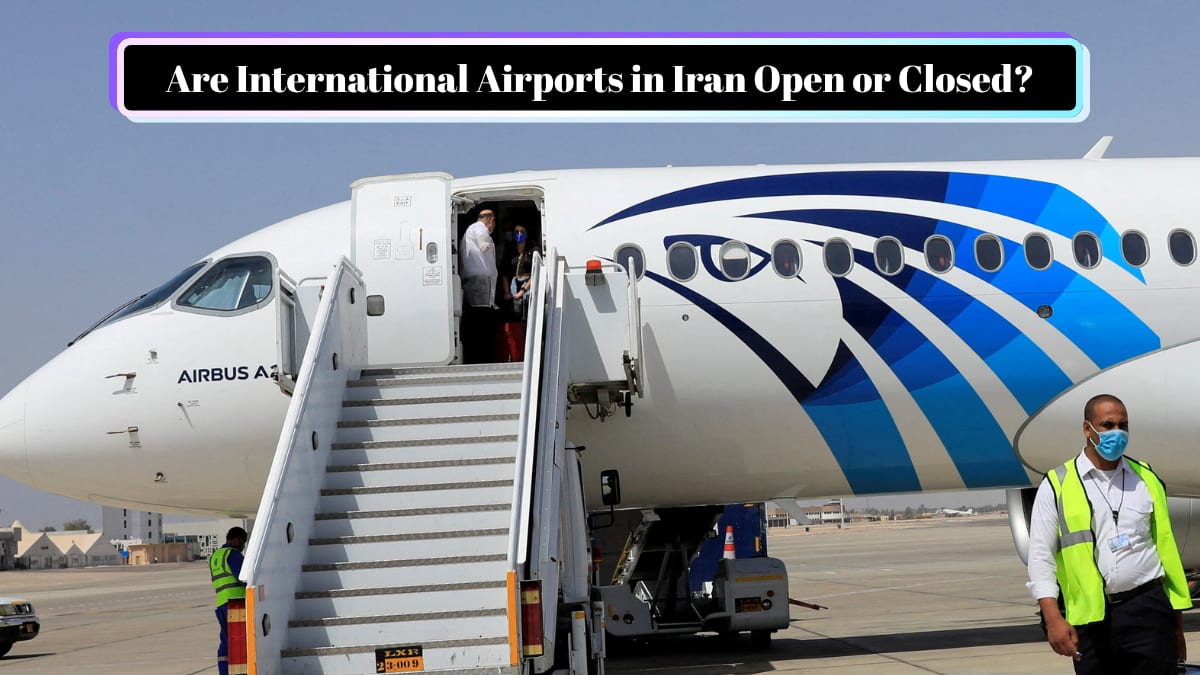
Current Status of International Airports and Airspace in Iran
Publicly available aviation notices and operational bulletins indicate that Iran’s civil airspace remains effectively closed to commercial overflights as of April 8, 2026. Industry monitors summarizing official Notices to Air Missions (NOTAMs) describe a total closure for civilian operations over the Tehran flight information region, with limited exceptions only for state, medical and emergency flights. This blanket restriction follows the opening phase of US and Israeli strikes on Iranian territory in late February and has been extended several times into April.
Airport-level advisories echo the picture of a near-complete halt to passenger services. Tehran’s main long-haul gateway, Imam Khomeini International Airport, is listed in multiple commercial travel and risk advisories as closed to regular civil traffic because of severe operational disruption and the wider airspace ban. Historic domestic hub Mehrabad in Tehran has also suffered direct damage during the conflict, according to publicly accessible reporting, further reducing the capital’s ability to handle any contingency passenger operations.
Reports on regional aviation impacts state that at least eight Middle Eastern countries, including Iran, shut their airspace to varying degrees as the war escalated. For Iran, this has translated into a sustained freeze on scheduled international passenger services in and out of major cities, even as cargo operators and some neighboring states begin to explore partial reopening elsewhere in the region.
Travel industry analyses suggest that even if individual Iranian airports retain limited technical functionality, the overarching closure of national airspace and insurance restrictions make any near-term resumption of commercial passenger flights highly unlikely. In practical terms, travelers should assume that normal international arrivals and departures at Iranian airports are not operating.
Flight Status, Cancellations and Global Route Disruptions
Global flight tracking data and airline advisories show that the Iran war has punched a significant hole in one of the world’s busiest aviation corridors between Europe and Asia. With Iranian airspace closed and neighboring states imposing their own restrictions, many long-haul carriers have suspended routes to Tehran entirely and re-routed flights around the Gulf, leading to longer flight times, higher fuel costs and tight aircraft schedules.
Several major airlines with pre-war services to Iran and other Middle Eastern hubs have announced extended suspensions. Publicly available statements from European and Gulf-based carriers indicate that flights to Tehran and other points in Iran remain off their timetables, while services to nearby hubs such as Dubai, Abu Dhabi and Doha have been cut back or temporarily halted at various points since late February because of security and airspace concerns.
Independent aviation analyses published in early April note that thousands of flights worldwide have experienced delays or cancellations attributed partly or wholly to the Middle East airspace closures. Carriers have had to redesign routings that previously transited Iranian skies, exacerbating congestion over alternative corridors such as Turkey and the eastern Mediterranean. This has knock-on effects even for passengers who are not traveling to or from Iran but whose itineraries depended on efficient Europe–Asia connections.
Travelers trying to reach Iran indirectly are facing particular uncertainty. Because Iran’s airspace is closed and most foreign carriers have withdrawn direct services, attempts to fly to neighboring countries and cross borders by land are complicated by security restrictions, sporadic closures and the broader regional military situation. Published commentary from aviation and security analysts stresses that travelers should not rely on workarounds involving last-minute re-routing through regional hubs, as conditions are volatile and subject to rapid change.
Official Travel Advisories and Safety Guidance for Iran
Government travel advisories reflect the gravity of the situation. The United States maintains a Level 4 “Do Not Travel” advisory for Iran, updated in late 2025 and still in force, citing the danger posed by the conflict, arbitrary detention risks and the lack of consular support. Other Western governments, including several in Europe, have similar or equivalent warnings in place, often explicitly referencing the current war and the closure of airspace across Iran and neighboring states.
Insurance providers and corporate risk consultancies have also issued special bulletins in the wake of the February 28 strikes. These documents, which reference the US-Israel attacks on Iran and the resulting airspace shutdowns, generally warn that war-related events are excluded from standard travel insurance coverage. Travelers are advised to review policy terms carefully, as cancellations or additional expenses linked to the conflict or airspace closures may not be reimbursed under ordinary plans.
Security-focused travel advisories emphasize that the overall operating environment in Iran has deteriorated sharply. In addition to the closure of airspace, the country has experienced extended communications disruptions, including nationwide internet shutdowns described by monitoring groups as the longest of their kind recorded in Iran. This further complicates efforts by visitors to obtain real-time information, contact airlines, or access online check-in and rebooking tools.
Risk assessments available to corporate travelers commonly recommend suspending all non-essential trips to Iran and the wider conflict zone. For individuals, both leisure and business travelers are urged to postpone or cancel planned visits and to avoid attempting to transit through Iranian territory by air or land while hostilities and airspace closures continue.
How to Check Flights, Manage Bookings and Seek Assistance
With conditions shifting quickly, experts point to a few practical steps for anyone whose travel might be affected. First, passengers should use airline mobile apps or official call centers as their primary source for flight status, as many third-party search engines and booking sites are slower to reflect last-minute cancellations or diversions. Some carriers are proactively advising customers not to travel to the airport unless their flight is explicitly confirmed as operating on the day of departure.
Second, travelers with itineraries that previously routed over Iran, even if they were not scheduled to land there, should closely monitor their bookings. Airlines have been reconfiguring flight paths to avoid Iranian, Iraqi, Israeli and other neighboring airspaces, which can result in revised departure times, longer travel durations and, in some cases, unscheduled technical stops. Passengers connecting through congested hubs may need to allow for significantly longer minimum connection times than usual.
Third, those who had direct bookings to Tehran or other Iranian cities should expect that airlines will either cancel these flights outright or keep them suspended indefinitely while airspace restrictions remain in place. In such cases, publicly available guidance from carriers and insurers generally advises customers to seek refunds or vouchers directly from the original ticket issuer. Travelers are encouraged to keep all documentation, including cancellation notices and updated itineraries, to support any future insurance or reimbursement claims where coverage is available.
Finally, people who are already in the region and affected by the war-related disruptions are urged in published advisories to maintain regular contact with their home country’s embassy or consular services where possible, monitor local media, and follow airport or airline announcements. Given the strain on communication networks and airport infrastructure, advance planning, flexibility and redundancy in travel arrangements are presented as essential for anyone navigating the current Middle East aviation landscape.
Key Takeaways for Travelers Considering Routes Near Iran
For now, the central fact remains that Iran’s airspace is largely closed to civil aviation, and its key international airports are not functioning as normal passenger gateways. Even if technical or humanitarian exceptions exist, they are not available as routine commercial options. This reality shapes not only direct travel to Iran but also a broad swath of long-haul routes between Europe, Asia and Oceania.
Airlines and aviation authorities are continuously updating routings as the conflict evolves, but most publicly available analyses concur that disruption is likely to persist for weeks or months rather than days. Carriers must balance safety and regulatory requirements with operational efficiency, and many have opted for conservative approaches that avoid the wider Gulf region whenever feasible.
Travelers planning future trips that could be affected by the US-Israel-Iran war are therefore advised, in publicly circulated travel guidance, to build flexibility into their plans. This may include choosing itineraries that do not depend on transiting the Middle East, purchasing tickets that allow changes without heavy penalties, and staying informed about regional developments.
Until there is a clear, sustained reopening of Iranian airspace documented by official aviation notices and reflected in airline schedules, prospective visitors should operate on the assumption that Iran’s international airports remain effectively closed to normal commercial traffic, and they should plan their journeys accordingly.