

More news on this day
The escalating US–Israel–Iran war is rapidly reshaping global travel, triggering a collapse in tourism across the Middle East as long haul flights are rerouted or halted, booking pipelines dry up and nervous holidaymakers shift plans away from a region once marketed as one of the world’s fastest-growing visitor playgrounds.
Get the latest news straight to your inbox!
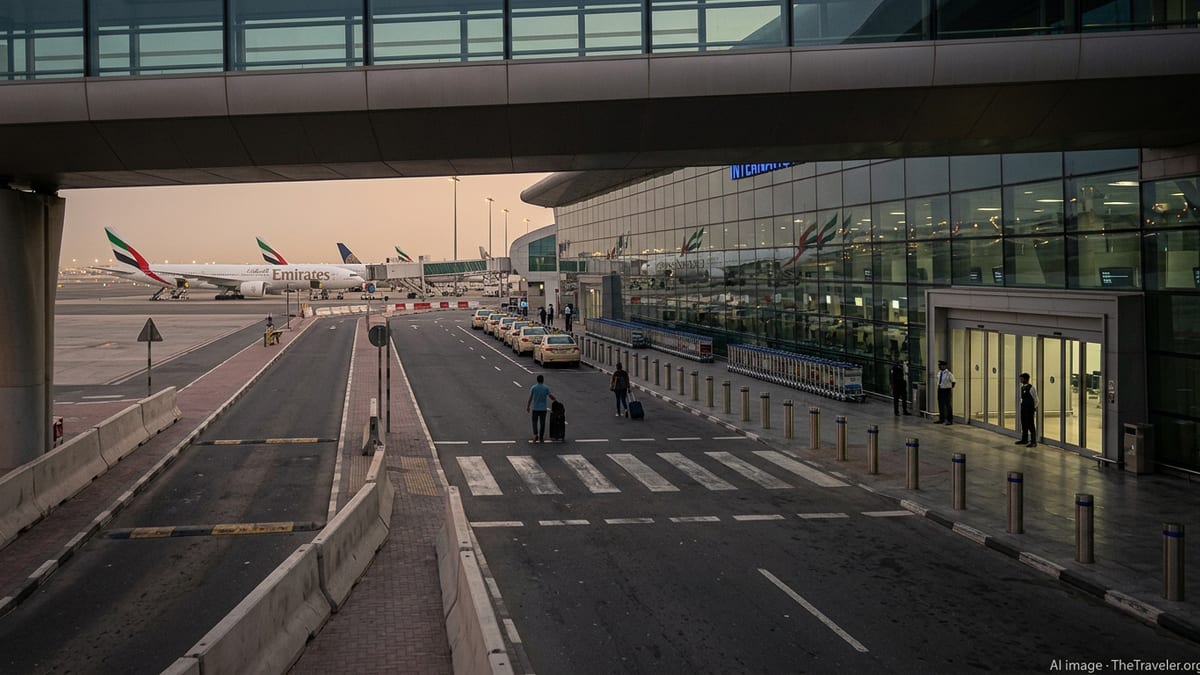
Tourism Boom Reverses Into Sudden Regional Slump
Before the first strikes on Iranian targets in late February 2026, the outlook for Middle Eastern tourism was strikingly positive. Industry forecasts from global travel bodies projected double-digit growth this year, with destinations such as Dubai, Doha and Riyadh expected to build on record visitor numbers driven by new attractions, major events and aggressive airline expansion. Several Gulf states had positioned tourism at the core of their diversification plans, banking on international arrivals to create jobs and soften their reliance on hydrocarbons.
That optimistic narrative has unraveled at speed. Publicly available estimates from the World Travel & Tourism Council and other industry analysts now suggest the region is losing roughly 600 million dollars a day in international visitor spending as the conflict ripples outward from Iran and Israel. Those figures are derived from pre-war expectations of more than 200 billion dollars in foreign visitor expenditure across the Middle East in 2026, underscoring how abruptly demand has fallen away.
Published coverage from travel trade outlets describes a broad-based slump that extends well beyond the immediate conflict zone. Gulf hubs such as the United Arab Emirates and Qatar, Red Sea resorts in Egypt and Saudi Arabia, and classic cultural destinations including Jordan and Turkey are all experiencing a sharp downturn in new bookings, with cancellations far outpacing fresh reservations. Markets that had only recently recovered from the impact of the pandemic are once again facing empty hotel corridors and shuttered excursion desks.
Tourism economics reports indicate that if current conditions persist through the coming months, the combined hit to Middle East travel revenues could reach tens of billions of dollars in 2026 alone. Economists warn that the shock may reverberate through labor markets and broader non-oil growth, given that tourism accounts for a significant share of GDP and employment in several Gulf and Levant economies.
Airspace Closures and Long Haul Flight Disruptions
The most immediate blow to regional tourism has come from the skies. Following US and Israeli strikes in Iran on February 28 and subsequent missile and drone exchanges, multiple countries across the Gulf and wider Middle East imposed partial or full airspace closures. According to open-source aviation tracking and economic analysis, Bahrain, Iraq, Israel, Kuwait, Qatar, Syria and the United Arab Emirates have all restricted airspace at various points, forcing airlines to suspend or reroute flights.
Major long haul services linking Europe and North America with South and Southeast Asia typically rely on Middle Eastern hubs and overflight corridors. With key routes disrupted, carriers from Europe to Asia have cut frequencies, added lengthy detours or temporarily halted services altogether. Media coverage notes that several prominent European airlines have canceled flights to Dubai and other Gulf gateways into late March, while Asian and regional carriers have sharply reduced operations to conflict-adjacent destinations.
These operational decisions are driven by both security risk assessments and rising costs. Detours around closed airspace add hours to flight times and increase fuel burn at a moment when oil prices have spiked on the back of war-related supply fears. Industry analysts quoted in regional and Asian media warn that higher fares, longer journeys and unpredictable schedules are dampening demand for leisure and business travel alike, even on routes not directly touching the Middle East.
The knock-on effects are being felt far from the Gulf. Outbound travelers in Asia and Europe who would normally transit through hubs such as Dubai, Doha or Abu Dhabi on their way to Africa and the Indian Ocean are facing limited options or are being offered alternative routings that bypass the region entirely. This erosion of connectivity threatens to undercut years of investment by Gulf carriers in building global super-connector networks.
Hotel Occupancies Plunge as Cancellations Surge
On the ground, hotels and resorts across the Middle East are struggling with a sudden reversal in demand. Travel industry reports focusing on Dubai and Abu Dhabi describe a rapid fall in occupancy rates, with some properties reportedly operating at a fraction of typical March levels. Visual reporting from Dubai highlights quiet beaches, near-empty shopping malls and subdued nightlife districts at what would normally be a peak travel period for European and Russian holidaymakers.
Similar patterns are emerging in Qatar and Saudi Arabia, where large new hotel inventories had been brought online to serve both business travelers and tourists attracted by recent mega-events and cultural festivals. Analysts cited in specialist tourism coverage say forward bookings for spring and early summer have weakened sharply, with group tours, meetings and incentives among the first segments to cancel or postpone.
In Egypt, where coastal resorts on the Red Sea and cultural attractions along the Nile had been experiencing strong demand, tour operators report that many new inquiries are now on hold. While parts of North Africa remain physically distant from the core conflict, the region is often perceived as a single travel theater, and risk-averse travelers are reacting accordingly. Industry data shared in European media suggests that a growing share of would-be visitors are redirecting holidays to southern Europe, particularly Spain and Greece, as they seek perceived safe and accessible alternatives.
For local tourism workers, the downturn is immediate and personal. Travel and hospitality publications describe guides, drivers, small guesthouse owners and freelance tour staff losing a critical income stream just as they had begun to recover from earlier crises. Many regional governments have framed travel and tourism as pillars of post-oil and post-pandemic resilience; the current collapse is testing those assumptions and raising questions about how quickly confidence can be restored once fighting subsides.
War Fear Spreads and Booking Patterns Shift Globally
Beyond direct cancellations, the conflict is feeding a broader sense of uncertainty that is reshaping global booking patterns. Data cited by European travel research firms indicates a sharp drop in search interest and flight reservations to Middle East destinations in the days after the first strikes, accompanied by an uptick in demand for Western Mediterranean, Southeast Asian and domestic trips. This shift mirrors earlier episodes, such as the Arab Spring and other periods of regional tension, when tourists recalibrated plans rather than abandon travel entirely.
Travel risk advisories issued by governments and private security consultancies now warn of potential further escalation affecting additional airspace corridors and infrastructure. While the specific language varies, the overall effect is to reinforce traveler caution, particularly among families and organized tour groups. Online booking platforms and travel agencies are responding by actively promoting itineraries that avoid the Middle East, highlighting flexible cancellation policies and alternative routing via hubs in Europe or East Asia.
At the same time, some large travel companies are refraining from long-range scheduling commitments into the region. Industry briefings indicate that capacity plans for the second half of 2026 are being revised on a rolling basis, with airlines, cruise lines and tour operators all weighing the risks of returning too quickly versus losing market share if conditions improve. This hesitation adds another layer of uncertainty for Middle Eastern destinations that had planned major events and marketing pushes for the coming high season.
There are early signs that the war’s tourism impact is reaching well beyond traditional visitor flows to the Gulf and Levant. Asian tourism outlets describe ripple effects on destinations such as Bali and the Maldives, where travelers and airlines are contending with higher fares and longer transit times linked to broader route disruptions. As global networks adjust, analysts caution that the Middle East’s role as a central aviation bridge between continents could be structurally weakened, at least in the short to medium term.
Economic Stakes for Gulf and Neighboring Economies
The tourism collapse is unfolding against a wider backdrop of economic stress in the Middle East. Economic research on the 2026 Iran war points to significant disruptions in regional oil production, shipping and trade, with knock-on effects for fiscal balances and currency stability. In several Gulf economies, tourism and aviation had been promoted as engines of diversification precisely to cushion against commodity volatility; the current crisis has instead intertwined energy and visitor revenue shocks.
Reports from international financial media suggest that airlines based in the United Arab Emirates, Qatar and other Gulf states are operating at well below pre-conflict capacity, in some cases under half of normal levels. With aircraft grounded and routes curtailed, revenue shortfalls are mounting, prompting concerns about profitability and potential pressure for state support. The suspension of major sporting fixtures and cultural events across the region has further reduced high-spend visitor traffic.
Macroeconomic forecasts cited in European coverage indicate that, if hostilities and airspace restrictions continue, several Gulf states could see meaningful slowdowns in non-oil GDP growth in 2026 compared with earlier projections. Countries such as Kuwait and Qatar, where tourism is a smaller share of the economy but still strategically important, may experience broad spillovers as related sectors from retail to real estate feel the drag of lower visitor numbers.
For now, publicly available commentary from industry groups remains cautiously hopeful that travel demand could rebound once security conditions stabilize and air connectivity is restored, pointing to the sector’s history of relatively rapid recoveries after previous crises. However, the depth and breadth of the current shock, combined with persistent war fears and complex route disruptions, suggest that Middle East tourism faces a prolonged and uncertain path back from the brink.