

More news on this day
Air travel across the Middle East and far beyond has been plunged into chaos after coordinated US and Israeli strikes on Iran prompted sweeping airspace closures, mass flight cancellations and a rush of new government travel warnings that are rippling through global tourism and business travel networks.
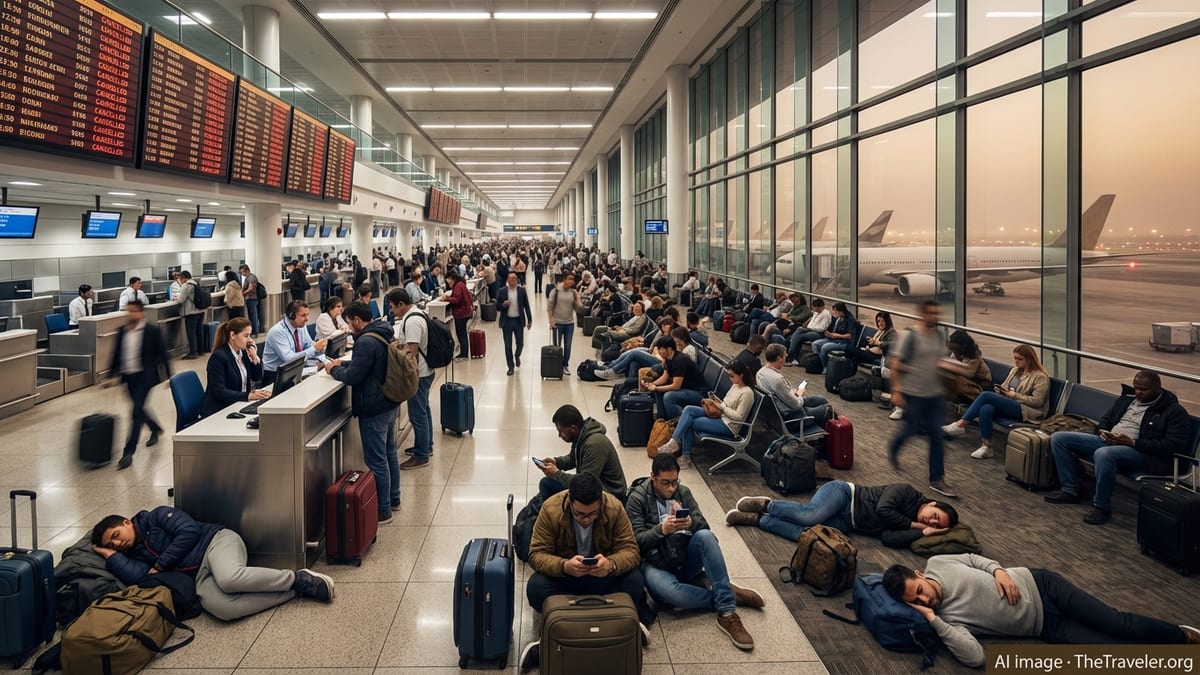
Middle East Airspace Closes as Conflict Escalates
The strikes on Iran on 28 February have rapidly transformed the skies over one of the world’s busiest aviation corridors into a patchwork of no-fly zones. Authorities in Iran, Iraq, Israel, Syria, Kuwait, Qatar, Bahrain and the United Arab Emirates have either fully or partially closed their airspace, forcing airlines to cancel or divert thousands of flights in less than 48 hours.
Major hubs in Dubai, Abu Dhabi and Doha, usually among the most connected airports on the planet, temporarily suspended operations as aviation and security officials assessed the risk of further missile and drone attacks. Flight-tracking services recorded thousands of cancellations and diversions, with some long-haul services turning back mid-journey after airspace closures were announced while they were already en route.
The disruption is particularly severe because Gulf carriers act as vital bridges between Europe, Asia, Africa and Oceania. With airlines suddenly unable to use the traditional east–west corridor over the northern Gulf and wider Middle East, routings that normally rely on smooth overflight permissions have become either impossible or uneconomical, sending planners scrambling for longer and more complex alternatives.
Industry analysts warn that, while some limited operations are resuming, the airspace picture remains fluid. Airlines are preparing for at least several days of rolling delays, last-minute cancellations and improvised routings as military assessments, not commercial schedules, dictate which skies can safely be used.
Global Carriers Slash Schedules and Reroute
Flag carriers and low-cost airlines alike have rushed out emergency timetable changes. Gulf giants Emirates, Etihad Airways and Qatar Airways have cancelled the majority of their services to and through their hubs, with some temporarily grounding flights altogether until regional airspace is deemed safe. Even as a handful of services begin cautiously operating again, the bulk of their long-haul connections remain suspended or heavily reduced.
European airlines including Lufthansa, Air France, KLM, British Airways, Turkish Airlines and others have suspended flights to key destinations such as Tel Aviv, Beirut, Tehran, Dubai, Abu Dhabi and several Gulf cities through dates ranging from 2 March to 7 March, and in many cases are avoiding Israeli, Lebanese, Jordanian, Iraqi, Qatari, Iranian and sometimes Emirati airspace entirely. This is forcing detours that can add several hours to journeys linking Europe with South and Southeast Asia.
Asian and Indo-Pacific carriers have also been drawn into the turmoil. Air India, IndiGo, Garuda Indonesia and Pakistan International Airlines have all cut Middle East routes, while Australian-bound services that typically refuel or transit in Doha, Dubai or Abu Dhabi have been cancelled or diverted, leaving passengers from Sydney to Singapore searching for alternative paths home.
US and Canadian carriers are not immune. Delta, American Airlines and Air Canada have either paused or curtailed flights to Tel Aviv and Dubai, and are closely monitoring the evolving security picture for further adjustments. For many global travellers, this means fewer seats, longer journeys and limited options even on routes that do not directly touch the Middle East but rely on its hubs as convenient transfer points.
State of Emergency in Israel and Border Tightening
Inside Israel, the strikes and the expectation of retaliatory action have led to a nationwide state of emergency. Civil aviation has largely been halted, with Israeli airspace repeatedly closed or tightly restricted, and national carrier El Al preparing special recovery flights once conditions allow. Domestic life has also been reshaped, as public gatherings are curtailed and many schools and businesses suspend operations.
On the ground, regional borders are tightening in ways that directly affect travellers. Land crossings, particularly along routes connecting Israel with neighbouring states, have heightened security screening and intermittent closures as authorities attempt to manage both security threats and surges of travellers seeking alternative ways out of the region.
Neighbouring countries are recalibrating their own controls. Even where borders remain technically open, additional documentation checks, vehicle inspections and police patrols near crossing points are slowing movements for tourists, migrant workers and cross-border commuters. Tour operators that once relied on easy multi-country itineraries across Israel, Jordan, Egypt and the Gulf are now rapidly rewriting or postponing departures.
For travellers already in the region, embassies and consulates are warning that exit routes can change at short notice and that overland options may not be safer or more reliable than waiting for organised airlifts once commercial operations resume in a more predictable pattern.
Governments Update Travel Warnings Worldwide
In capitals from Washington and London to Canberra, foreign ministries have issued updated travel advisories for Israel, Iran and much of the wider Middle East, in some cases urging citizens to avoid all non-essential travel or to leave while commercial options remain. Many advisories highlight the risk of further missile and drone attacks, as well as the potential for sudden closures of airports and borders.
The United States has tightened its existing warnings for Iran and its neighbours, reiterating that the capacity to provide consular support inside Iran is extremely limited and that dual nationals could face particular risks. European governments have similarly raised their alert levels, with several advising against transiting through Gulf hubs unless absolutely necessary.
Asian governments, including those in India and Indonesia, are issuing their own layered messages: urging pilgrims and labour migrants to defer departures, warning tour groups about uncertain schedules, and in some cases preparing government-organised charter flights to retrieve citizens stranded in the region. Australia’s travel advice service has highlighted large numbers of nationals stuck at Gulf transit hubs and is counselling them to stay in close touch with airlines and official channels rather than making hasty alternative arrangements.
Across continents, the clear message is that travellers should expect an unstable environment in which conditions can deteriorate rapidly, local curfews or security measures may be imposed with little warning, and insurance and assistance services may be stretched by the sheer volume of disrupted trips.
What Travellers Need to Know Now
For passengers with imminent journeys that involve flying over or through the Middle East, the single most important step is to monitor official airline channels in real time. Airlines are issuing rolling schedule changes, and industry regulators stress that travellers should not self-cancel trips without first confirming whether the carrier is cancelling or rebooking, as voluntary cancellations can affect eligibility for refunds or future travel credits.
Refund and rebooking policies vary by airline and jurisdiction, but most carriers are treating the disruption as a force majeure event, offering full refunds, fee-free date changes or travel vouchers to affected passengers. In North America and Europe, consumer protection rules generally require prompt refunds where a carrier cancels a flight, though obligations for cash compensation are weaker when disruptions are triggered by armed conflict rather than operational failures.
Travellers are being advised to keep all receipts for accommodation, meals and transfers incurred during unexpected layovers, as some airlines and travel insurers may reimburse reasonable expenses. At the same time, travel-insurance providers are reminding customers that policies purchased after public awareness of the conflict may exclude claims directly related to the new hostilities, underscoring the value of reading fine print carefully.
For those still planning future trips, experts recommend building in additional flexibility: allowing longer connection times, considering routings that avoid the Middle East entirely where practical, and being prepared for schedules to shift even after tickets are issued. While airlines and aviation authorities are working to restore safe, stable corridors, the latest escalation between the US, Israel and Iran has made clear how swiftly geopolitical shocks can reverberate through global travel.