

More news on this day
The US State Department has issued an updated worldwide caution advising American citizens to exercise increased vigilance when traveling abroad, citing heightened geopolitical tensions, shifting conflict zones, and an uptick in security incidents that are reshaping flight paths and on-the-ground safety expectations.
Get the latest news straight to your inbox!
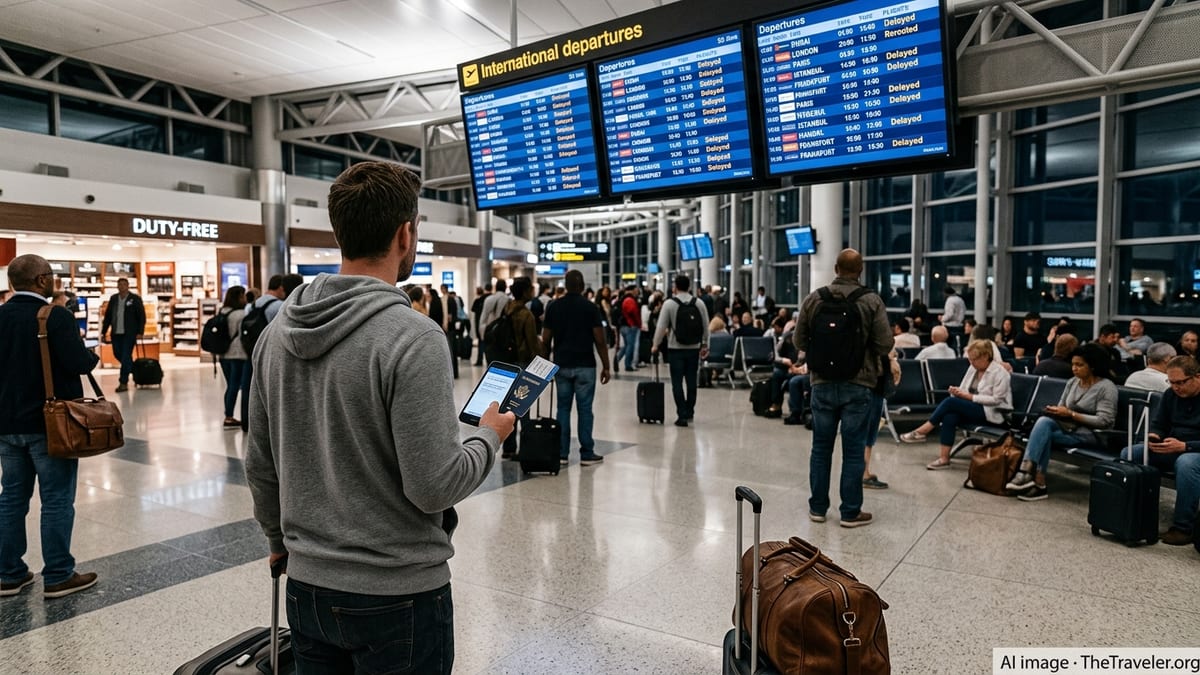
Why a New Worldwide Caution Is Back in Force
The worldwide caution dated February 28, 2026, renews a rare global alert that had previously been reissued in 2025 in response to escalating conflict in the Middle East. Publicly available State Department materials describe the alert as a broad warning that tensions in multiple regions have increased the potential for terrorism, civil unrest, and anti-US sentiment, without limiting concern to any single country.
Earlier iterations of similar notices in 2023 and 2025 were prompted by major security crises, including the Israel-Hamas war and later hostilities involving Iran. According to published coverage from US and international outlets, those alerts framed the worldwide caution as a tool to flag elevated risk rather than a ban on travel. The new advisory continues this pattern while acknowledging a more complex threat environment.
Travel industry reporting indicates that the latest notice is being interpreted by airlines, tour operators, and corporate travel departments as a signal to step up contingency planning and traveler tracking, as well as to review itineraries that transit or connect through unstable regions. For individual travelers, it represents a strong nudge to stay informed and prepare for sudden changes rather than a requirement to cancel trips outright.
American citizens are still encouraged, in official guidance, to consult country-specific advisories, enroll in the Smart Traveler Enrollment Program, and maintain updated contact details so they can receive alerts if conditions deteriorate quickly in the places they are visiting.
Conflict-Driven Airspace Closures and Rerouting
The most visible impact of the current security climate for many travelers is in the sky. Since late February 2026, intensified conflict involving Iran, Israel, and other regional actors has disrupted key air corridors between Europe, Asia, and the Middle East. Aviation tracking data and airline statements show widespread rerouting of long-haul flights to avoid conflict zones and missile risk corridors.
In parts of the Gulf region, local notices and port advisories report that airspace has periodically been closed or heavily restricted, with Qatar and several neighboring states seeing suspensions or significant reductions in routine commercial traffic. Regional briefings compiled by maritime and aviation risk consultancies describe large-scale rerouting that has lengthened flight times and contributed to rolling delays and congestion at hubs that remain open.
Beyond the Gulf, national aviation authorities have issued a series of notices to air missions restricting or prohibiting flights by US operators over conflict-affected territories such as Iran and Venezuela, citing security concerns. These restrictions come on top of earlier, longer-running prohibitions over parts of Ukraine, Syria, and other high-risk regions, leaving carriers with fewer viable routing options across major east-west corridors.
The Federal Aviation Administration has also imposed temporary flight restrictions over specific segments of US airspace for security reasons, including a high-profile February shutdown affecting parts of Texas and New Mexico that briefly halted operations at El Paso International Airport. While domestic airspace closures remain rare, analysts note that they underscore how quickly air routes can change when security conditions shift.
Heightened On-the-Ground Risks for US Travelers
The global advisory highlights that threats to travelers are not confined to the air. According to recent security assessments, demonstrations related to conflicts in the Middle East and other geopolitical flashpoints have drawn large crowds in major cities across Europe, North America, and the wider world. While many gatherings remain peaceful, authorities and risk consultancies warn that some have seen clashes, vandalism, or confrontations near diplomatic missions and symbolic sites.
Travel risk firms tracking the region report that in parts of the Middle East, including areas close to active fronts, airports have faced intermittent disruptions, curfews, or security incidents. In Iran, for example, international reporting has documented damage to airport infrastructure from airstrikes, while elsewhere in the region, governments have tightened access to key roads, ports, and border crossings.
Beyond direct conflict zones, publicly available terrorism threat assessments from Western governments point to a continued risk of opportunistic attacks against soft targets such as hotels, transport hubs, and popular public spaces. Analysts note that heightened rhetoric surrounding global crises can sometimes inspire lone actors or small cells, even in countries far from the front lines of any war.
For American travelers, the practical implication is a more variable risk environment, even in destinations that traditionally attract high volumes of tourism. Safety professionals recommend monitoring local news, being alert near large gatherings, and leaving extra time for potential security checks or transport disruptions.
What the Advisory Means for Flights, Cruises, and Itineraries
The worldwide caution is nonbinding, and commercial flights and cruises continue to operate to most destinations. However, airline schedule changes since late February illustrate how quickly the situation can evolve. Industry reports from Asia and Europe show carriers canceling or suspending flights that use contested airspace, sometimes giving passengers only hours of notice to rebook or reroute.
Cruise and shipping operations in and around the Strait of Hormuz and parts of the eastern Mediterranean have also come under pressure. Port advisories compiled in early March describe sharply reduced traffic through the strait and a shift in some itineraries to avoid high-risk waters, even without a formal legal closure. Higher insurance costs and company-level security assessments are influencing which routes remain commercially viable.
In this environment, travel planners recommend building flexibility into itineraries that cross the Middle East, the eastern Mediterranean, or adjacent regions. That can include allowing longer connection times, avoiding tight self-made connections on separate tickets, and preparing for last-minute equipment or routing changes that may affect seat assignments and arrival times.
Travelers with nonrefundable bookings in impacted areas may face uneven options, as airline and tour operator policies differ on when security-related changes trigger refunds or waivers. Consumer advocates suggest closely reading fare rules and keeping records of schedule changes, advisories, and carrier communications in case disputes arise later.
Practical Steps for Americans Planning International Trips
Despite the tone of the worldwide caution, experts quoted in recent travel-industry coverage generally stress that the alert is intended to encourage preparation rather than to discourage travel altogether. Many Americans continue to take international vacations, work trips, and study abroad programs, but with more attention to risk management than in past years.
Travel security specialists advise starting with a careful review of the State Department’s country-specific advisories, which are updated independently of the global notice and provide clearer guidance on destinations rated “Do Not Travel” or “Reconsider Travel.” Comparing these with assessments from other governments and reputable risk consultancies can provide a fuller picture of evolving conditions on the ground.
Practical measures for individuals include sharing itineraries and contact details with a trusted person at home, enabling roaming or local mobile service to receive alerts, and carrying copies of key documents such as passports and visas. Comprehensive travel insurance policies that include medical evacuation and trip interruption coverage are increasingly recommended, particularly for trips that transit or approach higher-risk regions.
For many travelers, the main adjustment is psychological: accepting that flight paths, schedules, and even local security rules may change on short notice, and that a successful trip in 2026 requires more flexibility and situational awareness than it might have a decade ago. The worldwide caution encapsulates that shift, signaling that global travel remains possible and vibrant, but more tightly intertwined with the world’s security landscape than ever before.