

More news on this day
The US Department of State has reaffirmed Level 4 “Do Not Travel” advisories for both Iran and Iraq, underscoring what officials describe as the highest level of risk for American travelers amid ongoing conflict, terrorism, and heightened regional tensions following recent US combat operations in Iran.
Heightened Warnings Amid Regional Military Escalation
The reinforced advisories come as the State Department issues a fresh Worldwide Caution, updated on February 28, 2026, in the wake of US combat operations in Iran. The global alert urges Americans, and particularly those in the Middle East, to exercise increased vigilance, expect airspace disruptions, and closely monitor guidance from US embassies and consulates.
Iran and Iraq, both classified at Level 4 on the State Department’s four-tier scale, are singled out as areas where life-threatening risks are widespread and the US government’s ability to assist citizens is severely constrained. Officials warn that in the event of a crisis, evacuation options could be limited or unavailable, especially as neighboring states intermittently close airspace or restrict flights during spikes in tension.
The decisions reflect not only the direct security threats posed by ongoing conflict and militant activity but also the broader instability triggered by recent military moves. Travel advisories at Level 4 are reviewed at least every six months, but can be updated at any time if conditions worsen, as the department recalibrates its guidance based on evolving intelligence and on-the-ground developments.
For travelers, the message is unambiguous: trips to Iran or Iraq should not be planned, and those already in either country are urged to consider immediate departure when safe and feasible commercial options exist, while preparing contingency plans should the situation deteriorate suddenly.
Why Iran and Iraq Are Classified at Level 4
In its country-specific advisory, the State Department instructs Americans not to travel to Iran, citing risks tied to terrorism, civil unrest, wrongful or arbitrary detention, kidnapping, and the potential for US citizens to be used for political leverage. Authorities note that local laws can be applied in ways that are opaque or discriminatory to foreign nationals, and that certain behavior considered routine elsewhere may lead to detention or prosecution.
In Iraq, the travel warning highlights terrorism, kidnapping, armed conflict, and persistent civil unrest. Insurgent and extremist groups have a documented history of targeting civilians, security forces, diplomatic interests, and critical infrastructure. The advisory stresses that the possibility of rocket, missile, and drone attacks remains a key concern, particularly near military installations, airports, and government facilities.
Across both countries, the US government acknowledges a limited capacity to provide emergency services, especially outside capital cities. Restricted movement for diplomatic personnel, frequent security incidents, and strained local infrastructure all hamper consular access. Travelers who disregard the advisory may find that, during a crisis, they cannot rely on the same level of support they might receive in lower-risk destinations.
These factors, combined with a volatile regional climate, underpin the State Department’s decision to assign and maintain the strictest advisory level for Iran and Iraq, a designation shared with only a small group of the world’s most dangerous destinations.
Practical Implications for US Travelers and Expats
For most leisure travelers, the Level 4 designation should function as a firm red line: Iran and Iraq are currently not appropriate choices for tourism or nonessential business trips. Travel insurance providers may refuse coverage for voluntary trips to countries under a “Do Not Travel” warning, and policies that do offer coverage can include broad exclusions for war or terrorism-related incidents, leaving travelers exposed to significant financial and medical risk.
Americans already in Iran or Iraq, including dual nationals, aid workers, and employees of international organizations, face a complex risk environment. The State Department advises them to maintain a low profile, avoid high-profile or symbolic locations, and keep updated evacuation and shelter-in-place plans. Access to routine consular services can be unpredictable, particularly during spikes in violence or when diplomatic staffing is reduced for security reasons.
For business operators, the advisories can disrupt supply chains, halt site visits, and trigger internal company restrictions on staff travel. Many multinationals impose their own bans that mirror or exceed US government guidance, often suspending all but the most essential movement and relying on remote operations wherever possible.
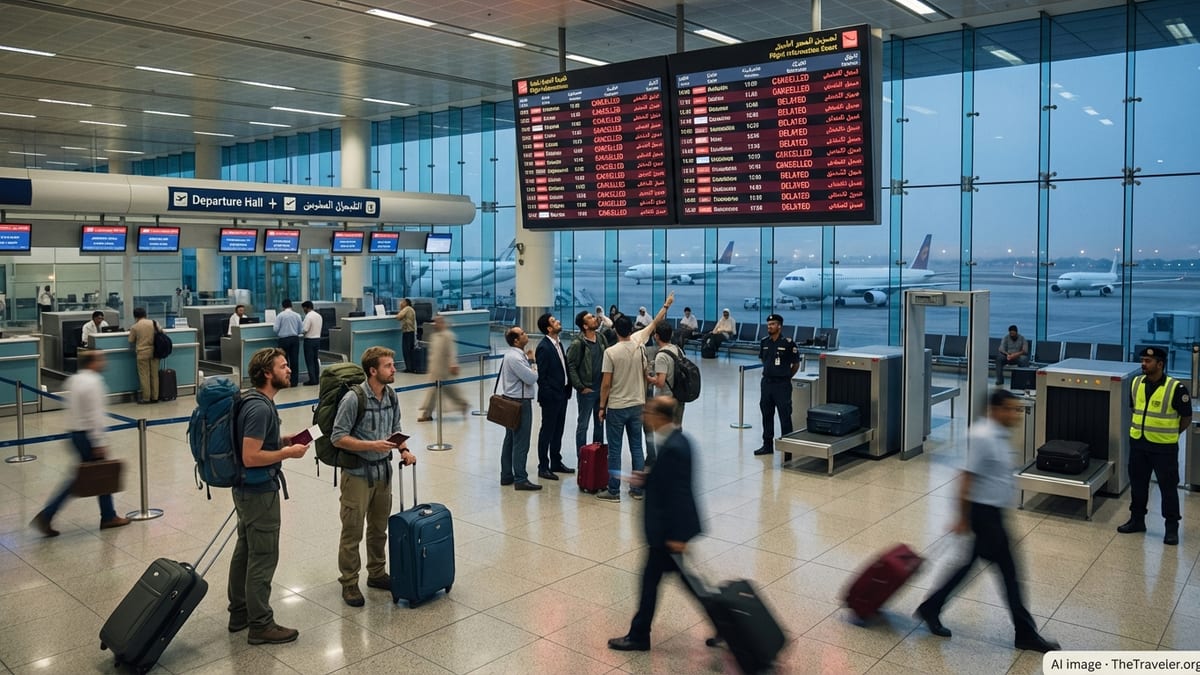
Even transiting the region can be challenging. As tensions flare, airspace closures and the rerouting of commercial flights can lead to last-minute cancellations and extended layovers in third countries. Travelers planning itineraries through the Middle East are increasingly urged to build flexibility into their plans and stay alert to fast-changing airline advisories.
How the Advisory System Works and What Level 4 Means
The State Department’s four-level advisory system, visible on its interactive global map, is designed to provide a quick, color-coded snapshot of risk. Level 1 calls for normal precautions, Level 2 urges increased caution, Level 3 advises travelers to reconsider nonessential trips, and Level 4 carries the clearest directive: do not travel.
Iran and Iraq’s placement at Level 4 indicates that the US government believes the likelihood of life-threatening harm is significantly higher than in most other destinations. Contributing risk categories flagged for both countries include terrorism, civil unrest, kidnapping or hostage-taking, and, in Iran’s case, wrongful detention. The department notes that in high-risk environments, it may have “limited or no ability” to assist citizens, particularly if diplomatic staff must be relocated or reduced.
Travel advisories are intended specifically for US citizens, nationals, and lawful permanent residents, but they are also closely watched by airlines, insurers, and foreign governments. A Level 4 rating can ripple across the broader travel ecosystem, influencing flight schedules, tour operations, and corporate travel policies far beyond the official wording of the notice.
While some travelers may be tempted to view the advisories as flexible recommendations, consular officials emphasize that the guidance reflects a sober assessment of threats. Decisions to enter or remain in a Level 4 country are ultimately personal, but they are taken, in the State Department’s words, “at your own risk,” with no guarantee that assistance will be possible in the worst-case scenario.
Steps for Those Affected and Planning Future Travel
US citizens in Iran or Iraq are strongly encouraged to enroll in the Smart Traveler Enrollment Program, a free service that allows embassies and consulates to send security alerts and contact individuals quickly during emergencies. Registrants can receive real-time updates on curfews, checkpoints, airspace closures, and any ordered movements of US government personnel that could signal a deteriorating situation.
Travelers are also urged to maintain multiple communication channels, keep important documents and essential supplies ready for rapid departure, and identify safer alternative routes out of the country in case primary airports become inaccessible. Those considering future work or assignments in either country should consult security professionals and thoroughly review employer support, including evacuation insurance and crisis-response capabilities.
For Americans planning international travel elsewhere, the State Department advises making the advisory map a standard part of pre-departure research. Many popular destinations in the region, such as Jordan and the United Arab Emirates, currently carry lower-level advisories, though officials caution that conditions can change quickly when regional tensions are high.
As the security environment across the Middle East remains fluid, the renewed “Do Not Travel” status for Iran and Iraq serves as a stark reminder that some destinations carry risks that go well beyond the scope of normal tourist precautions, requiring a fundamentally different level of caution and preparedness.