

More news on this day
The United States has issued a new security alert for Qatar amid intensifying regional conflict and recent missile threats, prompting travelers and expatriates to urgently reassess their plans and personal safety measures.
Get the latest news straight to your inbox!
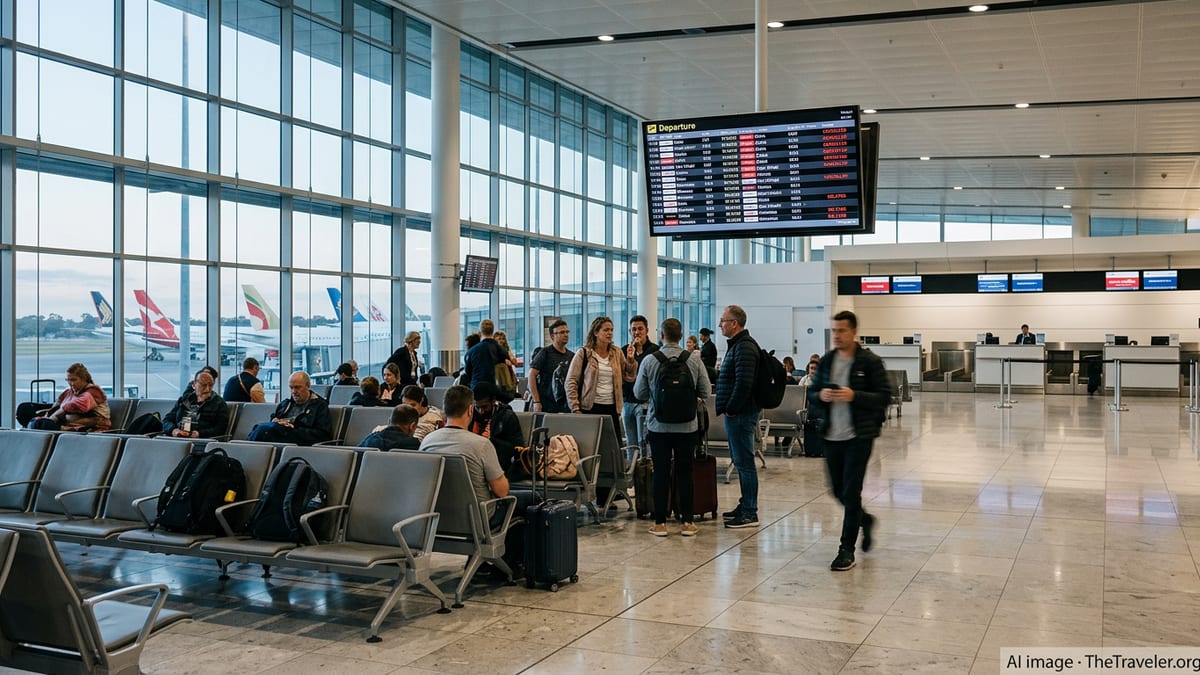
Escalating Regional Conflict Reaches Qatar
The latest alert for U.S. citizens in Qatar comes against the backdrop of a wider conflict involving Iran, the United States, Israel, and several Gulf states. Since late February 2026, Qatar has been drawn closer to the front line through a series of missile and drone incidents that have tested the country’s defenses and strained civilian life.
Publicly available reporting describes multiple Iranian strikes and attempted strikes across the Gulf region since February 28, when U.S. and Israeli forces launched coordinated operations against Iranian targets. Coverage of these events indicates that Qatar has faced repeated threats to key infrastructure, including areas near Hamad International Airport and facilities linked to energy production, forcing authorities to tighten security and restrict movement.
Security and risk bulletins compiled in early March note broad concern that U.S. military sites and locations associated with Western interests inside Qatar could be viewed as potential targets. U.S. government guidance now emphasizes that Americans in Qatar, and those considering travel, should closely monitor alerts, identify safe shelter options, and be prepared for rapid changes in the local security posture.
Although Qatari authorities announced on March 27 that a specific threat had been neutralized and that conditions had “returned to normal,” recent U.S. messaging stresses that the overall regional situation remains volatile. Travelers are being cautioned that a shift from calm to crisis could occur with little or no warning.
New U.S. Security Alert: What Has Changed
According to recent public statements and summaries of the March 29 security alert for Qatar, the U.S. Embassy in Doha is urging heightened vigilance and practical readiness among American citizens. The advisory underscores the possibility of further missile or drone activity in the wider Gulf region and points to the potential for secondary effects inside Qatar, even if incoming threats are intercepted.
In line with the U.S. State Department’s worldwide caution notice updated on March 22, the alert for Qatar highlights the risk that groups supportive of Iran or opposed to U.S. actions could target American interests abroad. The global guidance specifically warns that diplomatic facilities and other U.S.-linked locations may face elevated risk, and that disruptions to airspace and transport networks are likely as governments respond to changing threat assessments.
Embassy messaging described in recent coverage advises Americans in Qatar to be ready to “duck and cover” in a secure location if local authorities activate air raid or civil defense alerts. That language reflects an acknowledgment that even well-defended cities can experience debris, shockwaves, or accidental damage from intercepted projectiles, especially near critical infrastructure.
The same alert encourages U.S. citizens to keep travel documents, essential supplies, and communication devices accessible in case they need to relocate on short notice. While there is no blanket order for private citizens to leave Qatar, the tone of the advisory suggests that individuals should have a personal contingency plan, particularly those living or working near high-profile government, military, or energy sites.
Impact on Flights, Daily Life, and Critical Infrastructure
For travelers, one of the most immediate effects of the current crisis has been serious disruption to air travel. Airline statements and regional aviation notices indicate that Qatari airspace has experienced partial or full closures at several points since late February, with commercial operations at Hamad International Airport repeatedly curtailed or reconfigured for security reasons.
Service updates published by Qatar Airways and third-party safety briefings show that schedules were dramatically reduced in early March, with many passengers facing cancellations, long delays, and limited rebooking options. Some analyses describe Qatari airspace as operating at “severely restricted” capacity in mid-March, with the possibility of further suspensions at short notice depending on military activity and risk assessments.
On the ground, Qatar temporarily shifted much of its public sector workforce to remote operations in the weeks after the first wave of Iranian strikes. Local and regional reporting notes that government institutions began resuming normal office-based work around March 24 after a formal security review, a sign that authorities believe immediate threats have eased, even as they maintain elevated readiness.
Energy and industrial infrastructure has also come under scrutiny. Reports on the broader conflict reference missile activity affecting or threatening facilities linked to gas production and export, including in and around the Ras Laffan industrial zone. Although detailed damage assessments remain limited in open sources, analysts warn that any sustained disruption to these sites could have global implications for energy markets, while also complicating evacuation or diversion options for foreign nationals.
How Travelers Can Prepare Right Now
Security specialists and government advisories converge on several immediate steps for anyone currently in Qatar or planning imminent travel. First, travelers are urged to enroll in official alert systems offered by their home governments, which can provide rapid updates on missile warnings, airspace changes, and possible evacuation assistance. For U.S. citizens, public guidance points to online registration tools and global crisis hotlines that operate around the clock.
Second, individuals are encouraged to map out nearby shelter locations wherever they are staying or working. Risk advisories suggest identifying interior rooms away from windows and glass, as well as sturdy structures that could provide cover from debris. Travelers are advised to practice moving quickly to these safe spots, treating civil defense sirens and smartphone alerts as signals to act immediately rather than to seek further confirmation.
Third, experts recommend maintaining a basic emergency kit that can be grabbed in seconds. Common guidance includes keeping passports, residence permits, a small amount of cash, essential medications, a power bank, and a printed list of key phone numbers together in one accessible bag. With airspace and border crossings subject to sudden closure, travelers may also wish to keep a change of clothes, copies of important documents, and simple protective items such as ear protection and a dust mask readily available.
Finally, travel planners emphasize the importance of flexible itineraries. Given the pattern of rolling flight cancellations and frequent schedule adjustments reported throughout March, booking fully refundable tickets, avoiding tight connections through Doha, and confirming hotel cancellation policies can help mitigate potential financial and logistical shock if conditions deteriorate again.
Balancing Qatar’s Reassurances With Ongoing Global Warnings
The situation in Qatar highlights a tension between national confidence and global caution. On one hand, the Qatari Ministry of Interior has recently communicated that a specific threat has been “eliminated” and that life in the country is returning to a more normal rhythm. Local media in Doha describe a phased reopening of offices, the partial restoration of air traffic, and intensified monitoring of suspicious activity both online and offline.
On the other hand, the U.S. worldwide caution issued on March 22 makes clear that the broader risk environment remains unstable, especially across the Middle East. That notice stresses that Americans abroad should expect intermittent airspace closures, sporadic attacks on diplomatic and military facilities, and sudden shifts in security protocols as events evolve.
For travelers, reconciling these messages requires a nuanced approach. Analysts suggest that visitors to Qatar should neither assume imminent catastrophe nor dismiss the concerns embedded in recent U.S. alerts. Instead, they recommend treating Qatar as a destination where normal life can coexist with elevated, fast-changing security risks, demanding both situational awareness and practical preparedness.
As March 31 approaches with no major new incidents reported in recent days, airlines, governments, and local institutions continue to calibrate their responses. The core message emerging from the latest U.S. Embassy alert is that anyone with ties to Qatar should stay informed, avoid complacency, and be ready to act quickly if the regional conflict once again shifts onto Qatari soil.