

More news on this day
The United States has updated its security messaging for citizens abroad, with a renewed worldwide caution and a series of recent embassy alerts highlighting heightened risks of terrorism and conflict-related violence around key diplomatic sites and popular travel hubs.
Get the latest news straight to your inbox!
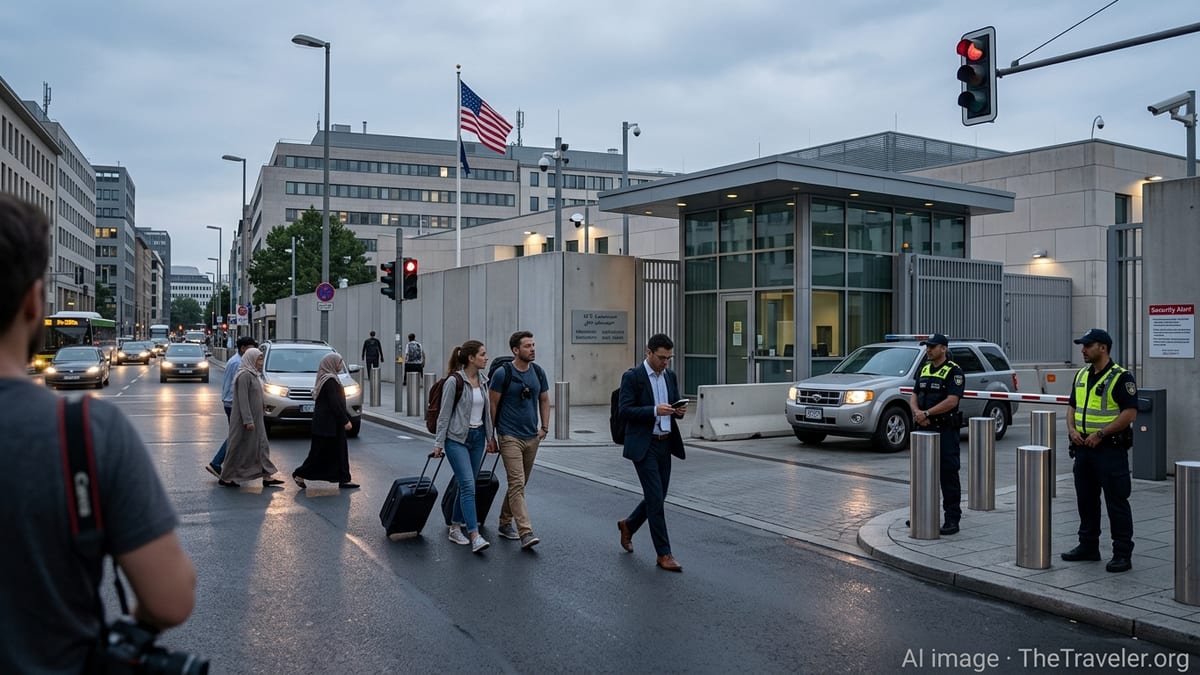
Worldwide Caution Highlights Elevated Global Threat Picture
Publicly available information from late March indicates that the US Department of State has issued a fresh worldwide caution, urging Americans overseas to exercise increased vigilance. The advisory references an unsettled global security environment, including armed conflict involving Iran and a pattern of attempted or successful attacks on locations associated with the United States.
Coverage of the updated notice describes a broad concern that groups sympathetic to Iran or hostile to US interests could target diplomatic facilities, commercial venues linked to American brands, or crowded public spaces frequented by foreign visitors. The advisory also notes the possibility of sudden airspace closures and flight disruptions, underscoring that even travelers far from active front lines may feel indirect effects.
The renewed caution comes on top of country-specific travel advisories, which already warn against travel to some regions because of terrorism, civil unrest, or armed clashes. The State Department’s framework separates routine travel advisories from time-limited alerts, such as security alerts or demonstration alerts, that are often issued directly by embassies and consulates when the threat picture changes rapidly.
For travelers, the worldwide caution serves as an umbrella signal that localized embassy warnings are part of a wider pattern rather than isolated incidents. It effectively raises the baseline expectation that Americans abroad should track security developments more closely, maintain flexible itineraries, and be prepared for fast-moving changes in local conditions.
Embassy Warnings Follow Attacks on US Missions and Allied Sites
In recent weeks, security incidents around US diplomatic facilities have contributed to a sense of elevated risk. Reporting from Norway describes an explosion outside the United States Embassy in Oslo on March 8, which damaged the consular entrance and prompted an extensive investigation into potential terror-related motives. Local authorities reportedly increased their presence around the mission and other sensitive sites while assessments continued.
Elsewhere, violence linked to the broader confrontation with Iran has intersected with US diplomatic footprints. Open-source coverage of the conflict details an explosive attack on the United States Embassy compound in Oslo, as well as drone and missile activity directed at facilities used by American personnel in Iraq and the Gulf. These incidents have reinforced the perception that embassies, consulates, and their surrounding neighborhoods may be treated as symbolic targets during periods of geopolitical tension.
Regional security reviews also point to attacks on hotels and commercial centers in Gulf states that host US interests, including sites in the United Arab Emirates and Bahrain. Human rights organizations and risk-analysis firms note that some of these locations appear to have been selected because they were perceived as hosting American visitors, military logistics, or corporate operations.
The cumulative effect of these episodes is that US missions in multiple regions are operating under tighter security postures, often paired with direct messages to American citizens regarding movement, curfews, or suggested avoidance of specific districts. While the details vary, the tone of the alerts emphasizes that the threat of terrorism or retaliatory strikes is not limited to active war zones.
Country-Level Alerts Signal Specific Terror and Conflict Risks
Alongside the global caution, several recent embassy and consulate alerts focus on distinct local threats that can affect travelers. In the Gulf, coverage from outlets such as Egypt Independent and Condé Nast Traveler notes that US missions have warned citizens in Saudi Arabia and the United Arab Emirates about the risk of further Iranian strikes, prompting calls for Americans to depart some countries while commercial options remain available.
Advisories for the UAE now urge travelers to reconsider nonessential trips, citing publicly stated intentions by Iranian actors to target locations associated with the United States. Embassy communications in mid-March highlighted that airports in the region have already been disrupted by the changing security environment, with short-notice closures and flight cancellations affecting both residents and transit passengers.
In Türkiye, updated US guidance raises the advisory level for parts of the southeast to its most severe category, pointing to a risk of terrorism and missile attacks linked to the Iran conflict. Reports indicate that the US consulate in Adana has suspended services, directing Americans to seek emergency assistance from other missions in the country. This combination of heightened threat and reduced consular access can significantly complicate travel planning and crisis response for visitors.
Similar patterns are visible in Iraq and Pakistan, where embassy alerts in March referenced both mass protests near US diplomatic compounds and direct attacks on facilities. Warnings in these countries have urged Americans to shelter in place, limit movements, and avoid large gatherings in areas surrounding embassies and consulates, especially when demonstrations or clashes are underway.
What the Updated Warnings Mean for US Travelers
For Americans planning international trips in the coming weeks, the latest alerts do not translate into a blanket prohibition on travel but do signal a higher bar for risk assessment. Travel-security analysts recommend that individuals distinguish between standard advisory language and specific, time-sensitive embassy messages that reference terror threats, missile risks, or civil unrest near particular cities or sites.
In practice, this means that travelers considering destinations in the Middle East, parts of Europe, or other regions cited in recent coverage may need to prepare for sudden changes in airport operations, temporary lockdowns around diplomatic or government areas, and tighter security screening at transportation hubs. Those already overseas may also experience more frequent siren tests, visible armed patrols, or restrictions around major events and religious or political sites.
Experts in risk management emphasize the value of contingency planning. Flexible tickets, comprehensive travel insurance, and a clear understanding of alternative routes can help mitigate disruption if a local alert leads to flight cancellations or movement restrictions. Americans are also encouraged to maintain up-to-date contact details with consular services through voluntary enrollment platforms so that they can receive direct messages about security developments.
While the renewed worldwide caution underscores that the threat of terrorism remains a central concern, it also reflects a broader environment shaped by state-on-state conflict, proxy attacks, and sporadic lone-actor violence. Travelers who remain informed, adapt itineraries in response to verified alerts, and maintain a low profile around sensitive locations may be better positioned to navigate the evolving risk landscape.
Staying Informed and Adjusting Plans Amid a Fluid Security Landscape
Given the pace of recent developments, awareness is emerging as a key protective measure for travelers. Public advisories encourage Americans abroad to monitor local media, follow official embassy channels, and pay attention to carrier or airport announcements that may foreshadow airspace restrictions or sudden schedule adjustments.
Risk bulletins produced by private security firms and international organizations describe the present environment as both high-risk and fluid, with the potential for rapid escalation in several theaters. These assessments stress that diplomatic sites, energy infrastructure, and high-profile commercial venues could face repeated targeting attempts, even in countries not directly at war.
For some travelers, the accumulation of embassy alerts and terror warnings may justify postponing or rerouting trips, particularly to areas where consular services are constrained or evacuation routes could become limited. Others may determine that with careful planning and close monitoring, certain destinations remain acceptable, especially if they are far from active hostilities but still affected by precautionary measures.
What is clear from recent US travel messaging is that embassy security alerts are no longer isolated notes buried on mission websites. Instead, they form part of a global pattern of caution that is shaping itineraries, insurance policies, and airline networks, and they are likely to remain a defining feature of international travel decisions in the near term.