

More news on this day
Americans heading to Italy and other blockbuster European destinations this spring are being urged to stay sharply alert, as a new worldwide caution from the U.S. Department of State highlights an elevated terrorism and security risk in crowded tourist areas across the continent.
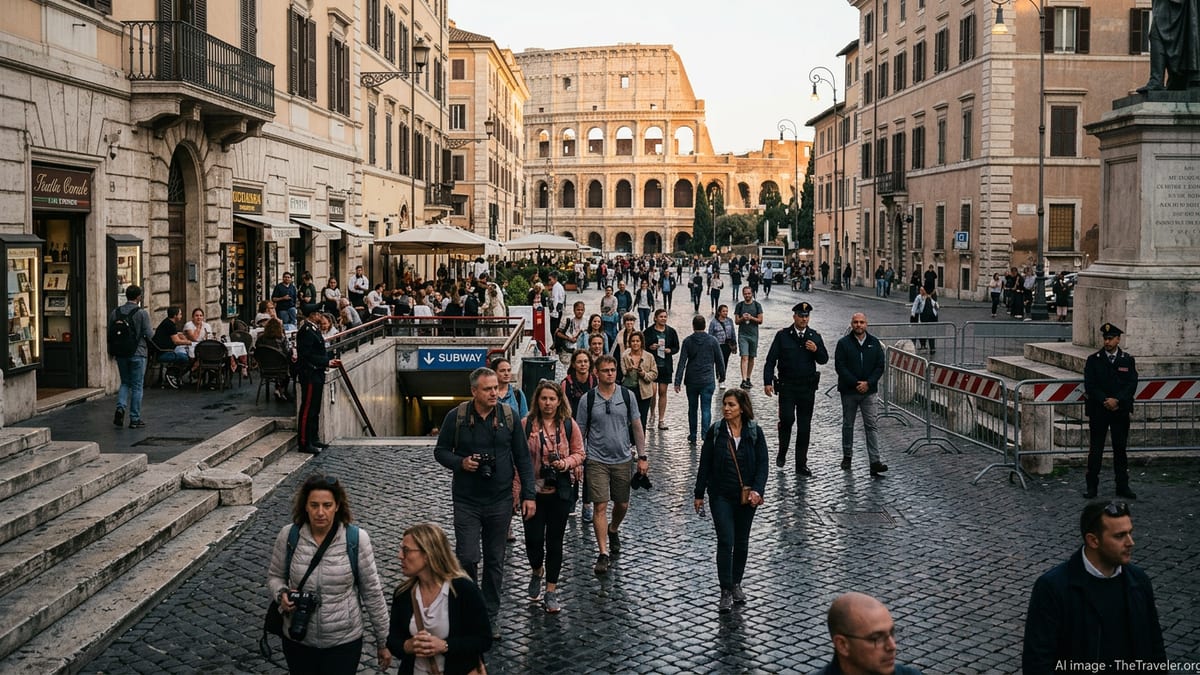
Worldwide Caution Heightens Concerns for European Travel
The State Department’s latest Worldwide Caution, updated on February 28, 2026, calls on U.S. citizens to exercise increased vigilance whenever they travel abroad, citing heightened global tensions and the possibility of terrorist attacks or violent incidents targeting public spaces frequented by foreigners. The alert notes that attacks can occur with little or no warning, particularly in locations such as transportation hubs, hotels, markets and major tourist attractions.
While the advisory is global in scope, its language has direct implications for Europe, where authorities have been warning of a sharper security environment since the escalation of conflict involving Iran and its regional proxies. Recent guidance from universities and corporate travel-security firms has amplified the message, telling travelers that the worldwide caution is not intended to halt trips but to change how people move, gather and behave in high-profile locations.
The worldwide notice comes on top of existing country-specific advisories, creating a layered picture for Americans planning European vacations. Popular destinations that remain open for tourism, including Italy, France, Spain and Greece, are all operating with varying degrees of heightened security, from visible patrols around monuments to discreet intelligence operations behind the scenes.
Italy Under Level 2 Advisory as Tourist Numbers Surge
Italy, consistently among the most visited countries in the world, continues to carry a Level 2 advisory from the United States: “Exercise increased caution.” The designation, first raised in 2025 and reaffirmed in recent travel-security updates, is rooted primarily in the risk of terrorism, with U.S. officials warning that attacks could target crowded tourist areas, religious sites, major events, transportation networks and government facilities.
Travel industry reports this month underscore that visitor numbers to Italy remain strong for 2026, especially to Rome, Florence, Venice and the Amalfi Coast. That combination of heavy foot traffic and symbolic landmarks is precisely what worries security analysts, who say popular piazzas, basilicas and train stations offer high visibility and a concentration of foreign visitors. Italian authorities continue to emphasize that there is no specific, public threat against any particular city, but that the potential for opportunistic or inspired attacks cannot be ruled out.
Security consultants advising U.S. and European corporate clients say Italy’s counterterrorism posture is considered robust, with authorities having a track record of aggressively investigating suspects and deporting individuals viewed as security risks. For ordinary travelers, however, the message from both private and government sources is the same: stay situationally aware in crowds, follow local instructions quickly if police redirect or cordon off areas, and avoid lingering near demonstrations or politically charged gatherings.
Europol Flags Elevated Terrorism Threat Across the EU
Reinforcing Washington’s caution, Europol this week warned of an “elevated threat” of terrorism and violent extremism on European soil, explicitly linking the risk to the widening conflict involving Iran. European security officials have pointed to potential threats from both jihadist actors and lone offenders motivated by geopolitical events, as well as the possibility of cyberattacks and disinformation campaigns designed to sow panic among residents and tourists.
National governments have responded by tightening security around potential targets. France has maintained a high-level counterterrorism alert, with armed patrols at major transportation hubs, government buildings and iconic landmarks. In Greece, authorities recently announced increased protective measures at dozens of sensitive sites, including embassies, synagogues, hotels and schools, following assessments that the risk of an attack is “visible” for the first time in years.
These steps are being taken as Southern Europe, in particular, expects a strong spring and summer travel season from North America. Tourism boards in Italy, Spain, Greece and neighboring countries continue to promote cultural events and seaside holidays, but behind the scenes security services are running joint exercises, shoring up intelligence-sharing and quietly hardening soft targets that attract large numbers of international visitors.
Popular Mediterranean Hotspots Under Closer Scrutiny
Beyond Italy, several of Europe’s most sought-after coastal and city-break destinations are also under closer watch from U.S. and European authorities. Recent travel-industry analyses highlight that Spain, Greece, France, Cyprus and Albania are among the Mediterranean countries drawing large volumes of American tourists in 2026, even as advisory levels and localized alerts shift in response to security developments.
Cyprus, in particular, has seen its U.S. advisory jump sharply in recent days, moving from a low-risk Level 1 to a Level 3 “Reconsider travel” due to regional spillover from hostilities with Iran and security incidents affecting British military facilities on the island. Although Cyprus remains open to tourism, the unusual speed and magnitude of the change has prompted tour operators and airlines to review contingency plans and update clients traveling through the eastern Mediterranean.
By contrast, Italy, France and Spain continue to sit in the Level 1 or Level 2 bands, indicating that travel remains broadly feasible but calling for elevated awareness. Localized measures, such as temporary closures around protests, heavier police presence near religious or political sites, and random checks on public transportation, are increasingly being treated as a normal part of the travel landscape rather than signs that visitors should abandon their plans.
What U.S. Travelers Are Being Urged to Do Now
For Americans already booked to visit Italy or other European hotspots, current guidance stops well short of recommending that vacations be canceled. Instead, security officials and travel experts advise focusing on preparation and behavior. That includes monitoring official advisories in the days leading up to departure, registering itineraries with the Smart Traveler Enrollment Program to receive real-time security updates, and reviewing the location and contact details of the nearest U.S. embassy or consulate in each country on the itinerary.
On the ground, travelers are being encouraged to practice low-profile habits that reduce risk without undermining the enjoyment of a trip. Suggested measures range from allowing extra time at airports and major train stations to avoiding highly congested choke points when possible, keeping valuables out of sight, and staying alert to unattended bags, sudden commotions or unusually heavy security activity.
Industry observers note that European cities have become adept at managing high tourism volumes under tightened security, balancing visible deterrence with the atmosphere visitors expect in historic centers, museums and beach resorts. For now, the overarching message from both Washington and European capitals is that Italy and its neighbors remain open for business, but that Americans should approach even the most familiar landmarks with a higher degree of attentiveness than in years past.