

More news on this day
American travelers heading to Mexico’s beaches for Spring Break 2026 are being urged to rethink their plans after the U.S. Embassy in Mexico issued an urgent security warning highlighting elevated risks of crime and kidnapping in popular resort hubs including Cancun, Puerto Vallarta and Cabo San Lucas.
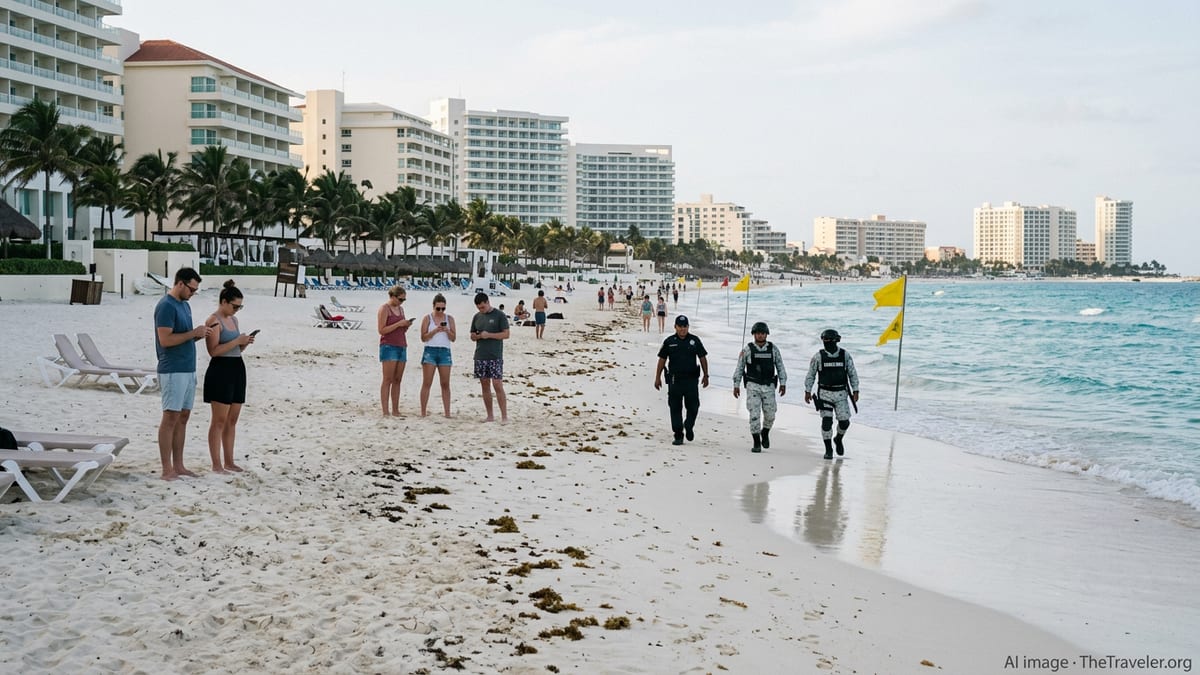
Embassy Sounds Alarm After Violent Unrest and Security Operations
The latest advisory, issued in early March ahead of the peak spring break period, follows a wave of cartel-related violence that swept across large swaths of Mexico on February 22 and 23, 2026. Those incidents, triggered by major security operations against organized crime, led to highway blockades, vehicle burnings, flight disruptions and temporary shelter-in-place orders in multiple states frequently visited by U.S. tourists.
While the U.S. Embassy has since lifted its broad “shelter in place” directive for Americans in much of the country, officials now stress that the underlying security environment remains volatile. The advisory notes that violent crime, including shootings, carjackings and targeted attacks linked to organized crime, can occur without warning, sometimes in areas close to resort corridors and tourist infrastructure.
The State Department’s wider Mexico travel advisory continues to cite terrorism, crime and kidnapping as key risks nationwide, with local dynamics varying significantly by state and city. Recent violence in Jalisco, home to Puerto Vallarta, and in parts of Baja California and neighboring regions has underscored how quickly security conditions can deteriorate, even in destinations that typically market themselves as safe tourist enclaves.
Mexican federal and state authorities say conditions along major tourist corridors are stabilizing and that roadblocks have largely been cleared, but security experts caution that criminal groups often recalibrate rather than disappear after major operations. Travelers are being urged to monitor official updates closely in the days leading up to their trips.
Crime and Kidnapping Risks Reach Mexico’s Best-Known Beach Towns
The renewed warning is particularly striking because it explicitly references risks in marquee spring break destinations long considered relatively insulated from Mexico’s most acute violence. Cancun, in Quintana Roo; Puerto Vallarta, in Jalisco and nearby Nayarit; and the Los Cabos area of Baja California Sur, centered on Cabo San Lucas and San José del Cabo, all feature prominently in current U.S. messaging.
In its notice, the embassy reiterates that crime, including violent incidents, robberies and assaults, can take place in and around hotels, rental properties, nightclubs and on public beaches frequented by visitors. In some cases, confrontations between rival criminal groups have erupted near tourist zones, raising the risk of travelers being caught in crossfire or nearby disturbances.
The advisory also underscores a persistent threat of both express and longer-term kidnappings in parts of the country. While most Americans visiting major resort areas do not experience serious incidents, U.S. officials warn that wealthier-looking tourists and those traveling alone or late at night can be perceived as soft targets by opportunistic criminals. Ride-hailing pickups, late-night walks between bars and poorly lit streets away from main hotel strips are singled out by security analysts as particularly vulnerable scenarios.
Local tourism boards in Cancun, Puerto Vallarta and Los Cabos continue to emphasize that they host millions of international visitors each year without major problems, and point to heavy police and private security deployments in hotel zones. Nonetheless, the heightened tone of the spring break advisory reflects Washington’s concern that a surge of young, often first-time international travelers may underestimate the risks.
Spring Break Crowds Face Added Dangers Beyond Street Crime
The embassy warning does not focus solely on cartel violence or traditional street crime. It also raises alarms about a cluster of risks that tend to spike during spring break, when thousands of U.S. students arrive between late February and early April, often in large groups and with heavy drinking and nightlife at the center of their plans.
U.S. officials flag a history of incidents involving sexual assault, drink spiking and the use of synthetic drugs and counterfeit medications in and around resort bars and clubs. Some bars and informal vendors have been accused of selling adulterated alcohol or unregulated pills that can be significantly more potent or toxic than buyers realize. In past seasons, this has led to reports of sudden blackouts, hospitalizations and, in rare cases, deaths among foreign visitors.
Authorities also warn that Mexican law can be applied harshly in cases involving narcotics or vaping products that may be legal or tolerated in parts of the United States. Travelers discovered with certain substances or devices at airports, on beaches or in nightlife districts may face arrest, fines or prolonged legal entanglements, even if the items were purchased openly from tourist-oriented shops.
Combined with the broader backdrop of crime and kidnapping risks, these spring break specific hazards have prompted consular officials and travel risk experts to urge American visitors to moderate alcohol consumption, avoid accepting drinks or pills from strangers, and stay in groups when moving between venues or back to their accommodations late at night.
State-by-State Advisories Highlight Elevated Risk in Jalisco and Surrounding Regions
The U.S. government’s Mexico travel advisory framework layers the embassy’s timely security alerts on top of standing, state-specific guidance that is updated periodically in response to evolving conditions. As of early March 2026, Mexico as a whole is under a Level 2 advisory, meaning Americans are urged to exercise increased caution. However, several states remain flagged at higher levels because of entrenched violence, kidnapping and organized crime.
Jalisco, encompassing Puerto Vallarta and Guadalajara, has drawn particular concern following February’s unrest, with foreign embassies and allied governments advising travelers to reconsider nonessential trips to the state. Neighboring Nayarit, which includes the resort area marketed as Nuevo Vallarta or Nuevo Nayarit, has also been cited in recent security alerts tied to roadblocks and criminal activity.
Baja California has experienced flare-ups linked to organized crime, including in border hubs such as Tijuana and in coastal cities like Ensenada. While Baja California Sur, home to Cabo San Lucas and San José del Cabo, has generally been viewed as more stable, officials stress that the wider regional dynamics mean travelers should not assume that any resort is fully insulated from spillover violence or opportunistic crime.
Quintana Roo, where Cancun is located, remains under a Level 2 advisory with specific reference to crime and kidnapping risks. Recent embassy communications noted that conditions in Cancun and the broader Riviera Maya corridor had “returned to normal” after February’s violence but emphasized that normal does not equate to risk-free. Travelers are being encouraged to review the latest state-by-state information in the days before departure and to enroll in consular alert systems.
What Travelers Should Do Before and During Mexico Beach Vacations
In light of the new warnings, the U.S. Embassy is urging Americans not just to read the advisories but to adjust their behavior accordingly. Before booking, travelers are encouraged to research current conditions in their specific destination city, check whether any routes require passing through high-risk states, and consider flexible tickets or travel insurance that covers disruptions linked to security events.
Once on the ground, security experts recommend sticking to well-known transportation options arranged through reputable hotels or licensed taxi stands, avoiding unmarked vehicles and informal ride offers. Visitors are also advised to keep valuables out of sight, use hotel safes for passports and spare cash, and avoid displaying expensive jewelry, watches or electronics in crowded public spaces.
Staying inside resort complexes or well-patrolled tourist zones does not eliminate all risk, but officials note that large, established hotels typically coordinate closely with local authorities and maintain their own surveillance and response protocols. Travelers choosing vacation rentals in residential neighborhoods are urged to be especially vigilant about building access, late-night arrivals and departures, and sharing location details only with trusted contacts.
For families and students still planning trips to Cancun, Puerto Vallarta or Cabo San Lucas this spring, consular officers emphasize that the goal of the warning is not to ban travel outright, but to push Americans to make informed choices and to recognize that the postcard scenes on the beach can mask a far more complicated security picture just beyond the sand.