

More news on this day
The United States has issued an urgent advisory warning Americans in Qatar to shelter in place and brace for extended travel disruption, as strikes on Iran trigger regional retaliation, the shutdown of Doha’s airspace and the suspension of routine services at the US Embassy in Doha.
Embassy Warns of Heightened Threats After Strikes on Iran
The US Embassy in Doha on Sunday maintained a rare shelter-in-place directive for its personnel and strongly urged all American citizens in Qatar to do the same, citing a heightened risk of retaliatory attacks following US and Israeli strikes on Iranian targets. The alert, circulated to registered Americans and posted through official channels, referenced the possibility that Iran and allied groups could seek to target US interests across the region.
The advisory comes in the wake of a broader State Department “worldwide caution” that asks Americans abroad to exercise increased vigilance in all countries after the launch of US combat operations in Iran. Officials have warned that the security environment in the Middle East is volatile and may change with little or no notice, with the risk of missile fire, drones and other incidents affecting both military and civilian infrastructure.
In its Qatar-specific message, the embassy urged Americans to remain indoors, avoid demonstrations and stay away from military installations and other sensitive sites, including the Al Udeid air base west of Doha, which hosts thousands of US personnel. Citizens were advised to maintain a low profile, keep mobile phones charged and ensure they have immediate access to safe shelter.
Routine Consular Services Halted as Embassy Shifts to Emergency Mode
As part of its security posture, the US Embassy in Doha has suspended routine consular services, including most passport renewals, notarial appointments and non-emergency visa processing for the coming week. Officials said the consular section is focusing on emergency assistance only, with capacity constrained by movement restrictions on staff and the broader uncertainty surrounding the security situation.
Americans in Qatar were told that appointments scheduled for early March have been cancelled and will be rescheduled when conditions allow. The embassy emphasized that its phone lines remain open for emergencies involving US citizens, such as medical crises, arrests or immediate threats to safety, but warned that response times may be affected by curfews, checkpoints and potential disruptions to local transport.
Travel security analysts note that the suspension of routine consular services is a strong signal of concern, particularly in a country that normally hosts a large expatriate community and serves as a major air transit hub. While there has been no indication of an imminent evacuation of private US citizens from Qatar, the embassy’s language suggests officials are preparing for a protracted period of elevated risk and operational constraints.
Doha Airspace Shutdown Sends Ripples Through Global Aviation
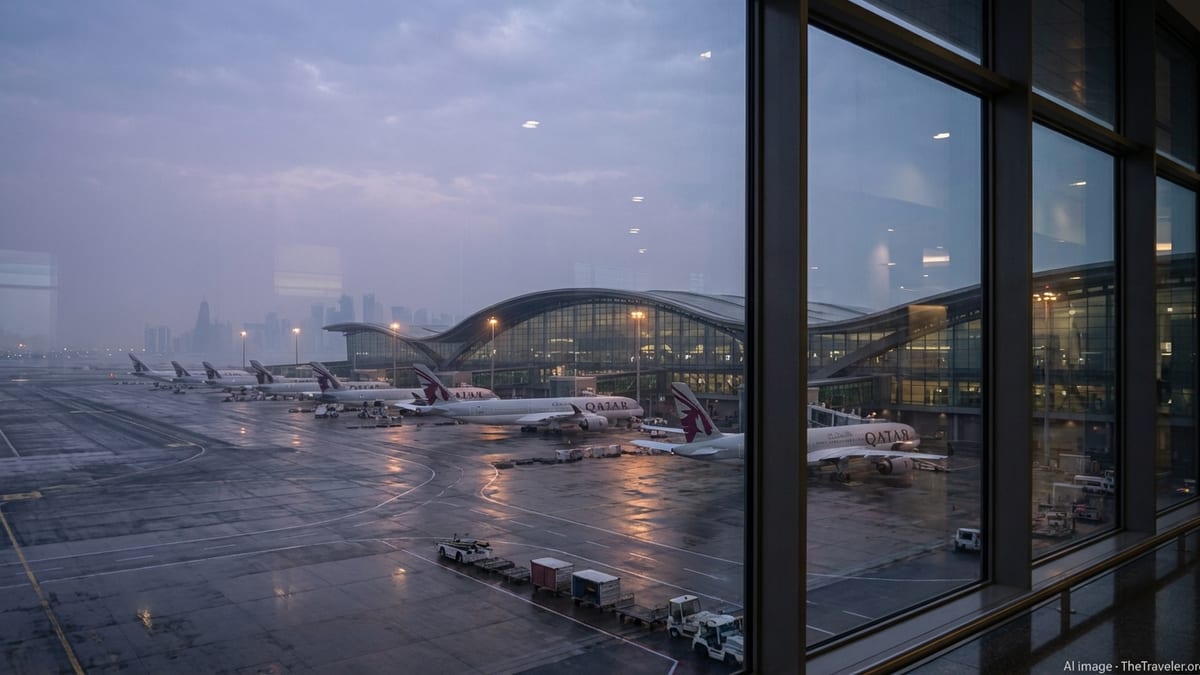
The closure of Qatari airspace following the strikes on Iran has dealt a significant blow to global aviation, abruptly halting flights into and out of Doha’s Hamad International Airport, one of the world’s busiest long-haul hubs. Authorities in Qatar joined several neighboring states in shuttering their skies over the weekend amid fears that missiles or drones could transit key air corridors.
Data from aviation tracking services show that a large share of flights to Qatar were cancelled or diverted after the initial wave of attacks and retaliatory strikes. Airlines operating through Doha have suspended passenger departures and arrivals, leaving many travelers stranded in transit and forcing others to reroute around the Gulf, adding hours to journeys between Europe, Asia and Africa.
The ripple effects extend well beyond the region, as carriers from North America, Europe and Asia rush to re-plan flight paths that typically rely on Gulf hubs as connective waypoints. Travel experts warn that airfares on alternative routes are likely to rise in the short term, while capacity constraints and crew scheduling challenges could lead to further cancellations even on routes that do not normally pass through Middle Eastern airspace.
With no clear timeline for the reopening of Doha’s skies, officials have advised passengers to avoid travelling to the airport until airlines confirm that their flights are operating. Travelers currently in Qatar have been urged to remain in secure accommodation, maintain direct contact with their carrier and monitor local media for updates on airspace restrictions.
Americans in Qatar Told to Shelter in Place and Prepare
For Americans already in Qatar, the US advisory stresses practical steps to manage an extended shelter-in-place period. Citizens are being urged to stock several days’ worth of food, water, medications and other essentials, and to identify an interior room or other protected area in their residence or hotel where they can move if security conditions deteriorate.
The embassy has recommended that Americans avoid non-essential travel within the country, particularly near government facilities, military bases, major intersections and high-profile commercial centers. Individuals are being asked to keep identification documents readily accessible, review personal emergency plans with family members or travel companions, and ensure that they are enrolled in the State Department’s Smart Traveler Enrollment Program so they can receive real-time security updates.
While there have been no reports of direct attacks in central Doha, officials caution that the situation could escalate quickly if regional hostilities intensify. Security experts say Americans should be prepared for intermittent disruptions to internet connectivity or mobile networks, which could complicate efforts to obtain information or contact family abroad. They advise travelers to download essential documents and offline maps and to maintain backup power sources where possible.
Implications for Future Travel Plans and Regional Transit
The crisis is already reshaping travel plans for Americans with upcoming trips to Qatar or itineraries routed through Doha. Tour operators and corporate travel managers report a surge in rebooking requests, as travelers seek to avoid connections in the Gulf or postpone non-essential trips to the wider Middle East until the security outlook becomes clearer.
Industry analysts expect that airlines will continue to avoid affected airspace even after formal closures are lifted, at least until there is confidence that missile and drone threats have receded. That could mean longer flight times on popular long-haul routes and a sustained reduction in capacity through traditional Gulf hubs. Frequent flyers are being advised to build extra buffer time into any itineraries involving the region and to consider flexible tickets that allow for last-minute changes.
For now, the State Department is urging Americans worldwide, and especially those in Qatar and neighboring countries, to closely track updates from embassies and local authorities. With tensions between the United States, its allies and Iran at their highest level in years, officials warn that additional military action or retaliatory strikes could trigger further airspace closures and security measures with little advance notice, keeping the travel outlook uncertain for days or weeks to come.