

More news on this day
The U.S. State Department has renewed a worldwide caution for American citizens, warning that escalating conflicts, rising security threats, attacks on diplomatic facilities, and sudden airspace closures are increasingly disrupting international travel and complicating movement across key global routes.
Get the latest news straight to your inbox!
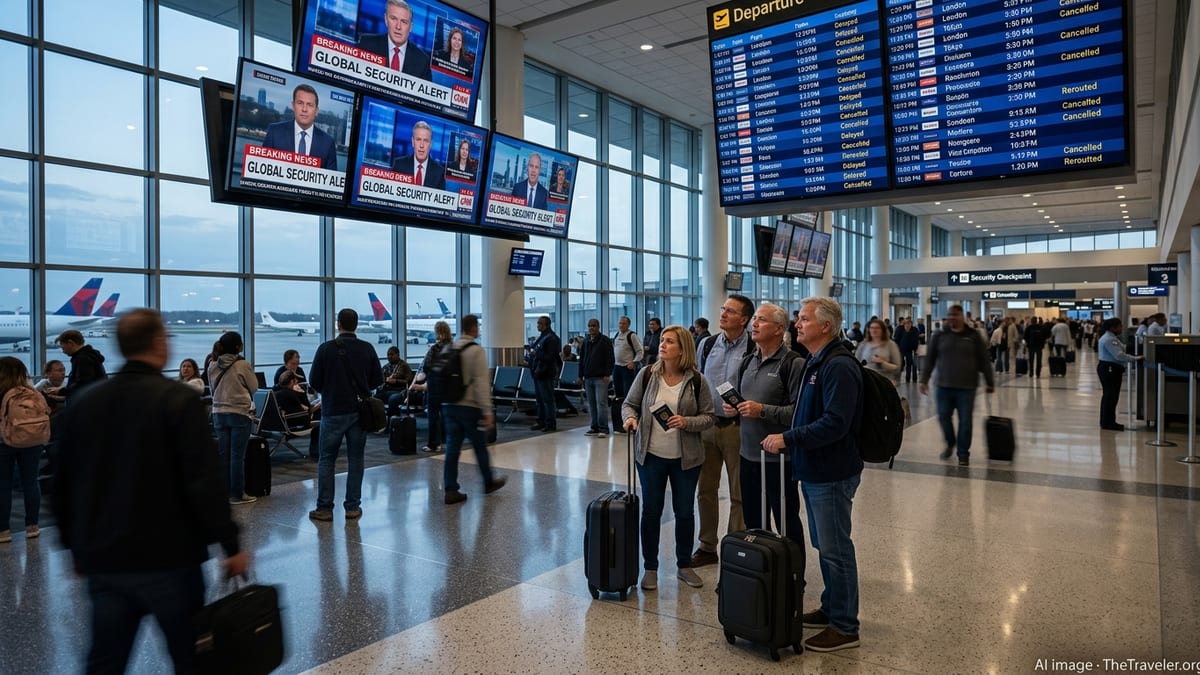
Worldwide Caution Highlights Elevated Global Risk Environment
According to recent updates on the State Department’s public advisory pages, the worldwide caution urges U.S. citizens abroad to exercise increased vigilance, monitor local conditions closely, and remain prepared for rapidly changing security situations. The advisory follows the launch of U.S. combat operations in Iran in 2025 and subsequent regional escalation, which analysts say has widened the scope of risk for American travelers well beyond the Middle East.
Travel-advisory materials emphasize that the caution is global in nature and not tied to a single, specific plot. Instead, publicly available information describes a broader environment in which U.S. citizens and facilities could face elevated exposure to terrorism, politically motivated violence, wrongful detention, and unrest. Travelers are encouraged to scrutinize country-specific advisories, which range from routine caution to “do not travel” guidance, depending on local conditions.
The caution is part of a tiered advisory system that already labels a number of destinations as high risk. These include countries where conflict, lawlessness, or state actions significantly limit the ability of the United States to assist its citizens. Risk indicators such as armed conflict, terrorism, civil unrest, kidnapping, and detention are increasingly common features in official country listings updated through early 2026.
Attacks on U.S. Diplomatic Posts Underscore Security Concerns
In the months surrounding the current warning, a series of incidents involving American diplomatic facilities has reinforced concerns about targeted violence. Published coverage has described repeated strikes on U.S. installations in Iraq during the ongoing Iran war, including reports of rocket and drone fire reaching embassy compounds and nearby areas. In South Asia, an attack on the U.S. consulate in Karachi in 2026 prompted a temporary shutdown of American diplomatic operations across Pakistan, according to open-source reporting.
Previous years also saw deadly confrontations near U.S. missions, including an armed clash at the embassy complex in Haiti in late 2025 during a period of intense gang violence and political breakdown. These events have contributed to a pattern in which embassies, consulates, and locations associated with American or allied interests appear as recurring focal points for unrest and militancy.
Such incidents typically result in tightened access, curtailed public services, and in some cases ordered departures of nonessential staff and family members. In Lebanon, for example, the State Department directed nonemergency personnel to leave the Beirut embassy in early 2026 amid heightened tensions linked to the Iran conflict. Public advisories associated with those decisions often warn U.S. citizens to reconsider their presence in affected countries and to be prepared for limited consular assistance during crises.
Airspace Closures and Reroutings Disrupt Global Flight Networks
Alongside ground-based security risks, air travel itself has become less predictable. Reports from aviation authorities and industry groups describe a patchwork of airspace closures and conflict-zone advisories stretching from the Middle East to South Asia and beyond. During one peak phase of the Iran war in 2025, Iran, Iraq, Jordan, and several Gulf states temporarily closed all or parts of their airspace, forcing significant diversions for long-haul flights between Europe, Asia, and North America.
Eurocontrol briefings and international aviation analyses show that crisis-related airspace restrictions have become a recurring feature of global traffic planning. Closures and caution zones have led to longer routings, higher fuel consumption, and operational complexity, even when overall flight volumes remain relatively stable. Airlines have been forced to redesign routes, in some cases adding emergency refueling stops or suspending services entirely on certain city pairs.
The disruptions are not confined to conflict zones overseas. In February 2026, the U.S. Federal Aviation Administration imposed sudden temporary flight restrictions over parts of Texas and New Mexico for security reasons, effectively shutting down traffic at El Paso International Airport for hours. While domestic, that episode underscored how little warning airlines and passengers may receive before critical airspace is closed, and how quickly local shutdowns can reverberate through broader networks.
Travelers Face Heightened Uncertainty and Planning Challenges
For ordinary travelers, the convergence of geopolitical tension, security incidents, and volatile airspace has translated into a less predictable journey from booking to arrival. Public travel guidance stresses that demonstrations, strikes, or attacks can erupt with minimal advance notice, leading to airport lockdowns, curfews, or sudden restrictions on movement. In some regions, border crossings and evacuation corridors may open and close repeatedly, creating narrow and uncertain windows for entry or departure.
Travel-industry reporting indicates that carriers are increasingly conservative about routes that traverse or approach active conflict areas, sometimes canceling flights days or weeks in advance, and at other times making last-minute decisions based on new notices to air missions. Travelers on multi-leg itineraries are particularly vulnerable to missed connections and unplanned stopovers when a single closure or security scare ripples through global schedules.
Insurance providers and risk consultants have responded by refining coverage language for war, terrorism, and political risk, while emphasizing the importance of flexible tickets and contingency planning. However, consumer-facing information remains uneven. Passengers may receive little more than short-notice text messages or airport announcements when security disruptions occur, leaving many to improvise onward travel or lodging arrangements in unfamiliar environments.
What the Worldwide Caution Means for Future International Trips
Although the worldwide caution does not prohibit American citizens from traveling, it signals a long-term shift toward a more fragile and fragmented global mobility landscape. Publicly available statements from the State Department suggest that heightened vigilance may remain a baseline expectation as the Iran conflict continues, regional rivalries intensify, and non-state actors look for symbolic targets connected to the United States.
Analysts note that worldwide cautions have historically been rare, reserved for moments when the U.S. government perceives a broad, diffuse risk rather than a localized emergency. The recurrence of such alerts since 2022 and 2023, including the current iteration tied to the Iran war and related instability, suggests that a rolling period of elevated risk has become the new normal for U.S. travelers.
For those planning trips in 2026 and beyond, the latest warning underscores the need to track country-level advisories up to the day of departure, understand local protest dynamics, and consider the possibility that routes passing over or near conflict zones may change with little notice. While many destinations remain open and accessible, the overall message is that international travel now carries a higher likelihood of disruption and that American citizens abroad must be prepared to adapt quickly if security conditions deteriorate.