

More news on this day
The United States has issued a rare worldwide security alert for its citizens abroad, warning Americans to exercise increased caution as the war with Iran and its regional fallout raise concerns about potential attacks on U.S. interests and popular travel destinations around the globe.
Get the latest news straight to your inbox!
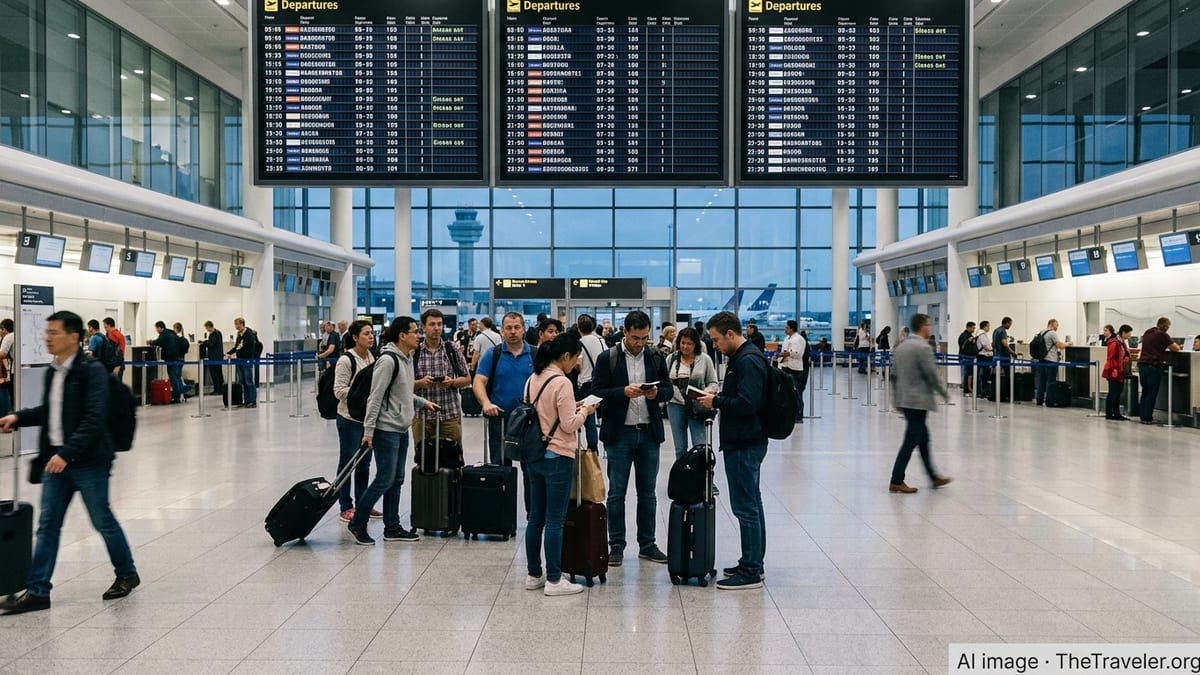
Heightened Global Risk as Iran Targets Symbolic Travel Sites
The new Worldwide Caution, dated March 22, 2026, follows a sharp escalation in the conflict that began with joint United States and Israeli strikes on Iran in late February and has since spread across the wider Middle East. Publicly available information on recent advisories indicates that Washington now sees a credible risk that groups aligned with or inspired by Iran could seek out soft targets linked to the United States, including public venues frequented by international travelers.
The alert comes shortly after Iranian leaders and affiliated media outlets amplified rhetoric about striking “parks, recreational areas and tourist destinations” associated with their adversaries. Reporting from major international news organizations has highlighted explicit threats to tourism and leisure sites as part of Iran’s response to the bombing of strategic energy facilities and military infrastructure. Those warnings, combined with ongoing missile and drone activity across the region, have intensified concern about copycat or opportunistic attacks far beyond the immediate battlefield.
For the global travel industry, the focus on tourist locations has raised alarms about the safety of high-profile city centers, beach resorts and heritage sites that attract large numbers of foreign visitors. While the Worldwide Caution does not single out individual countries, it underscores that potential threats may materialize in any location where U.S. citizens live, work or travel, particularly where security measures are lighter or crowds are dense.
From Regional Evacuations to a Worldwide Caution
In the first weeks of the Iran war, the U.S. response was largely regional. Travel advisories and security alerts urged Americans to depart immediately from a cluster of countries in the Middle East, including key Gulf hubs and states bordering Iran. Congressional correspondence and public reporting describe calls for citizens to “depart now” from more than a dozen jurisdictions, as embassies weighed partial drawdowns and contingency planning for evacuations.
As missile strikes, protests and clashes spread from Iran and the Gulf to cities such as Baghdad and Karachi, diplomatic facilities tightened access, reduced services and, in some cases, temporarily closed. Security messages urged Americans to shelter in place during periods of unrest, avoid large gatherings and monitor commercial flight availability as airspace restrictions and disrupted schedules left many travelers struggling to find a way out.
Over subsequent days, public statements and media coverage showed the State Department authorizing emergency funds for potential charter flights and refining its guidance for Americans who remained in affected countries. The latest Worldwide Caution represents a shift from region-specific warnings to a global posture, reflecting concern that the conflict’s political and symbolic dimensions could inspire attacks or harassment of U.S. travelers well outside the Middle East.
What the Worldwide Caution Means for Travelers
The Worldwide Caution is not a blanket ban on international travel, nor does it carry the same weight as a country-specific “Do Not Travel” advisory. Instead, it functions as a broad risk bulletin, urging Americans overseas and those planning trips to reassess their personal security habits, stay informed and consider how visible their U.S. ties may be in public spaces.
Publicly available guidance associated with recent alerts encourages travelers to remain aware of their surroundings, avoid demonstrations and areas where political tensions are running high, and keep a low profile in venues that may be viewed as closely linked to the United States. That can include international hotel chains, popular Western restaurant brands, major transit hubs, and large festivals or events that draw foreign visitors.
Travelers are also being reminded to enroll in the Smart Traveler Enrollment Program so that local U.S. embassies and consulates can send security updates and make contact more easily during a crisis. In parallel, consular services are directing citizens to keep their travel documents, emergency contact information and contingency plans in order, should a rapid departure become necessary because of civil unrest, infrastructure disruptions or sudden changes in airline operations.
Although many destinations remain open and operational, travel risk analysts note that localized flare-ups can quickly disrupt mobility, even in countries not party to the Iran conflict. Airport closures, airspace rerouting, stricter security checks and shifting insurance rules are all potential knock-on effects that travelers may need to factor into their plans over the coming weeks.
Pressure on Airlines, Tourism Hubs and Insurance Markets
The Iran crisis has already had a visible impact on aviation and tourism across the Middle East, and the Worldwide Caution is expected to add further pressure on carriers and destinations that depend heavily on American visitors. Major Gulf transit hubs have faced intermittent disruptions as missile and drone threats prompted temporary flight diversions, while some regional airports have experienced closures or reduced capacity.
Industry observers report that airlines are recalibrating routes to avoid conflict zones and closely monitoring overflight permissions and insurance exposure. Increased operating costs, combined with weaker demand from U.S. travelers, may lead to reduced frequencies or suspended routes on some long-haul corridors, especially those that rely on connections through the Gulf or over parts of the eastern Mediterranean.
Tourism-dependent economies outside the immediate conflict zone are watching developments closely. Cities that market themselves as safe alternatives or gateway hubs could see a short-term uptick in demand, even as they balance the need for heightened security around hotels, conference centers and tourist attractions. Travel insurers, meanwhile, are reviewing their coverage language related to war, terrorism and civil unrest, potentially affecting what protections American travelers can purchase or claim if their trips are disrupted.
For travel companies, the rapidly evolving landscape is forcing daily adjustments to itineraries, safety protocols and client communication. Agencies are leaning on open-source risk assessments, government advisories and local partners on the ground to judge whether excursions to specific regions, border areas or contested sites remain viable or should be suspended.
Practical Steps for Americans Abroad Amid Uncertainty
In this environment, Americans already overseas are being encouraged by publicly available advisories and expert commentary to take a layered approach to personal security. That includes mapping out alternative routes back to their accommodation, identifying nearby shelters or hardened buildings in case of sudden unrest, and keeping essential items such as passports, medications and a small amount of cash within easy reach.
Travelers are also advised to limit public discussion of political views related to the Iran war, avoid photographing security installations or sensitive protests, and respect local guidance from hotel security teams and transportation operators. In volatile urban areas, small changes in behavior, such as varying daily routines and steering clear of government buildings, foreign embassies and military sites, can significantly reduce exposure to risk.
For those contemplating upcoming international trips, the Worldwide Caution serves as a signal to conduct deeper pre-departure research. That may include checking current country-level advisories, reviewing airline flexibility policies, and consulting travel insurance providers about how escalating events could affect coverage. Some travelers may choose to reroute through alternative hubs or postpone nonessential journeys to regions closest to the conflict.
While the situation remains fluid, the new global alert underlines a central reality of the current crisis: even travelers far from the front lines cannot entirely disconnect from the geopolitical shockwaves of the Iran war. For Americans abroad, heightened awareness and agile planning have become essential parts of navigating an increasingly uncertain travel landscape.