

More news on this day
The United States government has issued its most sweeping travel warning in years, urging Americans to leave more than a dozen countries across the Middle East "now" as widening conflict with Iran triggers cascading airspace closures, paralyzes major aviation hubs and leaves hundreds of thousands of travelers scrambling for a way out.
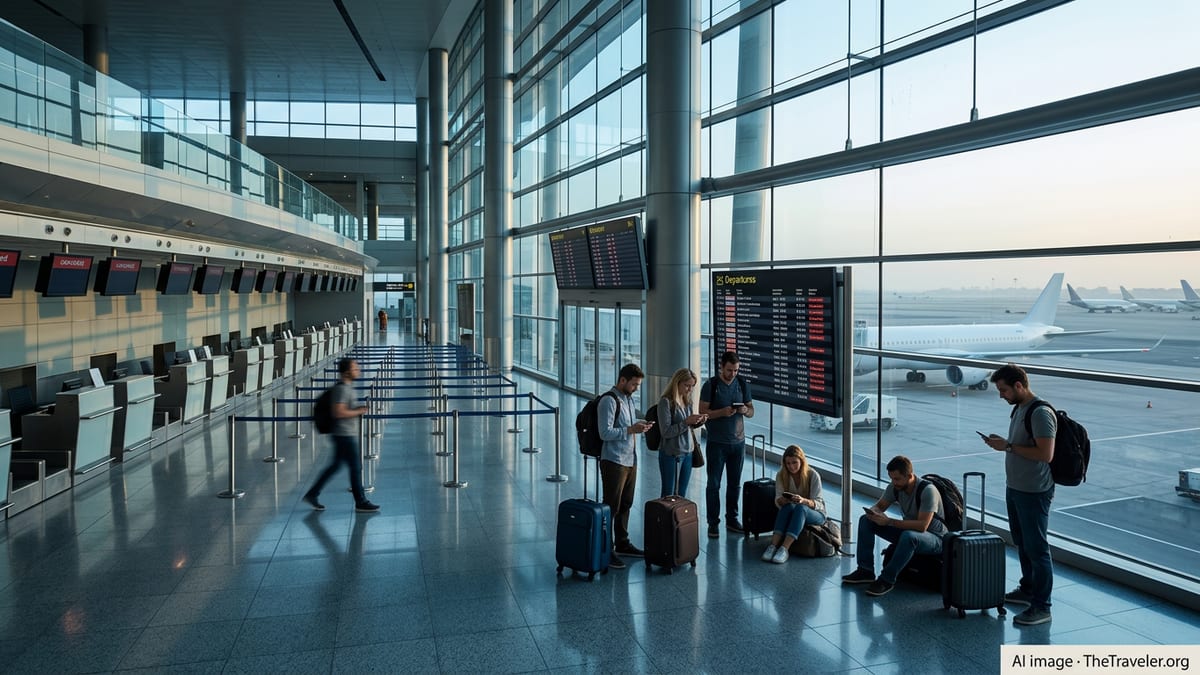
Urgent US Advisory Covers Over a Dozen Countries
The State Department’s emergency advisory, updated March 3, instructs US citizens in Bahrain, Egypt, Iran, Iraq, Israel, the Palestinian territories, Jordan, Kuwait, Lebanon, Oman, Qatar, Saudi Arabia, Syria, the United Arab Emirates and Yemen to depart immediately using any available commercial transportation. Officials describe the safety risks as severe and rapidly evolving, citing ongoing missile and drone attacks, strikes on diplomatic facilities and the possibility of further escalation.
Assistant Secretary of State for Consular Affairs Mora Namdar amplified the warning in a message on social media, telling Americans to "depart now" while some commercial options still exist. Senior officials say a 24 hour task force is working to track US citizens in the region and coordinate information between embassies, airlines and partner governments, but acknowledge that conditions are changing faster than they can update formal advisories.
The sweeping alert builds on a worldwide caution first issued after the launch of US combat operations in Iran at the end of February. That earlier notice warned of potential attacks against US interests and signaled the likelihood of regional spillover. The new directive targeting specific Middle Eastern states marks a sharp escalation in tone and scope, underscoring Washington’s concern that civilians could become caught in the crossfire.
US officials emphasize that the advisory applies both to resident expatriates and short term visitors, including tourists, business travelers, students and cruise passengers. They are urging all Americans in the region to register with consular services so they can receive security updates as airports, borders and city streets swing abruptly between open and locked down.
Middle East Airspace Gridlock Strands Global Travelers
The warning comes as large sections of Middle Eastern airspace effectively shut down following days of US and Israeli strikes on Iran and retaliatory missile barrages targeting bases, embassies and critical infrastructure. Aviation data shows full closures in several states and severe restrictions in others, choking off some of the world’s most important east west flight corridors and causing knock on disruption across Europe, Asia and Africa.
Key Gulf and Levant hubs that normally handle tens of thousands of passengers a day have oscillated between limited operations and complete standstill. Major airports in the United Arab Emirates, Qatar, Bahrain, Kuwait and Israel have all halted or drastically curtailed passenger flights at points in recent days following direct strikes or credible threat intelligence. Airlines have diverted long haul traffic around the region, adding hours to journey times and forcing mass rebooking.
Travel industry trackers estimate that more than twenty thousand flights have been canceled or heavily delayed since the first wave of strikes, with hundreds of thousands of passengers stranded across airports in the Gulf, Eastern Mediterranean and nearby transit cities. Cruise itineraries in the Persian Gulf have been thrown into chaos, with several ships unable to call at scheduled ports and thousands of American passengers uncertain when or how they will be able to disembark and fly home.
The airspace gridlock has created a paradox for US travelers: the government is urging them to leave immediately, but the physical routes out of the region are narrowing by the hour. Airlines that are still operating limited services are prioritizing previously booked passengers, and sudden closures have forced crew to reposition aircraft empty or abort flights mid route. Some Americans have begun attempting overland exits through relatively calmer borders, though even those corridors remain volatile.
Embassy Closures, Security Incidents and Limited Assistance
Compounding the uncertainty, multiple US embassies and consulates across the Middle East have either suspended routine services, evacuated nonessential staff or temporarily closed compounds following direct security incidents and credible threats. Facilities in Saudi Arabia, Kuwait and Lebanon are among those that have shut their doors in recent days, after drone and missile attacks struck near or on diplomatic grounds.
In several capitals, US missions have instructed citizens to shelter in place, avoid government buildings and stay away from demonstration sites and key infrastructure. Embassy alerts note that they are currently unable to provide large scale evacuation or on the ground escort services, stressing that individuals must rely primarily on commercial options and their own contingency planning where possible.
State Department officials say they are coordinating with the Pentagon on a limited number of military and charter flights to assist the most vulnerable Americans in locations where commercial air travel has effectively collapsed. Priority is being given to citizens in areas experiencing direct bombardment or those with urgent medical or humanitarian needs. However, authorities caution that these flights are few, may depart with little notice and cannot reach every affected country.
Americans attempting to contact consular services report jammed phone lines, overloaded websites and long waits for responses as demand surges. Officials have urged citizens to keep communications concise, stay off the roads during active strikes and maintain redundant plans in case a booked flight is canceled at the last moment.
Impact on US Travelers and Global Tourism Flows
The sudden closure of Middle East airspace has rippled far beyond the immediate conflict zone, severing vital links for travelers connecting between Europe, Asia, Africa and Oceania. Popular one stop routes via Gulf hubs have become unreliable or unavailable, forcing rerouting through less direct paths and driving up both travel times and fares. Travel agents in the United States report a flood of calls from anxious clients who either cannot reach their destinations or are seeking emergency returns.
American tourists who had been visiting iconic destinations in countries such as Egypt, Jordan and the United Arab Emirates have found their journeys abruptly cut short. Some have been moved between hotels as local partners juggle curfews, security cordons and changing airport statuses. Others remain in resort areas that are currently calm but increasingly isolated from the global flight network, relying on sporadic updates from local authorities and tour operators.
For the broader tourism industry, the crisis hits a region that had been recovering strongly from the pandemic and earlier bouts of instability. Major carriers based in the Gulf and Levant are key players in long haul travel, and any prolonged closure of their hubs could reshape global route maps and capacity planning for months to come. Travel analysts warn that business and leisure demand to neighboring regions may also soften as nervous travelers avoid any itineraries that could be affected by sudden diversions.
US airlines have largely suspended direct services into the affected countries and are monitoring security developments for potential knock on effects at secondary gateways. Travel insurers are fielding a surge of claims related to trip cancellations, missed connections and emergency accommodations, while simultaneously updating policy language around war risks and government advisories.
What Americans Abroad Are Being Told to Do Now
Against this turbulent backdrop, US officials are urging Americans in the Middle East to act quickly but cautiously. Travelers are being advised to monitor local media, sign up for consular alerts and remain in close contact with airlines or travel providers. Where commercial flights are still operating, the message is to take the earliest feasible departure, even if that means routing through a third country far from the original itinerary.
Citizens who cannot immediately leave are being encouraged to identify the safest available shelter, stock essential supplies and prepare for intermittent communications outages. Security messages emphasize avoiding crowded public venues, refraining from posting real time location details on social media and keeping identification documents within reach at all times. Private employers with staff in the region are activating corporate evacuation plans and, in some cases, arranging dedicated charter flights.
For Americans planning future trips, the State Department is urging a conservative approach, recommending that nonessential travel to the affected countries be postponed until the security picture stabilizes and reliable air links are restored. Travel experts suggest that prospective visitors consider fully refundable bookings, comprehensive insurance and itineraries that do not rely on a single regional hub.
With the situation in flux and regional leaders trading warnings of further escalation, both US officials and travel industry insiders caution that conditions could change with little warning. For now, the clear message from Washington to Americans in the Middle East is to leave while they still can, and for those elsewhere to think carefully before transiting a region where the skies have suddenly fallen quiet.